


Origins and History of the Museum
The musée Hèbre de Saint-Clément emerged during the second half of the 19th century. It bears the name of Pierre-André Hèbre de Saint-Clément, who served as the Mayor of Rochefort between 1767 and 1771 and again from 1800 to 1805. This institution carries the official Musée de France label, acknowledging its role in preserving the history and fine arts of the region. It also holds the Tourisme et Handicap label, ensuring accessibility for visitors with reduced mobility.
The history of the site is closely tied to the civic life of Rochefort. For many decades, the building functioned as the municipal library, a role it maintained until 2002. Since then, the museum has focused on its mission to house the city's art and history collections. The institution remains a central point for understanding the local identity and the maritime connections that once defined this area.
The Building and its Architecture
Located at 63, avenue Charles de Gaulle in Rochefort, France, the museum occupies the Hôtel Hèbre de Saint-Clément. This 18th-century private mansion reflects the Palladian style, characterized by a sense of order and classical proportion. The exterior facades, which date to around 1758, remain visible to those passing along the avenue and the rue Pierre Loti.
The structure is a former hôtel particulier that has housed the municipal museum since 1860. While the interior has been adapted to accommodate various collections and the Centre d’interprétation de l’architecture et du patrimoine, the architectural integrity of the building's shell persists. The presence of the original facades provides a direct link to the urban fabric of Rochefort as it existed in the mid-18th century.
Diverse Art and Ethnographic Collections
The museum houses a collection that bridges the local history of Rochefort with a broader, global perspective. Fine arts are presented alongside ethnographic objects brought from Oceania, Africa, and Asia. These items reflect the maritime connections of the region, specifically through the expeditions of explorers who traveled to distant lands. The presence of extra-European collections provides a quiet dialogue between the local landscape and the far reaches of the Pacific and beyond.
Within the art galleries, the focus shifts to the nuances of light and subject. Orientalist paintings sit near realistic landscapes, capturing specific atmospheres of both known and distant terrains. The collection also preserves items related to the life and travels of Pierre Loti, whose presence is felt through the objects and spaces dedicated to his memory. These pieces exist as physical traces of a specific era of maritime exploration and artistic observation.
- Jupiter and Lycaon, about 1637
- The Music Lesson, 1750
- The Sleeping Child in the Care of a Brave Dog, 1801
- Portrait of René Primevère Lesson, 1829
Masterpieces and Notable Works
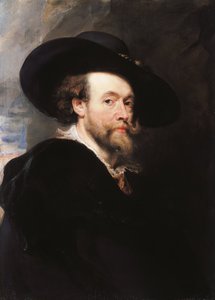
The collection holds significant presence through works by Rubens, Géricault, and Auguin. These paintings exist alongside a detailed drawing of the port and arsenal from 1728, signed by Gérard Edelinck. The precision of the line captures a specific moment in the maritime history of the region.
A central feature is the plan-relief of Rochefort, designed by Pierre-Marie Touboulic in 1835. This large-scale model consists of seven wooden panels that form a disc nearly 5 meters in diameter. It offers a physical perspective of the city as it appeared in the early nineteenth century, including the arsenal and the wooden halls.
- Jupiter and Lycaon, about 1637 - Peter Paul Rubens
- The Music Lesson, 1750 - Jean-Baptiste Pater
- The Sleeping Child in the Care of a Brave Dog, 1801 - Jeanne-Élisabeth Chaudet
- Portrait of René Primevère Lesson, 1829 - Louis Charles Arsenne
Visiting the Interpretive Center
Located on the ground floor, the CIAP functions as an interpretation center dedicated to the architecture and heritage of the area. This space offers a specific lens through which the urban evolution of Rochefort can be observed. The center provides a way to understand the historical layers of the city through various specialized tools.
A central feature of this space is a 3D aerial plan of the city center. This model allows for a detailed examination of the urban layout. Alongside this, interactive interpretation tools are available to assist in the study of the local landscape. These elements work together to provide a clear reading of the city's development and its architectural history.


