

The Architectural Dialogue of Form and Flow
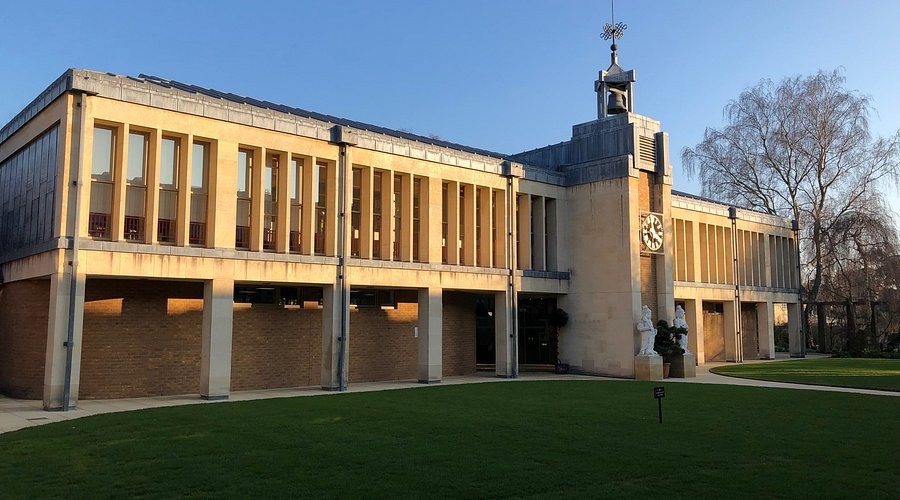
In the heart of Cambridge, where the ancient echoes of medieval scholarship often dominate the landscape, Wolfson College emerges as a striking, modernist provocation. It is a place where the weight of tradition is met with the lightness of contemporary vision, standing as a singular testament to the transformative power of architecture. Designed by the masterful
Powell and Moya Architects
, the college is not merely a collection of buildings but a deliberate composition of three interconnected quadrangles that invite movement and contemplation. The most notable among these, the Berlin Quad—named in honor of the visionary philosopher Isaiah Berlin—serves as a focal point for this architectural harmony.
The structure itself, now recognized as a Grade II listed landmark, exists in a profound relationship with its surroundings. As one traverses the footbridge over the River Cam, the architecture begins to breathe in unison with the landscape, fostering an environment where the boundary between the built form and the natural world becomes beautifully blurred. For the interior designer or lover of modernism, the college offers a masterclass in how space can be utilized to champion collaboration and intellectual exchange, creating a setting that is as much a piece of art as the works it houses.
A Living Gallery of Contemporary Expression
To enter the collection of Wolfson College is to step into a dynamic narrative that refuses to remain static. Unlike traditional museums that may feel like silent mausolements of the past, Wolfson’s holdings are a vibrant epicenter for contemporary artistic expression. The collection defies easy categorization, reflecting the shifting tides of current artistic trends and the bold ideas of a new generation. It is a curated experience where
internationally acclaimed artists
stand in thoughtful dialogue with emerging talents, showcasing a diverse range of mediums that challenge and inspire.
One cannot contemplate this collection without considering how the art interacts with its modernist container. The architecture does not simply hold the art; it acts as an integral component of the experience itself. This is perhaps most poignantly felt in works like the
Wolfson College Mural
by Peter Mennim, where the use of bold colors and intricate details captures the very essence of daily life within the college walls. For collectors and enthusiasts, the allure lies in this constant evolution—the knowledge that the collection is a living, breathing entity, continually enriched by new acquisitions and exhibitions that push the boundaries of what art can represent in an academic sanctuary.
An Egalitarian Legacy of Intellectual Beauty
The soul of Wolfson College is inextricably linked to the philosophical convictions of its founding era. Under the influence of Isaiah Berlin, the college was conceived with a rejection of rigid hierarchies, embracing instead an ethos of inclusivity and open intellectual curiosity. This egalitarian spirit is palpable in every corner of the campus, from the shared social spaces where students and fellows interact as equals, to the cosmopolitan atmosphere created by a community representing over 100 different nations.
This diversity of perspective is the true heartbeat of the college’s artistic identity. The art here serves as both an inspiration and a reflection of the broader human experience, bridging the gap between disparate cultures and disciplines. It is a place where history, philosophy, and modern design converge to create a space for profound reflection. For those seeking beauty that is rooted in purpose, Wolfson College offers more than just a viewing of art; it offers an immersion into a world where creativity is the fundamental language of human connection.


