Breaking the Flatness: The Death of Byzantine Static and the Birth of Depth
 The Proto-Renaissance: The Dawn of a New Era and the Artistic Revolution of Giotto
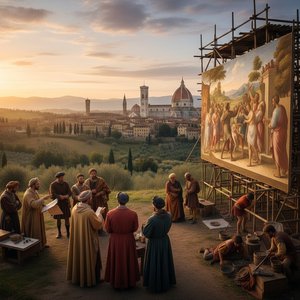
The Twilight of the Medieval: Understanding the Trecento Context To understand the profound seismic shift that occurred during the Proto-Renaissance, one must first contemplate the heavy, gilded atmosphere of the centuries that preceded it. For much ...
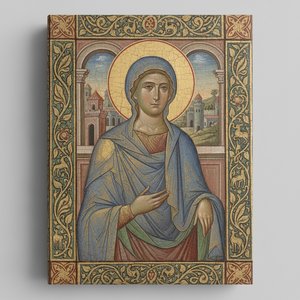
Imagine a world where every image you saw was stuck in 2D. For centuries, the European visual landscape was dominated by the Byzantine tradition—a heavy, gilded atmosphere that felt more like a spiritual vacuum than a tangible reality. This wasn't art meant to reflect life; it was art meant to transcend it. Figures were suspended in endless expanses of gold leaf, disconnected from gravity, earth, or even each other. They were icons, not individuals. There was no horizon, no shadow, and certainly no depth. It was a beautiful, frozen, and profoundly static way of seeing that prioritized religious symbolism over the messy, three-dimensional reality of human existence.
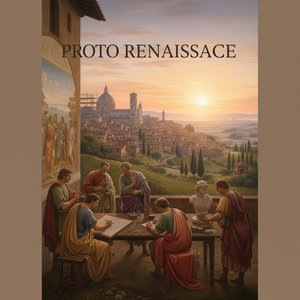
But then, something began to crack. The late 13th century brought a seismic shift, a moment where the rigid boundaries of the medieval era started to dissolve. This wasn't just a change in technique; it was a revolution in perception. Artists began to push back against the flat, ethereal void, seeking instead to anchor their subjects in a world that felt heavy, breathable, and real. The gold backgrounds began to recede, replaced by the suggestion of sky, landscape, and architectural space. This transition marked the end of an era where art served only as a symbolic window to the divine and the beginning of a period where art became a mirror held up to the human experience.
Giotto: The OG Visionary Who Brought Human Emotion to the Canvas
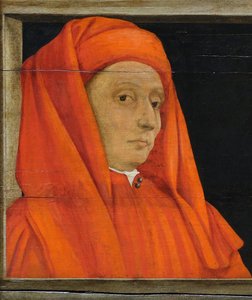 Giotto di Bondone
The Shepherd Boy of Florence: Giotto’s Revolutionary Vision Born around 1267 in the rolling hills near Florence, Italy, Giotto di Bondone emerged from humble beginnings to become arguably the most pivotal figure in the transition from medieval artist...
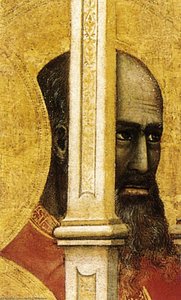
If there was a protagonist in this artistic uprising, it was Giotto di Bondone. Legend has it he started as a simple shepherd boy, sketching lifelike sheep onto rocks with such precision that masters took notice. Whether fact or folklore, the essence of his genius remains: an innate, raw ability to capture the natural world. Giontto didn't just paint religious figures; he breathed life into them. He dared to depict humanity with an unprecedented level of emotional depth and psychological weight. When you look at a Giotto masterpiece, you aren't just looking at a saint; you are witnessing a person capable of grief, joy, and profound contemplation.
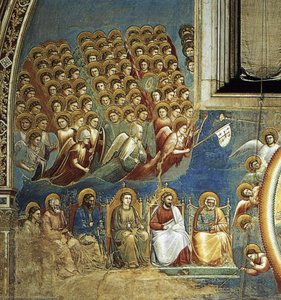
In works like the
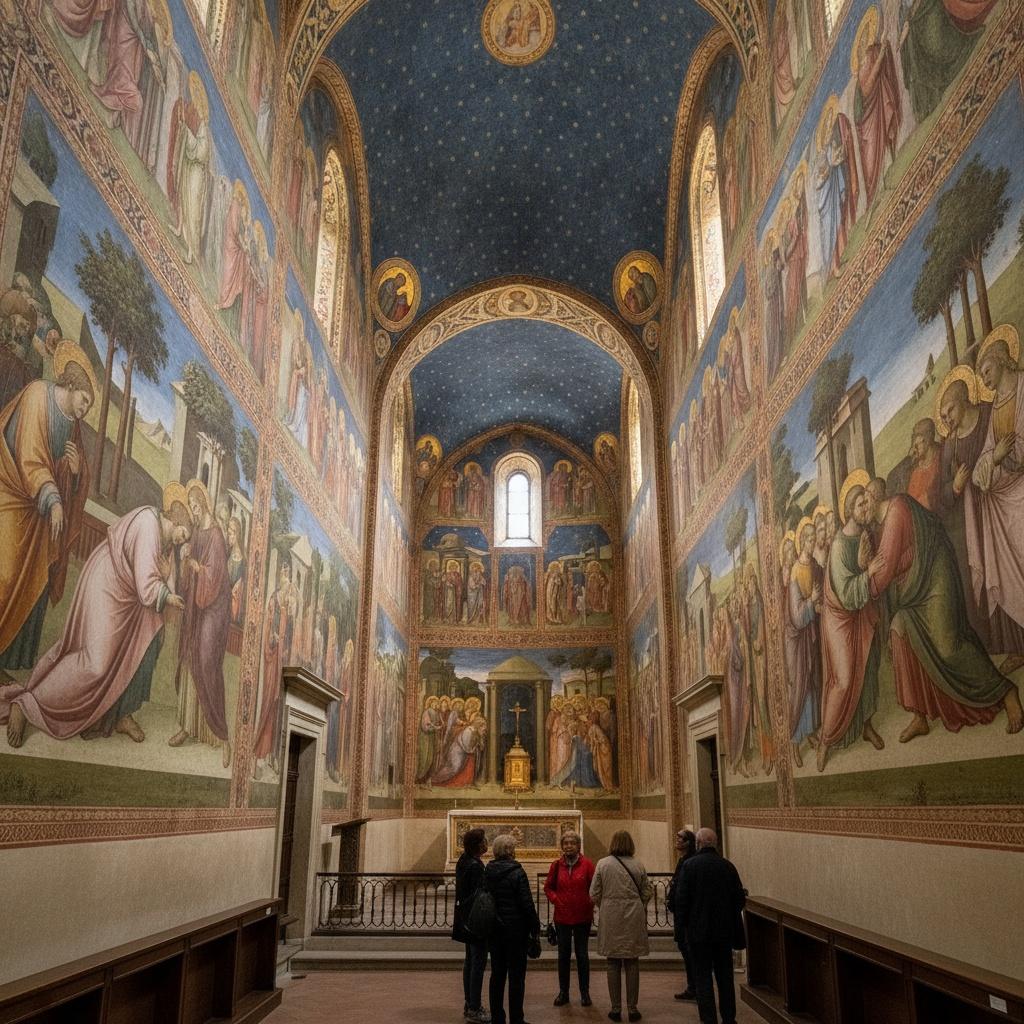
Scrovegni - Last Judgment or his breathtaking frescoes in the Basilica di San Francesco, Giotto broke the mold by introducing characters that possessed weight and volume. He moved away from the stylized, mask-like faces of the Byzantine era and replaced them with expressive gestures and believable facial expressions. His figures interact; they weep, they recoil, they embrace. This was a radical departure from the detached, holy icons of the past. By infusing sacred narratives with human vulnerability, Giotto created a bridge between the celestial and the terrestrial, making the divine feel accessible and deeply personal to the viewer.
From Gold Leaf to Real Life: The Technical Shift Toward Naturalism
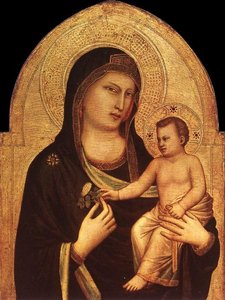
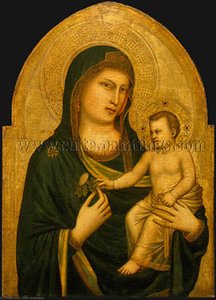 Madonna and Child
Introduction to the Artist Giotto Di Bondone , a renowned Italian painter and architect, is celebrated for his innovative approach to painting during the Gothic and Proto-Renaissance periods. Born around 1267 in Florence, Giotto Di Bondone began his ...
The technical evolution during the Proto-Renaissance was nothing short of a masterclass in innovation. To move away from the flat, two-dimensional plane, artists had to invent new ways of manipulating light and shadow. Giotto and his contemporaries began experimenting with what we now recognize as the foundations of naturalism. They utilized shading and subtle gradations of tone to create the illusion of three-dimensionality, giving bodies a sense of mass and presence that had never been seen before. This wasn' quite just about making things look "pretty"; it was about creating a believable physical reality within the frame.
This period saw the early, experimental use of linear perspective and an intense focus on anatomical accuracy. While not yet the mathematically perfected science of the High Renaissance, these early attempts at depth changed everything. Artists began to pay attention to how light hits a fold of drapery or how a figure occupies space within a landscape. They moved toward a more naturalistic representation of life, where the environment was no longer just a decorative backdrop but a functional part of the composition. This commitment to observation—to seeing the world as it actually is—laid the groundwork for the scientific and artistic breakthroughs that would define the centuries to follow.
The Narrative Revolution: Storytelling That Actually Hits Different
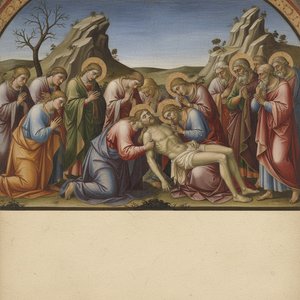 Giotto di Bondone: Revolutionizing Late Medieval Painting through Narrative Innovation
The Dawn of a New Style: Giotto’s Historical Context Wikipedia: Giotto Giotto di Bondone (Italian: [ˈdʒɔtto di bonˈdoːne]; c. 1267 – January 8, 1337), known mononymously as Giotto, was an Italian painter and architect from Florence during the Late Mi...
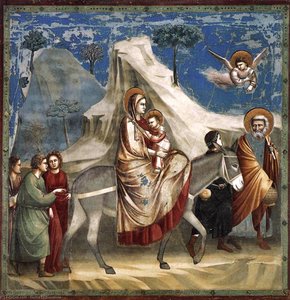
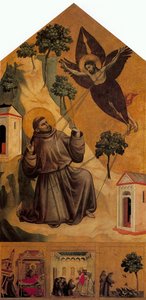
Before this era, religious art functioned largely as a series of symbolic snapshots. The goal was to convey a theological truth through recognizable icons. However, the Proto-Renaissance introduced a new kind of narrative power: the ability to tell a story that felt cinematic and immersive. Giotto’s work, particularly his
Legend of St Francis series, functions much like a visual epic. He didn't just present isolated miracles; he constructed cohesive, sequential narratives that guided the viewer through a journey of faith and human struggle.
This narrative innovation relied heavily on interaction and setting. By placing figures in recognizable, tangible environments—complete with architectural elements and natural landscapes—artists could create a sense of drama and movement. A character's posture or a sudden turn of the head could signal a turning point in the story. This was art that demanded engagement; it wasn't just something to be venerated from a distance, but something to be read, interpreted, and felt. The ability to weave complex human emotions into grand religious chronicles transformed the act of viewing art into an experience of profound empathy and storytelling.
Legacy of the Proto-Renaissance: How Early Innovation Paved the Way for Modern Visual Impact
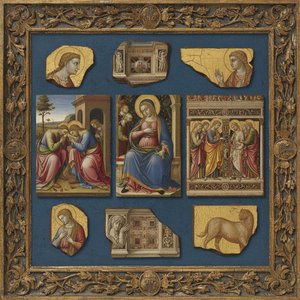 Proto-Renaissance Masters: 10 Artworks That Changed History | Mus3ums
Introduction Imagine stepping back in time to a world poised on the cusp of rebirth, where artistic conventions were beginning to crack and a new vision—one rooted in humanism, observation, and emotion—was starting to bloom. This is the world of the ...
The impact of the Proto-Renaissance cannot be overstated; it was the spark that ignited the entire Renaissance movement. The shift from the stylized, symbolic language of the Middle Ages to the humanistic, naturalistic approach of Giotto and his successors provided the DNA for everything that followed. Without this initial break from Byzantine tradition, the later triumphs of Leonardo, Michelangelo, and Raphael would have been impossible. They inherited a world where space, emotion, and anatomy were already being explored with fearless curiosity.
Today, we see the echoes of this revolution in every corner of modern visual culture. The drive to capture realism, the obsession with emotional resonance, and the power of immersive storytelling all find their roots in this period of transition. The Proto-Renaissance taught us that art's greatest strength lies in its ability to connect us to our shared humanity. It proved that by looking closer at the physical world—at the weight of a hand, the shadow on a face, or the depth of a landscape—we could find deeper truths about the spiritual and emotional worlds we inhabit. This was the moment art truly began to live.