

The History and Architecture of Musée Sainte-Croix
Musée Sainte-Croix is the largest museum in Poitiers, France. The institution occupies the site of the former Abbaye Sainte-Croix, a religious complex that was moved to Saint-Benoît, Vienne. The current structure was designed by the architect Jean Monge. It is a construction of concrete and glass, reflecting the 1970s style.
The building was completed in 1974 and opened to the public on December 21, 1974. Since September 2015, the museum's historical qualities of architecture have been recognized by the Ministry of Culture through the Heritage of the 20th century label. The site continues to function as a primary center for the study and preservation of regional history and fine arts.
Major Collections and Art Movements
The museum maintains a permanent exhibition spanning from prehistory to contemporary art. This chronological breadth includes significant collections of regional archaeology and numismatics. The Gallo-Roman collection is particularly notable, featuring marble works such as a white Minerve from the 2nd century. Ethnological collections also form a part of the permanent holdings, providing context to the regional history of Poitiers.
The Fine Arts section focuses on paintings and sculptures produced from the end of the 18th century through the 20th century. The galleries represent several distinct movements, including Impressionism and Orientalism. Modern and contemporary art is also represented within the current displays. Among the sculptural holdings are a collection of bronzes by Camille Claudel.
- Minerve in white marble, 2nd century
- Gable Farm with trees, Piet Mondrian
- Ulysse and Nausicaa, 1798, Louis Gauffier
- The return from the hunt, 1898, Angèle Delasalle
Notable Masterpieces and Sculptures
The museum's sculptural holdings include works by Camille Claudel and Auguste Rodin. These pieces are held alongside significant archaeological finds, such as a Minerve carved from white marble dating to the 2nd century. This Gallo-Roman object remains a central part of the permanent collection. Additionally, the museum preserves a unique glass reliquary vase discovered in the abbaye de Saint-Savin, which is a singular specimen in Europe.
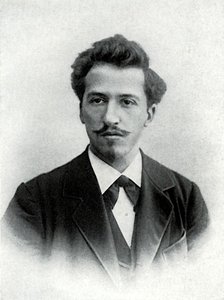
The fine arts galleries contain significant works from the modern and contemporary eras. The collection includes paintings by Piet Mondrian and Odilon Redon. These works are displayed within a framework that spans from the late 18th century through the 20th century, covering various movements including Impressionism and Orientalism.
- Ulysse and Nausicaa, 1798 - Louis Gauffier
- Mars Wounded by Diomedes, 1781 - Gabriel François Doyen
- The return from the hunt, 1898 - Angèle Delasalle
- Landscape, 1666 - Philips Augustijn Immenraet
- Portrait of the Artist Geneviève Blanchot, 1704 - Jean Baptiste Santerre
- Portrait of Éléna Olmazu, 1931 - Albert Braïtou-Sala
Major Donations and Collections of Women Artists
The museum holds a significant collection of works by female artists, largely due to the dedicated acquisitions of Eugénie Dubreuil. Over a period of two decades, Dubreuil assembled a collection of 500 works consisting entirely of pieces created by women. This collection was subsequently donated to the Musée Sainte-Croix de Poitiers. Currently, the museum exhibits 300 of these works within its galleries.
The acquisition process involved a meticulous effort to document the artists. Dubreuil maintained a detailed archive, recording information about each artist on small cards kept in a wooden box. This archive, which is now part of the museum's holdings, provides a historical record of the collection's development. The works within this donation represent a specific commitment to the visibility of women in the arts.
Research and Documentation Services
The museum maintains a dedicated documentation center that functions as a specialized research center. It is situated on the first floor of the former Evêché, located on the esplanade Mendès-France near the place de la Cathédrale. This facility provides a structured environment for the study of art history, archaeology, prehistory, and regional history. The center holds extensive collections of works and literature pertaining to these specific disciplines.
Beyond historical and archaeological texts, the center manages scientific documentation regarding the specific works held within the museum's permanent collections. This resource is intended to support academic inquiry and detailed study. Researchers and students may access the documentation center by appointment. The facility operates from 09:30 to 12:00 and from 14:00 to 17:30.