Una Sintesi tra Visione Europea e Spirito Yoruba
Adunni Olorisha, nata Susanne Wenger, rimane una delle figure più singolari e trasformative dell'arte del XX secolo. Artista austriaco-nigeriana la cui vita è stata un profondo ponte tra continenti, possedeva la rara capacità di intrecciare le sensibilità estetiche occidentali con le profonde e ritmate tradizioni della spiritualità Yoruba. Nata a Graz, in Austria, il 4 luglio 1915, i suoi primi anni furono plasmati da una connessione innata con il mondo naturale e da una fascinazione accademica per il folklore e la mitologia. Questa base intellettuale, nutrita dagli studi di religione comparata presso l'Università di Graz, sarebbe servita in seguito come bussola spirituale per il suo viaggio creativo oltre l'Atlantico.
Il suo trasferimento in Nigeria nel 1952 segnò molto più di un semplice cambiamento geografico; fu un profondo risveglio artistico. Arrivando a Osogbo insieme al marito, lo studioso Ulli Beier, Wenger si ritrovò immersa in un paesaggio dove i confini tra il fisico e il divino erano perpetuamente fluidi. Questa immersione scatenò un'esplosione creativa che trascese i limiti dei media tradizionali. Mentre abbracciava l'identità di sacerdotessa Yoruba, la sua arte si evolse dalla formazione formale ricevuta al College for Arts and Crafts di Graz e all'Accademia di Vienna in un linguaggio simbolico potente, capace di parlare direttamente all'anima degli Orisha.
Il Movimento dell'Arte Sacra e la Sacra Foresta di Osun
L'eredità più duratura di Wenger risiede nel suo ruolo di forza motrice dietro il Movimento dell'Arte Sacra. Invece di lavorare in isolamento, cercò di promuovere uno spirito collettivo, istituendo una cooperativa di artisti a Osogbi che valorizzasse i maestri locali dell'argilla, del cemento e dell'intaglio del legno. Insieme ad artisti come Kasali Akangbe e Adebisi Akanji, intraprese l'imponente compito di rivitalizzare la Sacra Foresta di Osun-Osogbo. Non si trattava solo di un'impresa scultorea, ma di un atto di preservazione culturale e di restaurazione spirituale.
Grazie alla sua guida, la foresta fu trasformata in una galleria vivente di strutture monumentali e sculture che onoravano le divinità della cosmologia Yoruba. Il suo lavoro in questo periodo fu caratterizzato da:
- Armonia Architettonica: Creazione di installazioni che sembravano estensioni organiche della foresta stessa.
- Profondità Simbolica: Utilizzo dell'astrazione geometrica e di intricati motivi per evocare la natura multifaccettica degli Orisha.
- Maestria Collaborativa: Fusione delle sue conoscenze sulle antiche tecniche dell'affresco con le tradizioni scultoree indigene nigeriane.
La sua instancabile attività di sensibilizzazione fu fondamentale per ottenere il riconoscimento governativo per la preservazione della foresta nel 1965, una missione che portò infine alla sua designazione come Patrimonio dell'Umanità UNESCO nel 1979. Questo traguardo consolidò il suo status di campionessa globale del patrimonio culturale, garantendo che il paesaggio sacro rimanesse un santuario sia per la natura che per lo spirito.
Un'Eredità di Convergenza Culturale
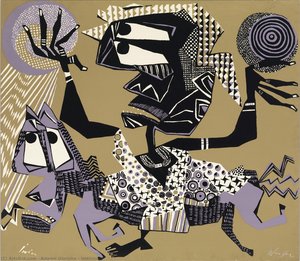
L'arte di Adunni Olorisha è definita dal suo rifiuto di aderire a una singola tradizione. Che sia attraverso i suoi dipinti, come l'evocativo Palme del Destino, o le sue installazioni ambientali su larga scala, la sua opera rimane una testimonianza del potere della sintesi culturale. Il suo stile — un accattivante connubio tra l'astrazione geometrica europea e la vitalità terrosa e materica dei motivi africani — funge da dialogo visivo tra due mondi. Non si limitò ad osservare la cultura Yoruba; ne divenne parte integrante della storia vivente, contribuendo sia al suo paesaggio visivo che alla sua letteratura.
In riconoscimento dei suoi immensi contributi alla società e alle arti nigeriane, il governo nigeriano la onorò nel 2008 come Membro dell'Ordine della Repubblica Federale (MFR). Oggi, le opere di Adunni Olorisha continuano a risuonare in chi cerca un'arte che trascenda le pareti delle gallerie. La sua vita rimane una narrazione ispiratrice di come un artista possa andare oltre i confini della propria nascita per trovare una vera casa nel battito spirituale e creativo di un'altra cultura, lasciando dietro di sé un'eredità duratura quanto le foreste sacre che ha combattuto così ferocemente per proteggere.
Domande e risposte
A quale periodo storico appartiene l'opera di Adunni Olorisha?
Adunni Olorisha ha operato nel periodo Età Moderna, collocando storicamente la sua attività.
Di dove è Adunni Olorisha?
Adunni Olorisha è nato/a in Austria.
Con quali altri nomi è noto Adunni Olorisha?
Adunni Olorisha è noto anche con il nome di Susanne Wenger.