A Pioneer of Abstraction: The Life and Legacy of Hilla Rebay
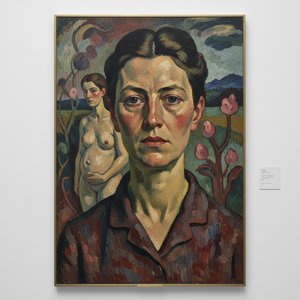
Hilla Rebay (1890-1967) stands as a singular figure in the annals of twentieth-century art, an architect of aesthetic vision whose unwavering dedication propelled her to become not only a celebrated artist herself but also a pivotal catalyst for shaping the trajectory of modernism. Born Hildegard Anna Augusta Elisabeth Freiin Rebay von Ehrenwiesen in Strasbourg, Germany—a city steeped in artistic tradition yet poised on the cusp of transformative change—her early life foreshadowed the extraordinary journey that would define her career and solidify her place as one of the foremost champions of non-objective art. From a familial background rooted in Prussian aristocracy, Rebay’s upbringing instilled within her a profound appreciation for cultural heritage alongside an innate curiosity about artistic innovation. This duality proved instrumental in nurturing her creative spirit and guiding her exploration into uncharted aesthetic territories.Early Artistic Training and Influences
Rebay’s artistic inclinations blossomed during her formative years at the Cologne Kunstgewerbeschule, where she honed her skills in drawing and painting under the tutelage of esteemed instructors—a grounding experience that would serve as a bedrock for her subsequent stylistic developments. However, it was her encounter with Hans (Jean) Arp in Zurich that truly ignited her artistic passion and propelled her toward the avant-garde currents swirling through Europe at the time. Through Arp’s guidance, Rebay immersed herself in the groundbreaking explorations of Kandinsky, Klee, Marc, Chagall, and Bauer—artists who dared to liberate themselves from representational constraints and embrace pure abstraction as a vehicle for expressing profound spiritual truths. This exposure irrevocably altered her artistic perspective, fostering an unwavering conviction that art could transcend mere imitation of nature and achieve a higher level of communicative power. The influence of these pioneering figures resonated deeply within Rebay’s creative sensibility, shaping her distinctive visual language and informing her artistic endeavors throughout her life.The Embrace of Non-Objective Art: Der Krater and Artistic Experimentation
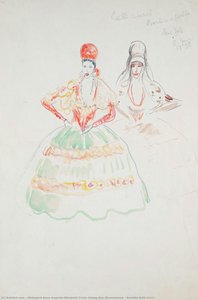
Rebay’s commitment to avant-garde expression solidified in 1920 with the formation of “Der Krater” alongside Rudolf Bauer and Otto Nebel—a collective dedicated to pushing the boundaries of artistic innovation and challenging prevailing aesthetic conventions. This group served as a crucible for experimentation, fostering dialogue around radical new approaches to visual art and propelling Rebay’s stylistic evolution toward increasingly complex and evocative forms. Her early abstract works were characterized by overlapping curved lines, planes, dots, and dense textures of asymmetrical shapes—a visual language that reflected her fascination with geometric abstraction and her desire to convey underlying energies and spiritual dimensions. These explorations mirrored the broader artistic landscape of the Weimar Republic, where artists wrestled with questions of form, color, and materiality in response to the seismic shifts reshaping European culture.A Patronage Forged in Vision: Solomon R. Guggenheim
The pivotal moment that cemented Rebay’s legacy arrived in 1927 when she encountered Solomon R. Guggenheim—a visionary collector whose ambition would transform him into one of the most influential figures in American art history. Their relationship blossomed on shared intellectual convictions and a mutual appreciation for non-objective aesthetics, forging an alliance that would propel Guggenheim toward assembling one of the world’s foremost collections of modern art. Rebay tirelessly championed artists like Bauer and Kandinsky—recognizing their genius and advocating for their inclusion in Guggenheim’s holdings—demonstrating her unwavering belief in the transformative potential of artistic innovation. Her guidance to Guggenheim not only shaped the development of a landmark collection but also contributed to fostering a broader acceptance and appreciation of non-objective art within the United States.The Guggenheim Museum: An Architectural Triumph
Rebay’s ambition reached its zenith in 1943 when she commissioned Frank Lloyd Wright to design the permanent Guggenheim Museum building—a project that would become an enduring symbol of modernist architectural grandeur. Wright’s spiral structure, conceived as a fluid and dynamic space embodying Rebay’s aesthetic ideals, stands today as testament to her unwavering commitment to innovative design principles and her profound understanding of how architecture could enhance artistic experience. The museum’s soaring interior—characterized by its undulating walls and central atrium—mirrors the spiraling forms found in Rebay’s abstract paintings, creating a harmonious dialogue between art and architecture that continues to inspire visitors worldwide. ## Legacy and Historical Significance Hilla Rebay’s influence extends far beyond her own artistic creations and architectural endeavors. She was a tireless advocate for non-objective art—organizing exhibitions throughout Europe and the United States—and fostering dialogue around its aesthetic principles. As director of the Museum of Non-Objective Painting/Solomon R. Guggenheim Museum, she played a crucial role in establishing its reputation as a leading center for modern art—a position she held until her departure from the museum’s board in 1967. Her unwavering dedication to artistic innovation and her profound belief in abstraction’s capacity to elevate human consciousness cemented her place as one of the most significant figures in twentieth-century art history—a pioneer who dared to challenge conventions and champion a new aesthetic vision.Domande e risposte
Di dove è Hilla von Rebay?
Hilla von Rebay è nato/a in Francia.
A quale periodo storico appartiene l'opera di Hilla von Rebay?
Hilla von Rebay ha operato nel periodo Età Moderna, collocando storicamente la sua attività.