
Triumphs of Caeser (scene 5)Andrea Mantegna · 1500
 Acrilico su tela
- Opere da parete
- Renaissance
 1500
1500- Rinascimento
Triumphs of Caeser (scene 5) - Andrea Mantegna
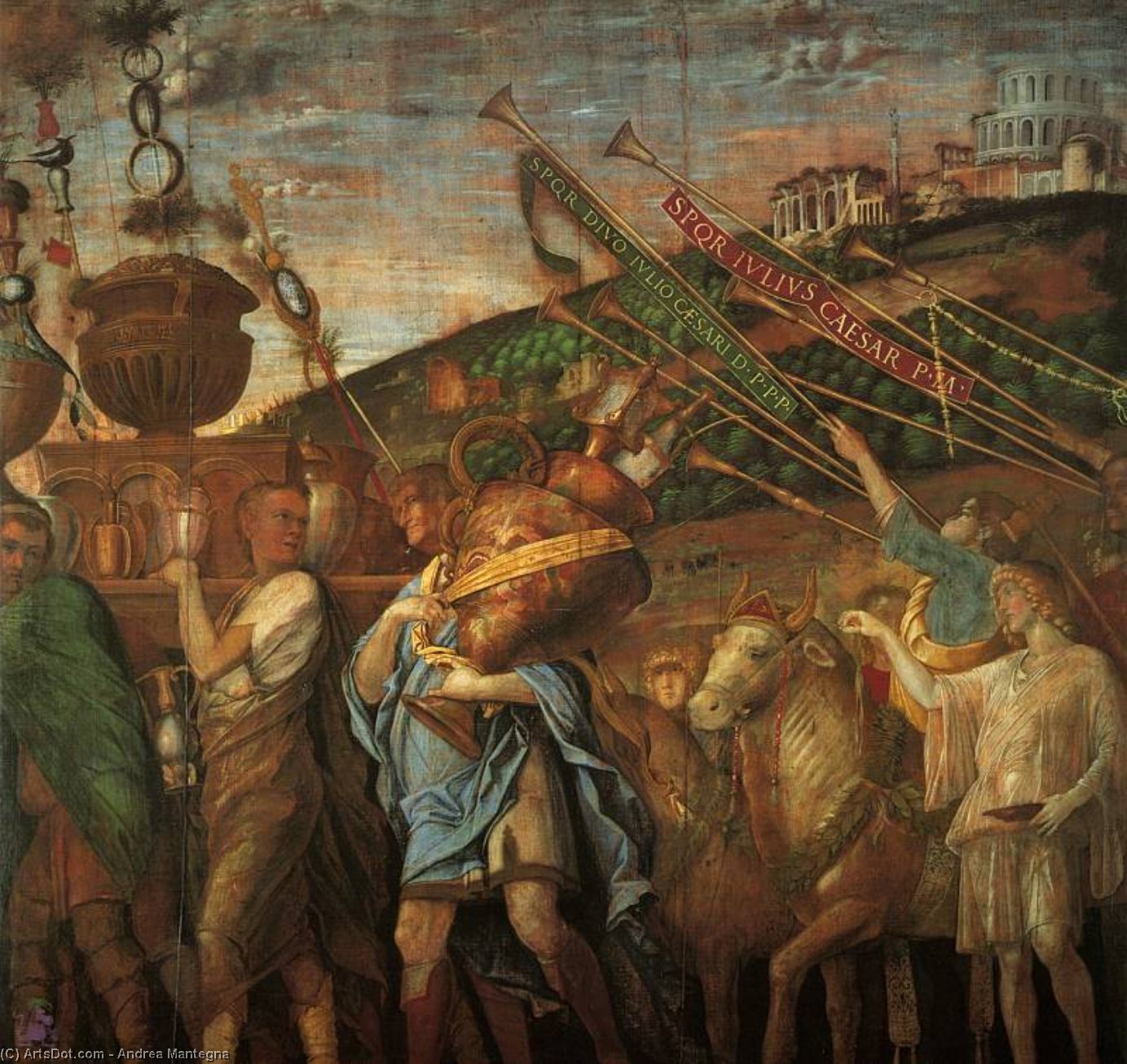
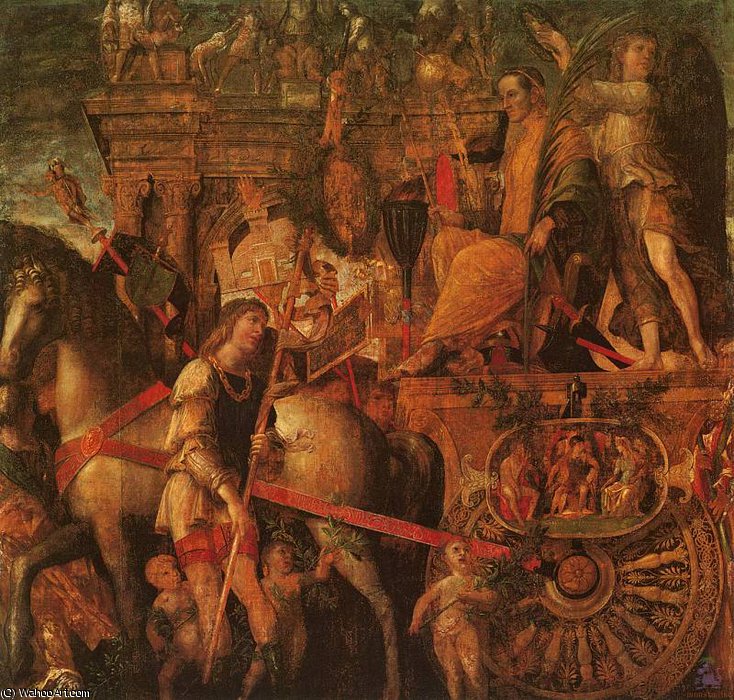
Andrea Mantegna’s “Triumphs of Caesar (scene 5)” stands as a monumental testament to the Renaissance fascination with classical grandeur and artistic innovation. Painted in 1500, this fresco—part of a larger series depicting Julius Caesar's victories—captures a pivotal moment in Roman history: the arrival of Caesar’s triumph procession, dominated by four magnificent African elephants laden with golden candelabras.
Historical Context
The Triumphs of Caesar project was commissioned by Francesco II Gonzaga, Marquis of Mantua, a fervent patron of humanist arts and scholarship. Mantegna meticulously researched ancient Roman sources—Suetonius’s biographies of Caesar, Plutarch's Lives—to ensure accuracy in portraying the ceremonial procession. This dedication to historical detail reflects the broader Renaissance preoccupation with reviving classical ideals and celebrating human achievement.
Artistic Significance
Mantegna’s mastery is evident in every aspect of this artwork. He employed *trompe-l'oeil*—a technique that creates illusions of depth—to convincingly depict a receding landscape, mirroring the architectural grandeur of Roman triumphal arches. The elephant riders are rendered with remarkable sculptural precision, conveying both power and elegance. Observe the careful arrangement of figures, the subtle use of color, and the masterful depiction of textures – all contributing to an immersive experience for the viewer.
Symbolism
Beyond its visual splendor, “Triumphs of Caesar (scene 5)” carries profound symbolic weight. The elephants represent Africa—a symbol of wealth and exotic splendor—and their bearers embody Roman authority and prestige. The golden candelabras symbolize divine illumination and commemorate the triumph’s solemn occasion. Mantegna's deliberate choices underscore the Renaissance humanist belief in celebrating human intellect and artistic excellence.
Technical Details
Executed in tempera on canvas, “Triumphs of Caesar (scene 5)” exemplifies Mantegna’s innovative approach to painting technique. The artist skillfully blended pigments with a medium that allowed for luminous colors and subtle gradations—a departure from the darker palettes favored by earlier artists. This meticulous attention to detail ensures that the fresco retains its vibrancy and immediacy centuries after its creation.
Further Exploration
To delve deeper into Andrea Mantegna’s artistic legacy, visit https://Mus3ums.com for biographical information and reproductions of his other masterpieces. Explore the series “Triumphs of Caesar” on our website: /en/art/triumphs-of-caeser,triumphs,caeser,scene+5,scene&. Admire the breathtaking detail of “Triumphs of Caesar (scene 4)” at https://Mus3ums.com and discover other captivating works by Mantegna on our platform.
Don’t miss the opportunity to experience “Triumphs of Caeser (scene 9)” at https://Mus3ums.com and immerse yourself in the grandeur of Renaissance art.
Andrea Mantegna (1431 – 1506)
Andrea Mantegna (1431-1506) è stato un pittore rinascimentale rinomato per l'uso innovativo della prospettiva, delle forme scultoree e delle composizioni drammatiche. Esplora 'Il lamento del Cristo morto' e altro su Mus3ums! #ArteRinascimentale #PitturaItaliana #Per
Informazioni sull'opera
- Titolo: Triumphs of Caeser (scene 5)
- Artista: Andrea Mantegna
- Anno: 1500
- Formato: Orizzontale
- Stato del copyright: Di pubblico dominio
- Tecnica e materiali: Acrilico su tela
- Epoca: Rinascimento
- Tipo di tecnica: Opere da parete
- Palette colori: Scuri
- Colore principale: Kaki
Informazioni rapide
- Notable elements or techniques: Perspective, Trompe-l'oeil
- Artistic style: Monumental painting
- Title: Triumphs of Caeser (scene 5)
- Movement: Renaissance Art
- Medium: Fresco
Domande e risposte
Quale tecnica è stata utilizzata per "Triumphs of Caeser (scene 5)" di Andrea Mantegna?
"Triumphs of Caeser (scene 5)" è realizzata con Acrilico su tela.
I colori di "Triumphs of Caeser (scene 5)" di Andrea Mantegna sono vivaci o tenui?
I colori di "Triumphs of Caeser (scene 5)" di Andrea Mantegna presentano una saturazione Presenza cromatica nitida e un'intensità Vivido.
In quale ambiente della casa si adatterebbe bene una riproduzione di "Triumphs of Caeser (scene 5)"?
"Triumphs of Caeser (scene 5)" di Andrea Mantegna è consigliato per un/una Zona living. Questo suggerimento si basa sul soggetto, sui colori e sull'atmosfera dell'opera.