
Introduction
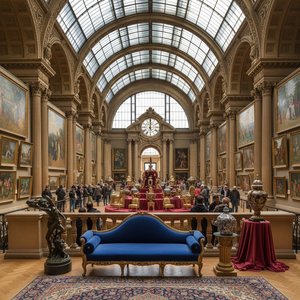
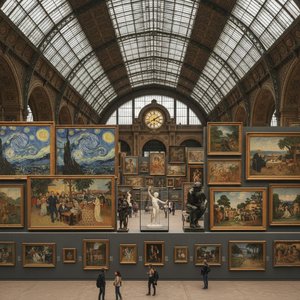
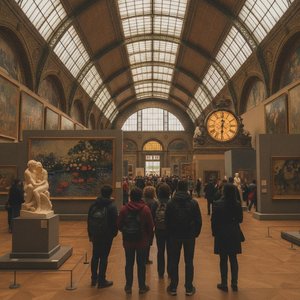
Imagine walking through a grand, sun-drenched cathedral of light, where the rhythmic echoes of steam engines from a bygone era still seem to linger in the soaring ironwork. This is the Musée d'Orsay —a place where industrial history and artistic soul collide. Once a bustling railway terminal on the banks of the Seine, this magnificent Beaux-Arts landmark has been transformed into one of the world’s most enchanting sanctuaries for art, inviting you to step out of the modern rush and into a moment of pure, painterly reflection.
As you wander beneath its vast glass ceilings, you aren't just visiting a museum; you are entering the heart of a revolution. The halls of the d’Orsay hold the most significant assembly of Impressionist and Post-Impressionist masterpieces in existence. Here, the heavy, realistic textures of the mid-19th century begin to dissolve into the flickering light, vibrant colors, and emotive brushstrokes that changed the course of human vision forever. It is a space where the structured world of Gustave Courbet meets the dancing, ethereal light of Claude Monet, creating a dialogue between tradition and innovation that continues to breathe life into every gallery.
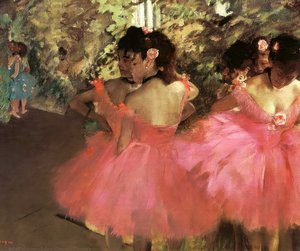
These artworks remain profoundly meaningful today because they capture something universal: the beauty of the fleeting moment. In an age of digital perfection, there is a deep, human comfort in seeing the visible hand of the artist—the thick impasto , the deliberate movement, and the way a single stroke can convey the warmth of a French afternoon or the quiet melancholy of a twilight landscape. These paintings remind us to slow down, to notice the play of shadow on a dancer’s skirt, and to find magic in the everyday.
In the following guide, we will take you on a curated journey through this legendary collection. We have selected 25 essential masterpieces that define the spirit of the Musée d'Orsay—works that are not merely museum pieces, but windows into the very essence of light, color, and emotion. Prepare to lose yourself in the textures of history.
Olympia - Édouard Manet
 Olympia - Édouard Manet
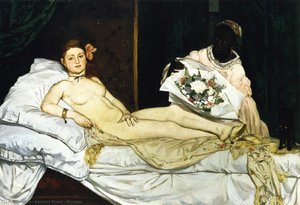
To encounter Olympia by Édouard Manet is to be met by a gaze that refuses to look away. The power of this masterpiece lies in its startling, directional light, which cuts across the canvas to illuminate Olympia’s pale skin against the deep, velvety shadows of her surroundings. This stark use of light and shadow—a bold departure from the soft, idealized glows of the academic era—was exactly what scandalized Paris in 1863. Manet rejected traditional depth, using high-contrast illumination to emphasize the physical reality of the scene, from the crumpled textures of the white bedsheets to the dark, watchful presence of the cat.
As one of the top 25 artworks in Musée d'Orsay, Paris, this painting captures a revolutionary moment where light meets modern truth. For those looking to bring a sense of quiet prestige and dramatic flair to a home, a high-quality reproduction of this work offers incredible depth. The interplay of brilliant whites and rich, dark tones creates a sophisticated focal point that adds a layer of historical luxury and intellectual intrigue to any contemporary room.
Arrangement in Grey and Black. Portrait of the Painter's Mother - James Abbott McNeill Whistler
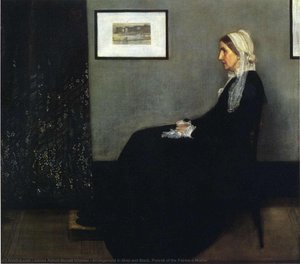 Arrangement in Grey and Black. Portrait of the Painter's Mother - James Abbott McNeill Whistler
In the quiet corners of the Musée d'Orsay, few works command a room with such hushed, dignified power as Arrangement in Grey and Black by James Abbott McNeill Whistler. As you stand before this iconic portrait, you aren't just looking at a likeness of the artist's mother; you are witnessing a masterclass in emotional restraint. The painting captures a profound sense of solitude and resilience through its monochromatic palette, where subtle gradations of charcoal, slate, and bone-white create a rhythmic, almost musical, visual flow.
Whistler’s focus on 'art for art’s sake' strips away distracting narratives, leaving only the soulful weight of the subject's profile and the somber elegance of her silhouette. This piece is a cornerstone of the museum's top 25 artworks because it serves as a universal mirror for our own moments of contemplation. Bringing this sense of tonal harmony into your own home can transform a busy living space into a personal sanctuary, offering a window of profound calm and a sophisticated, understated grace that invites deep reflection.
Gare Saint Lazare, Pari - Claude Monet
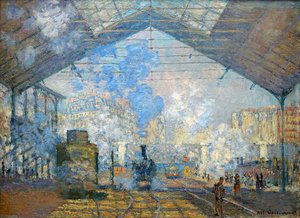 Gare Saint Lazare, Pari - Claude Monet
There is a profound, rhythmic magic in watching the world rush by, a feeling captured perfectly in Gare Saint-Lazare, Paris by Claude Monet. In this 1877 masterpiece, Monet doesn't just paint a station; he captures the very breath of a modernizing city. As you stand before it, you can almost feel the warmth of the steam and hear the distant whistle of a locomotive cutting through the hazy, blue-grey atmosphere. It is a poetic meditation on transience—the beauty found in a single, fleeting moment of movement.
This work earns its place among the top 25 artworks in Musée d'Orsay because it redefined how we perceive industrial life, transforming iron and smoke into something ethereal and light-drenched. The visible, energetic brushstrokes create a sense of motion that remains breathtaking over a century later. At Mus3ums.com, we love helping you bring this same sense of atmospheric wonder into your own home. Our handmade oil reproductions preserve Monet’s signature texture and the delicate interplay of light, allowing you to invite the soulful, bustling energy of historic Paris into your living space.
The Great Bathers (The Nymphs) - Pierre-Auguste Renoir
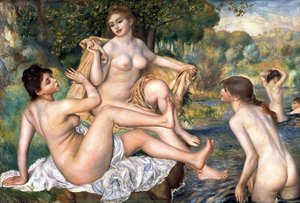 The Great Bathers (The Nymphs) - Pierre-Auguste Renoir
In The Great Bathers (The Nymphs) , the lines of Renoir’s brush aren’t merely drawn; they are choreographed . This is not just a composition of figures by a river; it is a dance frozen in time . As you stand before this 1919 masterpiece in the Musée d'Orsay, you witness the artist’s late-career evolution, where the fleeting light of Impressionism meets a new, sculptural monumentality. The soft, dappled sunlight filters through lush greenery, casting a shimmering glow across skin tones rendered in delicate peaches and warm pinks.
Renoir uses thick, tactile impasto to capture the rhythmic pulse of water and the weight of form, creating a scene that feels both eternal and ephemeral. There is a profound sense of harmony here—a celebration of peace and natural grace following the shadows of World War I. What if your own living room could hold that same balance? What if your walls could breathe rhythm and invite that same serene, sun-drenched tranquility into your home?
Two Women on the Beach - Eugène Henri Paul Gauguin
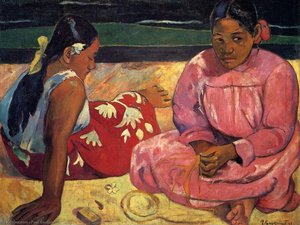 Two Women on the Beach - Eugène Henri Paul Gauguin
In Two Women on the Beach , Paul Gauguin invites us into a profound Tahitian reverie, where the boundaries between reality and dream begin to dissolve. As one of the most significant works within the Musée d'Orsay’s collection, this masterpiece stands as a cornerstone of Post-Impressionism, marking a radical departure from Western naturalism toward a more symbolic, emotional language. Gauguin uses bold, flat planes of color and heavy outlines—a technique known as Cloisonnism—to capture the quiet intimacy of two women engaged in a moment of serene connection.
The palette is a warm symphony of ochre, deep reds, and sun-drenched pinks, evoking the tropical heat and the rhythmic pulse of Polynesian life. Beyond its historical importance, the painting asks us to reconsider how we perceive beauty: not through photographic accuracy, but through the raw essence of mood and light. For the modern collector, the vibrant textures and soulful atmosphere of this work offer endless inspiration, bringing a sense of exotic tranquility and timeless prestige to any curated interior space.
Dance at the Moulin de la Galette - Pierre-Auguste Renoir
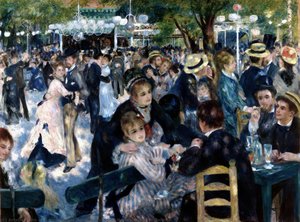 Dance at the Moulin de la Galette - Pierre-Auguste Renoir
Step into a sun-drenched afternoon in Montmartre with Dance at the Moulin de la Galette by Pierre-Auguste Renoir. This masterpiece is more than just a painting; it is a rhythmic celebration of life, capturing the dappled sunlight and joyful movement of a Parisian crowd. As one of the most iconic works within the Musée d'Orsay, Paris , it earns its place in our Top 25 by redefining how we perceive light and social harmony through soft pastels and energetic, visible brushstrokes.
Renoir doesn't just show you a dance; he makes you feel the warmth of the afternoon and the murmur of conversation. At Mus3ums.com, we believe this kind of infectious energy shouldn't be confined to museum walls. Imagine this luminous scene bringing a sense of effortless elegance and vitality to your own living space. Whether you are looking for a centerpiece that sparks conversation or a soft, impressionistic touch for a bedroom sanctuary, bringing Renoir’s radiant world into your home turns any room into a sophisticated personal gallery.
The Card Players - Paul Cézanne
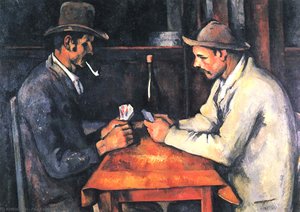 The Card Players - Paul Cézanne
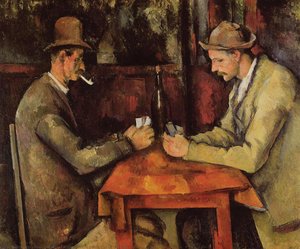
What story does the quiet tension within the dimly lit tavern of The Card Players by Paul Cézanne tell us about the beauty of the everyday? As one of the most profound highlights in our journey through the top 25 artworks in Musée d'Orsay, Paris, this masterpiece captures a moment where time seems to suspend itself. Moving away from the fleeting light of Impressionism, Cézanne uses earthy ochres, deep browns, and structured, blocky forms to grant these Provençal peasants a sense of eternal dignity.
The painting’s heavy, tactile atmosphere—achieved through deliberate, sculptural brushstrokes—offers more than just a historical glimpse; it provides a soulful anchor for the modern home. In an era of constant digital noise, bringing the muted, contemplative mood of this Post-Impressionist icon into your living space creates a curated escape. It invites a sense of groundedness and permanence, turning a simple wall into a window onto a world of quiet strength and timeless human connection.
The origin of the world - Gustave Courbet
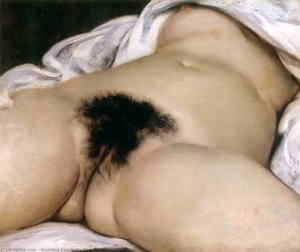 The origin of the world - Gustave Courbet
Step into a moment of profound, unfiltered intimacy with Gustave Courbet’s 1866 masterpiece, The Origin of the World . As you stand before this provocative work in the Musée d'Orsay, the world around you seems to fade, replaced by a striking study of light, shadow, and raw human presence. There is no distant landscape or mythological backdrop here; instead, Courbet forces an immediate, visceral confrontation through a tight, cinematic crop of the female form.
The painting breathes with a heavy, earthy palette—warm ochres, creamy flesh tones, and deep, dramatic shadows that sculpt the body with almost tactile realism. By rejecting the polished, idealized nudes of the Academy, Courbet uses masterful chiaroscuro to celebrate the textures of reality, from the softness of skin to the unapologetic details of nature. This bold assertion of Realism invites a sense of fearless authenticity into your own surroundings. Much like a well-placed statement piece in a modern home, this artwork inspires a courageous appreciation for beauty in its most honest and unadorned state, turning any space into a sanctuary for deep reflection and soulful truth.
Three Muses - Denis Maurice
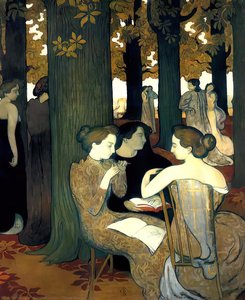 Three Muses - Denis Maurice
Imagine stepping into a sun-dappled clearing where the boundary between reality and dream dissolves into a soft, golden haze. In Three Muses , Maurice Denis invites us into an enchanted forest, a sanctuary of tranquility that feels as though it exists just beyond the veil of our waking world. This 1893 masterpiece is a breathtaking fusion of Symbolism and Art Nouveau, where organic, flowing lines and deep, earthy tones of moss green and gilded amber create a rhythmic harmony with the natural landscape.
As you observe the figures gathered in intimate conversation, you feel the profound stillness of a shared secret. This painting earns its place among the top 25 artworks in Musée d'Orsay because it captures more than just a moment; it captures an atmosphere of spiritual peace. For the modern home, bringing such a piece into your space—perhaps as a textured oil reproduction—offers a way to reclaim that sense of quietude and wonder, transforming a simple room into a personal retreat of beauty and grace.
Family Reunion - Frédéric Bazille
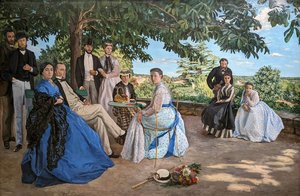 Family Reunion - Frédéric Bazille
Step into a sun-drenched afternoon of connection with Family Reunion by Frédéric Bazille, a painting that breathes the very essence of warmth and togetherness. As one of the most cherished highlights in our journey through the top 25 artworks in Musée d'Orsay, Paris, this 1867 masterpiece serves as a beautiful precursor to the Impressionist revolution. Bazille, a close confidant of Monet and Renoir, captures a vibrant social gathering beneath a lush canopy, where the interplay of light and intricate textures creates a rhythmic, lively atmosphere.
What makes this work irreplaceable is its ability to transform a simple outdoor picnic into a profound symbol of unity and shared joy. The meticulous detail in the figures' attire and the soft, natural palette evoke a sense of timeless elegance that transcends the nineteenth century. For the modern decorator, such a piece offers more than just color; it brings a soulful, tranquil energy to a room. At Mus3ums, we believe in democratizing this level of beauty, allowing you to bring the transformative presence and historical prestige of Bazille’s masterpiece into your own home, office, or personal gallery through our high-fidelity reproductions.
Luxe, Calme, et Volupté (compositional study) - Henri Matisse
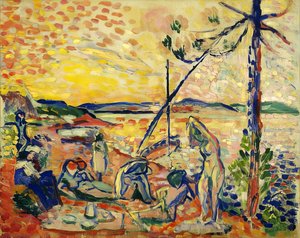 Luxe, Calme, et Volupté (compositional study) - Henri Matisse
In the sun-drenched halls of the Musée d'Orsay, Luxe, Calme, et Volupté (compositional study) by Henri Matisse serves as a breathtaking portal into the dawn of Fauvism. This 1904 masterpiece captures more than just a coastal scene; it embodies a profound emotional shift toward pure, uninhibited color. As a pivotal work in our collection of the top 25 artworks in Musée d'Orsay, Paris, this study showcases Matisse’s transition from traditional forms to a rhythmic, vibrant language where bold, expressive brushstrokes dance across the canvas.
The painting radiates a sense of warmth and vitality, using intense hues to evoke the feeling of a Mediterranean afternoon. For the modern decorator, this piece offers incredible versatility; its energetic palette and sense of leisure make it a stunning focal point for a bright living space or a serene bedroom sanctuary. Much like the contemporary trend of using art to define a room's mood, Matisse’s use of light and organic shapes invites a feeling of effortless luxury and connection to nature into any home interior.
Young Girls at the Piano - Pierre-Auguste Renoir
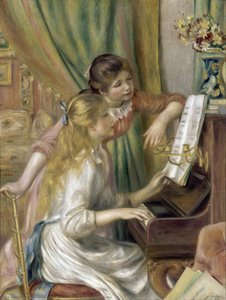 Young Girls at the Piano - Pierre-Auguste Renoir
To stand before Young Girls at the Piano by Pierre-Auguste Renoir is to step into a whispered moment of pure, domestic grace. As one of the most cherished treasures within the top 25 artworks in Musée d'Orsay, Paris, this 1892 masterpiece transcends mere paint on canvas; it is an invitation to witness the soft glow of innocence. Renoir, an Impressionist master, utilizes his signature fluid brushstrokes to dissolve hard edges, replacing them with a luminous atmosphere where light seems to breathe.
The composition radiates a sense of refined tranquility, perfect for those who appreciate how classical beauty anchors a modern, sophisticated interior. A harmonious palette of delicate pinks, soft blues, and warm golds dances across the scene, mirroring the gentle interaction between the two figures. The piano acts as a soulful anchor, symbolizing cultural refinement and the timeless joy of melody. For the discerning collector, this work offers more than visual delight; it provides an emotional sanctuary, bringing the warmth of a sun-drenched afternoon into any curated space.
Camille Monet On Her Deathbed - Claude Monet
 Camille Monet On Her Deathbed - Claude Monet
In Camille Monet On Her Deathbed , Claude Monet achieves a breathtaking mastery of light that transcends mere portraiture, turning a moment of profound grief into an ethereal experience. The painting is defined by a hauntingly soft, diffused illumination that seems to emanate from within the canvas itself. Rather than using sharp shadows, Monet employs a delicate play of cool blues, muted greys, and spectral whites to create a sense of spiritual transcendence. This subtle use of light and shadow—a masterful approach to atmosphere over anatomy—is precisely what secures its place among the top 25 artworks in Musée d'Orsay, Paris .
The way the light catches the thick, impasto textures of the shroud creates a tactile depth that feels both heavy with sorrow and light with memory. For those looking to bring a sense of quiet prestige into their own homes, a faithful reproduction of this piece offers more than just decor; it introduces a layer of soulful luxury. The painting’s ability to transform a somber subject into a glowing, dreamlike vision adds an incomparable emotional depth and a sophisticated, moody elegance to any contemporary wall.
Red Roofs, Corner of a Village, Winter - Camille Pissarro
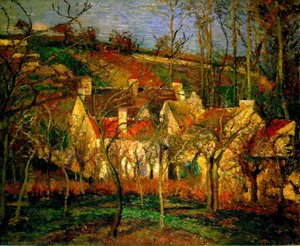 Red Roofs, Corner of a Village, Winter - Camille Pissarro
In Red Roofs, Corner of a Village, Winter by Camille Pissarro, the landscape unfolds through a masterful arrangement of organic shapes and rhythmic geometry. The composition is anchored by the steeply pitched, terracotta-toned rooftops that cascade down a gentle slope, creating a series of diagonal lines that guide the eye through the village. These structural elements are balanced by the vertical, skeletal silhouettes of bare trees, establishing a sense of equilibrium that feels both grounded and ethereal. This precise structural harmony is what secures its place among the top 25 artworks in Musée d'Orsay, Paris ; it offers a timeless perfection that transcends the era of its creation.
For the modern decorator, Pissarro’s work offers a surprising connection to contemporary aesthetics. The painting’s internal balance—the way weight is distributed between the warm earth tones and the muted, misty sky—mirrors the principles of modern minimalist design . Its ability to provide a focal point of warmth without overwhelming a space makes it an ideal choice for bringing a clean, sophisticated, and tranquil atmosphere to a contemporary home.
Starry Night Over the Rhone - Vincent Willem Van Gogh
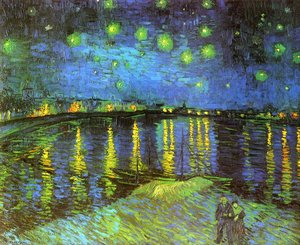 Starry Night Over the Rhone - Vincent Willem Van Gogh
There is a luminous magic in Starry Night Over the Rhone by Vincent van Gogh that seems to pulse with its own heartbeat. As you wander through the Musée d'Orsay, this masterpiece greets you not just as a landscape, but as an emotional experience. The deep, velvety blues of the night sky swirl with celestial energy, while the golden reflections dancing upon the Rhône River create a rhythmic dance of light and shadow.
Van Gogh’s signature impasto technique brings the canvas to life; you can almost feel the thick, textured strokes of paint as they capture the flickering gaslights of Arles. The two solitary figures strolling along the riverbank invite us into a moment of quiet companionship amidst the vastness of the universe. It is a painting that acts as a mirror for our own wonder and melancholy. To bring this piece into your home is to invite a sense of profound peace and cosmic inspiration, reminding you that even in the darkest night, there is an undeniable, radiant beauty waiting to be discovered.
Cart on the Snow Covered Road with Saint-Simeon Farm - Claude Monet
 Cart on the Snow Covered Road with Saint-Simeon Farm - Claude Monet
Stepping into the presence of Cart on the Snow Covered Road with Saint-Simeon Farm is like stepping into a quiet, frozen moment of history. Claude Monet, the undisputed master of light, captures the profound stillness of the French countryside in this 1865 masterpiece. The scene unfolds through a palette of ethereal whites, icy blues, and soft grays, where a winding, snow-dusted path leads your eye toward the distant, humble silhouette of the farm.
There is a rhythmic, tactile beauty in Monet’s early brushwork; you can almost feel the crispness of the winter air and the crunch of the frost. The solitary horse-drawn carriage serves as a poignant symbol of peaceful solitude, offering a sense of tranquility that remains incredibly relevant for modern living. Owning a piece of this legacy isn't merely about decoration; it is an inheritance of taste. At Mus3ums, we bring this lineage of the Musée d'Orsay directly to your home, allowing you to wrap your space in the same serene, light-drenched atmosphere that has captivated collectors for centuries.
The Floor Scrapers (also known as The Floor Strippers) - Gustave Caillebotte
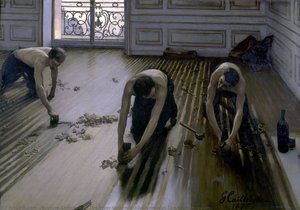 The Floor Scrapers (also known as The Floor Strippers) - Gustave Caillebotte
There is a profound, quiet strength in The Floor Scrapers by Gustave Caillebotte that lingers long after you turn away from the canvas. While many visitors to the Musée d'Orsay seek the ethereal light of Monet, this masterpiece offers something more grounded: a mirror to the dignity of the human condition . Through a masterful blend of Realism and Impressionism, Caillebotte captures three laborers lost in the rhythmic, arduous task of refinishing a grand wooden floor.
The composition is a lesson in perspective; the diagonal lines of the floorboards draw your eye deep into the scene, where muted earth tones and soft, naturalistic light from an unseen window illuminate the texture of wood shavings and muscular effort. It is a study in subdued elegance —the contrast between the humble, repetitive labor and the opulent setting creates a tension that feels remarkably modern. Bringing a piece like this into your home doesn't just decorate a wall; it introduces a sense of groundedness and resilience , reminding us that there is beauty to be found in the most meticulous and unseen moments of life.
Irises in Monet's Garden - Claude Monet
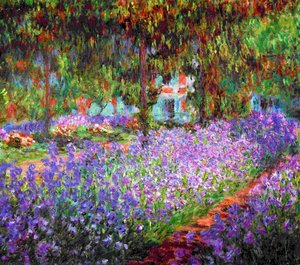 Irises in Monet's Garden - Claude Monet
In Irises in Monet's Garden , Claude Monet achieves a breathtaking mastery of diffused light, where the sun seems to dissolve into the very petals it touches. Rather than using harsh shadows, Monet employs a delicate play of luminosity, allowing soft, atmospheric light to filter through the lush greenery of Giverny. This command over illumination—capturing that fleeting, hazy moment of a midday glow—is precisely what secured this masterpiece's place among the top 25 artworks in Musée d'Orsay, Paris .
The painting is a sensory feast; the vibrant purples and deep blues of the irises emerge from a textured impasto landscape, creating a sense of movement as if the garden itself is breathing. For those looking to elevate a contemporary home, a high-quality reproduction of this piece offers more than just color. The way the light appears to dance across the visible brushstrokes adds an incredible layer of depth and organic luxury to a modern wall. It transforms a simple room into a serene sanctuary, bringing the tranquil, light-drenched spirit of French Impressionism directly into your living space.
Noon Rest from Work after Millet - Vincent Willem Van Gogh
 Noon Rest from Work after Millet - Vincent Willem Van Gogh
In Noon Rest from Work after Millet by Vincent van Gogh, a radiant, sun-drenched gold dominates the canvas, casting a mood of profound warmth and quietude. This mastery of ochre and bright yellow, contrasted against a soft, turbulent blue sky, is precisely why this piece remains a cornerstone of the top 25 artworks in Musée d'Orsay, Paris. Van Gogh does not merely replicate Millet; he breathes emotional life into the scene through thick, tactile impasto strokes that make the wheat field feel alive with energy.
For those looking to curate a soulful interior, this painting offers an incredible way to introduce organic warmth and serenity into a modern living space or dining room. The earthy palette of gold, brown, and muted green acts as a natural anchor, perfect for creating a cozy, grounded atmosphere in a contemporary home. Whether you are drawn to its historical significance or its ability to evoke the peaceful rhythm of rural life, this masterpiece brings a sense of timeless tranquility to any collection.
The Harbour at Argenteuil - Claude Monet
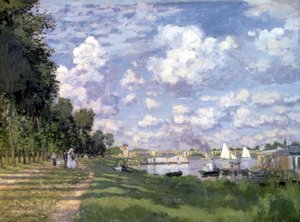 The Harbour at Argenteuil - Claude Monet
Imagine standing on the banks of the Seine in 1872, feeling the gentle breeze and watching the sunlight dance across a shimmering river. Claude Monet’s The Harbour at Argenteuil captures this exact moment of pure, sun-drenched tranquility. As one of the most beloved treasures within the Musée d'Orsay collection, this masterpiece is a masterclass in the Impressionist spirit. Monet uses loose, rhythmic brushstrokes to weave together a palette of soft blues, pale pinks, and luminous yellows, creating an atmosphere where the sky and water seem to breathe in unison.
The painting does more than just depict a landscape; it invites a sense of profound calm into the viewer's soul. The way the light diffuses through the clouds and reflects off the sailboats offers a rhythmic, peaceful energy that is incredibly restorative. For those looking to curate a home sanctuary, bringing this piece into your living space can transform a room into a place of reflection and serenity. It is an exquisite choice for anyone seeking to ground their modern interior with the timeless, light-filled beauty of 19th-century France.
Harvest - Charles-François Daubigny
 Harvest - Charles-François Daubigny
In the grand tapestry of the Musée d'Orsay, Charles-François Daubigny’s Harvest (1851) serves as a profound bridge between the structured realism of the past and the luminous freedom of Impressionism. As a cornerstone of the Barbizon School, this masterpiece captures more than just a seasonal moment; it embodies a soulful connection to the earth. The canvas breathes with the golden warmth of wheat fields under a soft, diffused sky, where the rhythmic movement of farmers and a lone figure on horseback celebrate the quiet dignity of rural labor.
Daubigny’s mastery lies in his ability to use visible, tactile brushstrokes to create a sense of living atmosphere. The striking contrast of a vibrant red accent against earthy ochres and muted greens draws the eye deep into the landscape, inviting us to reflect on the timeless cycle of abundance and nature's enduring peace. For the modern collector, bringing the essence of Harvest into a home offers a serene escape—a way to infuse a contemporary space with the tranquil, sun-drenched beauty of the French countryside.
Water-Lilies (12) - Claude Monet
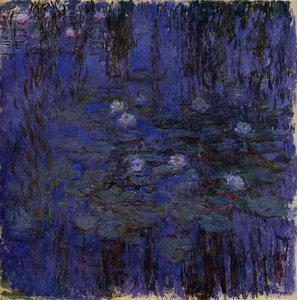 Water-Lilies (12) - Claude Monet
As Claude Monet struggled with the encroaching shadows of cataracts, his world began to blur into a dreamscape of deep violets and luminous blues—a transformation that birthed the breathtaking intimacy of Water-Lilies (12) . This 1916 masterpiece is not merely a painting of a pond; it is a profound sensory immersion. Within the halls of the Musée d'Orsay, this work stands as a pinnacle of the Impressionist movement, where the boundaries between water, sky, and flora dissolve into a single, shimmering plane.
Monet’s technical genius lies in his use of broken color; by applying rhythmic, textured brushstrokes, he allows the eye to optically blend hues of indigo and soft lavender, capturing the fleeting pulse of light at dusk. The composition lacks a traditional horizon, pulling the viewer into a weightless, meditative state. This sense of boundless tranquility and focused presence makes such a piece an extraordinary choice for a modern study or home office, where its serene atmosphere can inspire deep concentration and a sophisticated, calm productivity.
Hospital Saint-Paul at Saint-Rémy-de-Provence - Vincent Willem Van Gogh
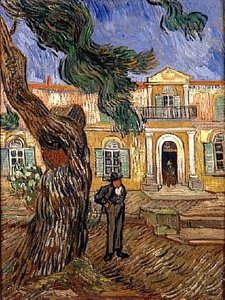 Hospital Saint-Paul at Saint-Rémy-de-Provence - Vincent Willem Van Gogh
In Hospital Saint-Paul at Saint-Rémy-de-Provence , the lines aren’t merely drawn; they are choreographed . This is not just a depiction of an asylum; it is a dance frozen in time , where the vibrant yellow walls and rhythmic green shutters pulse with a life of their own. Painted during Van Gogh's profound stay at the Saint-Rémy asylum, the work captures a moment where chaos finds its way into harmony.
As you wander through the Musée d'Orsay, this masterpiece invites you to feel the texture of his emotional journey. The architecture, complete with a delicate balcony and a watchful clock, serves as a backdrop to the swirling energy of Post-Impressionism. The bold, impasto brushstrokes create a sense of movement that makes the canvas breathe rhythm . What if your own home could hold this same balance? Bringing such a soulful piece into your space allows you to surround yourself with the transformative power of light and color, turning a simple wall into a window of profound emotional depth.
Burial at Ornans - Gustave Courbet
 Burial at Ornans - Gustave Courbet
In the grand halls of the Musée d'Orsay, few works command the room with such raw, unapologetic gravity as Burial at Ornans by Gustave Courbet. To look at this painting is to witness a revolution; its lines aren’t merely drawn, they are choreographed in a somber, horizontal procession of grief. This is not just a composition; it is a dance frozen in time , where over fifty figures from all walks of life move through a landscape of muted earth tones, blacks, and heavy grays.
Courbet shattered the polished illusions of the Academy, replacing idealized beauty with the palpable texture of reality. You can almost feel the weight of the damp soil and the rough, impasto brushstrokes that give the mourners such visceral presence. The way the light diffuses over the crowd creates a stage-like atmosphere, turning a local funeral into a universal meditation on mortality. What if your own home could hold that same profound balance? Imagine a space where your walls breathe rhythm and depth, anchored by the quiet prestige of such a monumental masterpiece.
Water-Lily Pond, Symphony in Rose - Claude Monet
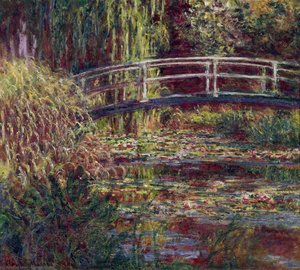 Water-Lily Pond, Symphony in Rose - Claude Monet
In Water-Lily Pond, Symphony in Rose , Claude Monet achieves a breathtaking mastery of light that transcends mere landscape painting. The work is defined by a luminous, ethereal glow, where the sun seems to dissolve the boundaries between water and sky. Rather than using traditional shadows, Monet employs a delicate dance of pinks, whites, and soft blues to simulate the way sunlight filters through the atmosphere, creating a shimmering, liquid surface. This sophisticated command of illumination was revolutionary; it moved art away from rigid forms toward a sensory experience of pure light.
As one of the top 25 artworks in Musée d'Orsay, Paris , this masterpiece captures a fleeting moment of tranquility that has captivated collectors for decades. When brought into a modern home, a high-quality reproduction of this piece—with its visible, textured brushstrokes—adds an incredible sense of depth and airy luxury to any room. The way the light-drenched pigments interact with your space can transform a simple wall into a window of serene, Impressionist beauty, making it a perfect centerpiece for those looking to decorate with soul and movement.
Conclusion
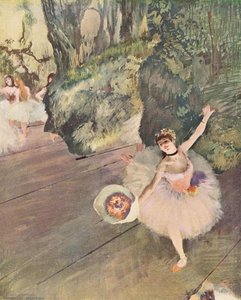
As the golden light of a Parisian dusk settles over the Seine, leaving the iron bones of the Gare d’Orsay in soft shadow, we find ourselves reflecting on more than just a list of masterpieces. To walk through these galleries is to witness a profound dialogue between light and life—a conversation that began over a century ago and continues to resonate within our own modern lives. These paintings are not merely relics of a bygone era or static treasures locked behind museum glass; they are living presences. They carry the rhythmic energy of Degas’ dancers, the quiet morning mist of Monet’s landscapes, and the soulful, textured truth of Courbet’s realism directly into the present moment.
There is a unique magic in bringing these echoes of human creativity into your own sanctuary. When you choose to surround yourself with the textures of an Impressionist brushstroke or the luminous palette of a Post-Impressionist dream, you are doing more than decorating a room; you are inviting grace, movement, and inspiration into your daily rituals. Whether it is a large-scale canvas that anchors a living space or a delicate reproduction that adds a whisper of color to a quiet corner, these works serve as gentle reminders of the beauty found in fleeting moments and the enduring strength of the human spirit.
We invite you to continue this journey of discovery and to find the piece that speaks to your unique story. Let the light of the Musée d’Orsay illuminate your home, transforming your personal space into a gallery of emotion and timeless elegance. You can explore our full collection to find the masterpiece that resonates with your heart and completes your world.