Giovanni Battista Cima da Conegliano: Serenity Embodied in Venetian Renaissance Art
Giovanni Battista Cima da Conegliano (c. 1459 – 1517) stands as a pivotal figure within the Venetian Renaissance, renowned for his masterful depictions of Madonna and Child compositions imbued with an unparalleled sense of tranquility and elegant symmetry. Born in Conegliano Veneto, Italy, Cima’s artistic journey unfolded amidst the burgeoning intellectual fervor of his era—a period marked by humanist ideals and a renewed fascination with classical art forms. His influence extended beyond mere stylistic imitation; he actively participated in shaping the visual language of Venetian painting, leaving an indelible mark on subsequent generations of artists.- Early Life & Training: Precise biographical details surrounding Cima’s formative years remain elusive, shrouded in historical obscurity. However, evidence suggests that he honed his skills under Lorenzo di Credi, a celebrated Florentine painter who championed the humanist spirit and incorporated elements of Leonardo da Vinci's innovative techniques into his own oeuvre. This mentorship undoubtedly instilled in Cima a profound appreciation for anatomical accuracy and expressive realism—principles that would permeate his artistic endeavors.
- Venetian Artistic Landscape: Conegliano’s location within Veneto, the epicenter of Venetian artistic dynamism, provided Cima with an ideal environment for cultivating his talent. The city's patronage system fostered creativity and encouraged experimentation, propelling artists like Cima to explore new stylistic horizons. He collaborated closely with fellow masters such as Francesco Mazzola and Vittore Belliniano, fostering a vibrant artistic community that propelled Venetian painting to unprecedented heights.
Style & Technique: The Pursuit of Serene Symmetry
Cima’s distinctive style is characterized by its remarkable stillness—a deliberate antithesis to the turbulent emotional expressions prevalent in contemporary art. He achieved this profound serenity through meticulous compositional planning, employing a technique known as “disposizione,” which prioritized balanced groupings of figures and harmonious spatial arrangements. Unlike many artists of his time who sought dramatic visual impact, Cima favored subtle nuances of color and light—creating canvases that radiate an aura of contemplative peace. His masterful use of sfumato—a blurring technique pioneered by Leonardo da Vinci—further enhanced the ethereal quality of his paintings, lending them an otherworldly luminescence.Notable Works & Artistic Legacy
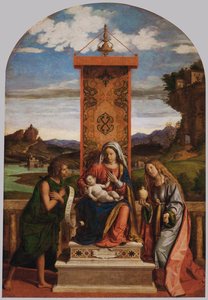
Cima’s artistic output comprises a considerable number of Madonna and Child paintings, many adorned with saints—most notably “Madonna and Child with Saints Francis and Clare” (National Gallery London) and “Sacra Conversazione or Rest on the Flight into Egypt,” currently housed in Venice's Santa Maria dei Carmini church. These masterpieces exemplify Cima’s stylistic hallmarks: balanced compositions, luminous color palettes, and an unwavering commitment to conveying spiritual contemplation. His influence extended beyond his immediate contemporaries; he served as a teacher to Carlo da Conegliano and Vittore Belliniano—artists who carried forward Cima's aesthetic principles into subsequent artistic lineages.Historical Significance & Enduring Appeal
Giovanni Battista Cima da Conegliano’s contribution to Venetian Renaissance art transcends mere stylistic innovation. He embodies the humanist ideal of achieving inner harmony through careful observation and reasoned contemplation—a perspective that resonates powerfully with audiences today. His paintings continue to captivate viewers with their serene beauty and profound spiritual depth, serving as enduring reminders of the transformative power of artistic vision. Cima’s legacy resides not only in his technical prowess but also in his unwavering dedication to capturing the essence of human experience—a testament to the enduring relevance of Venetian Renaissance art.よくあるご質問
ジョヴァンニ・バッティスタ・チマ・ダ・コネリャーノの出身地(都市および国)はどこですか?
ジョヴァンニ・バッティスタ・チマ・ダ・コネリャーノは、イタリアのコネリアーノで生まれました。
ジョヴァンニ・バッティスタ・チマ・ダ・コネリャーノには他にどのような名で知られているものがありますか?
ジョヴァンニ・バッティスタ・チマ・ダ・コネリャーノは、ジョヴァンニ・バッティスタ・チマ, チマ・ダ・コネリャーノ, ジョヴァンニ・バッティスタ・ダ・コネリャーノ, ジョヴァンニ・バッティスタ・ディ・コネリャーノという名でも知られています。
ジョヴァンニ・バッティスタ・チマ・ダ・コネリャーノの出生地と誕生年はいつですか?
ジョヴァンニ・バッティスタ・チマ・ダ・コネリャーノは1459年、コネリアーノに生まれました。