Giuseppe Abbati: Life and Legacy
Early Life and Training
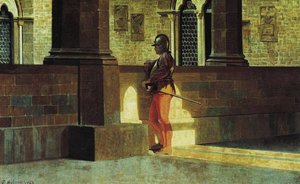
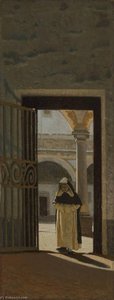
Giuseppe Abbati was born in Naples, Italy, on January 13, 1836. He received his initial artistic training from his father, Vincenzo Abbati, who specialized in paintings of architectural interiors. This early influence is evident in Giuseppe’s first works, which also focused on interior scenes.
Military Service and the Macchiaioli
Abbati's life took a dramatic turn when he participated in Garibaldi’s 1860 campaign for Italian unification. During the Battle of Capua, he tragically lost his right eye. Following this experience, he moved to Florence, a pivotal moment that shaped his artistic trajectory. In Florence, at the famed Caffè Michelangiolo, he connected with key figures who would become known as the Macchiaioli – Giovanni Fattori, Silvestro Lega, and others.
Artistic Development and Style
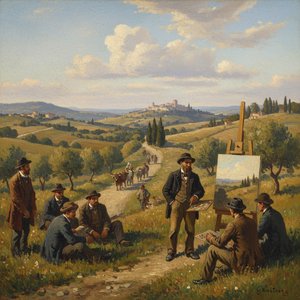
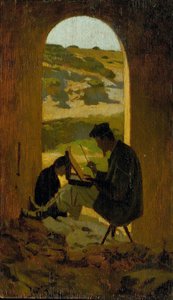
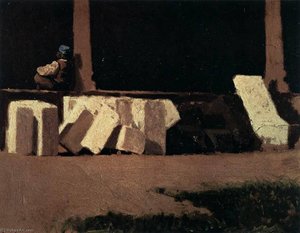
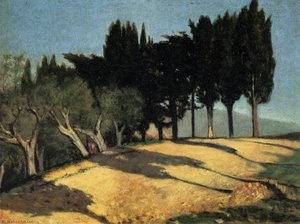
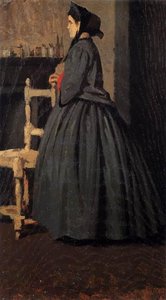
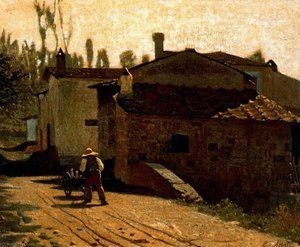
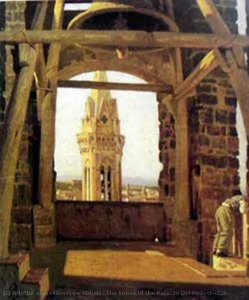
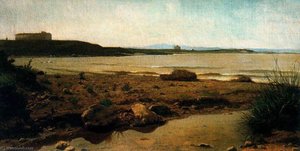
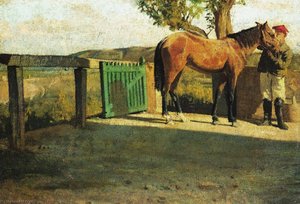
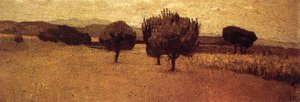
Initially recognized for his interior views—for which he even received a medal at the National Exposition in Florence in 1861 (which he refused as protest against the jury)—Abbati soon embraced plein air painting, influenced by his new circle of artists. His style became characterized by a bold treatment of light and shadow, focusing on capturing luminous effects in landscapes. He often depicted scenes viewed through doorways or windows, creating a sense of depth and atmosphere.
Key Characteristics of Abbati’s Work
- Bold Light Effects: A defining feature of his paintings.
- Plein Air Painting: Embracing the practice of painting outdoors to capture natural light.
- Horizontal Formats: Many of his landscapes, like “View of Castiglioncello,” are elongated horizontally, a common preference among the Macchiaioli.
- Dramatic Contrasts: Juxtaposing luminous outdoor scenes with darkened interiors.
Later Life and Untimely Death
Abbati’s artistic pursuits were again interrupted in 1866 when he enlisted in the army for the Third Independence War. He was captured by Austrian forces in Croatia before returning to civilian life at the end of the year. He spent his final year painting in the countryside near Castelnuovo della Misericordia. Tragically, Abbati died on February 21, 1868, in Florence, after being bitten by his own dog and contracting rabies.
Influences and Historical Significance
Abbati was significantly influenced by the ideals of the Macchiaioli movement, which sought to break away from academic traditions and embrace a more realistic depiction of Italian life. He contributed to the Risorgimento artistic expression through his depictions of landscapes and everyday scenes. While his career was cut short, Abbati’s work remains important for its innovative use of light, its connection to the Macchiaioli aesthetic, and its reflection of a pivotal period in Italian history.
Notable Works
- “View from the Wine Cellar of Diego Martelli” (1866)
- “Landscape at Castiglioncello” (1867)
- “Cloister” (1861)
- “Gallery with Armor Bearer” (1864)
よくあるご質問
ジュゼッペ・アッバティには他にどのような名で知られているものがありますか?
ジュゼッペ・アッバティは、Giuseppe Abbatiという別名でも表記されます。
ジュゼッペ・アッバティの出生地と誕生年はいつですか?
ジュゼッペ・アッバティは1836年、ナポリに生まれました。
ジュゼッペ・アッバティの出身地(都市および国)はどこですか?
ジュゼッペ・アッバティは、イタリアのナポリで生まれました。