The Sculptor of Baroque Splendor: The Life and Legacy of Ignaz Lengelacher
In the heart of the eighteenth century, amidst the swirling grandeur of the Baroque era, the name Ignaz Lengelacher emerged as a symbol of divine craftsmanship and architectural elegance. Born on July 25, 1698, near Peißenberg in Germany, Lengelacher’s journey was one of movement and metamorphosis, spanning from the imperial workshops of Vienna to the aristocratic courts of South Moravia and eventually to the courtly circles of Baden. His life was not merely a sequence of dates, but a continuous pursuit of capturing the ephemeral beauty of faith and power through the enduring medium of stone and wood.
Lengelacher’s artistic soul was forged in the crucible of the most prestigious workshops in Europe. By 1717, he had become an essential assistant to masters such as Giovanni Stanetti, Lorenzo Mattielli, and Giovanni Giuliani. Within these Viennese studios, he breathed the air of innovation that defined the Habsburg era, contributing to the creation of breathtaking sculptures for the gardens of the Belvedere Palaces. This early period was a masterclass in the dynamic movement and anatomical precision that would later define his independent work. The influence of Venetian masters like Alessandro Falconetto lingered in his approach, imbuing his compositions with a sense of theatricality and light that transformed static figures into breathing entities.
A Master of the Dietrichstein Court and Sacred Spaces
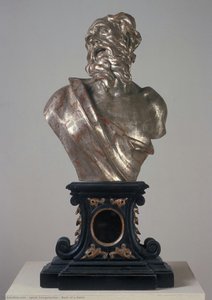
The trajectory of Lengelacher’s career reached a monumental peak when he entered the service of Walther Franz Xaver Anton, Prince of Dietrichstein. Tasked with the restoration and decoration of Nikolsburg Castle following a devastating fire, Lengelacher became more than a mere craftsman; he became an architect of prestige. His work at Nikolsburg was incredibly diverse, ranging from delicate putti and intricate reliefs to robust animal figures and ornamental amphorae. He possessed a rare ability to harmonize his sculptural output with the surrounding architecture, ensuring that every bust and ornament served the greater narrative of the castle’s magnificence.
Beyond the walls of the palace, Lengelacher’s hand guided the spiritual landscape of South Moravia. His devotion to religious iconography led him to create profound works for various ecclesiastical sites. He was particularly drawn to the figure of Saint John of Nepomuk, crafting statues that stood as sentinels of faith in locations such as Wolframitz and Kanitz. His ability to adapt his style—changing composition and expression to suit the specific emotional weight of a setting—allowed him to breathe life into altars and pulpits. Whether designing the main altar for the church in Unterwistern to feature Saint Michael or decorating the Benedictine Church of Saints Peter and Paul in Groß Raigern, his work always sought to bridge the gap between the earthly and the divine.
The Final Act: From Moravia to the Court of Baden
As the mid-eighteenth century approached, the winds of change began to stir within Lengelacher’s life. In 1754, in a move that remains a subject of historical intrigue, he auctioned off his workshop inventory and departed from the region where he had achieved such renown. This transition led him back to Germany, where he established himself in Karlsruhe. His reputation preceded him, earning him the prestigious title of Court Sculptor for the Margraviate of Baden. This final chapter of his career solidified his status as a premier artist of the age, capable of serving both the highest ecclesiastical authorities and the most powerful secular rulers.
The historical significance of Ignaz Lengelacher lies in his role as a cultural bridge-builder. His work unified the stylistic flourishes of Vienna with the local traditions of Moravia and the formal requirements of German courts. Through his hands, the heavy weight of stone was made to feel light, and the rigid demands of architecture were softened by the grace of sculpted form. Today, his legacy survives in the silent majesty of the Holy Trinity Columns, the intricate Torah arks of synagogues, and the enduring religious statues that continue to watch over the landscapes of Central Europe, reminding us of an era when art was the ultimate expression of human devotion.
Q&A
Ignác Lengelacherは、どの時代に活動していましたか?
Ignác LengelacherはEarly Modernに活動していました。この時代背景は、その画家の活動を歴史の中に位置づけるものです。
Ignác Lengelacherの出生地と誕生年はいつですか?
Ignác Lengelacherは1698年にPeissenbergで生まれました。
Ignác Lengelacherには、他にどのような別名や通称がありますか?
Ignác Lengelacherは、Ignaz Lengelacher, Ignac Lengelacherという別名でも知られています。