Léon Joseph Florentin Bonnat: Life and Legacy
Early Life and Artistic Beginnings
Léon Joseph Florentin Bonnat was born in Bayonne, France, in 1833 and passed away in 1922. His early life took an interesting turn when his family moved to Madrid in 1846, where his father established a bookshop. This relocation proved pivotal for the young Bonnat’s artistic development. While assisting in the shop, he diligently copied engravings of works by Old Masters, fostering a deep passion for drawing and laying the foundation for his future career. He received formal training under Madrazo in Madrid before returning to Paris.Training and Influences
In Paris, Bonnat sought further refinement of his skills, studying under prominent history painters Paul Delaroche and Léon Cogniet. Despite several attempts, he was not immediately accepted into the prestigious École des Beaux-Arts through the Prix de Rome competition. However, a scholarship from Bayonne enabled him to spend three years in Rome (1858–60), an experience that profoundly shaped his artistic vision. During this period, he forged friendships with fellow artists like Edgar Degas, Gustave Moreau, and sculptor Henri Chapu. Bonnat’s style was heavily influenced by the Spanish masters – particularly Velázquez and Jusepe de Ribera – as well as artists like Titian and Van Dyck, whose works he meticulously studied in the Prado Museum.Artistic Development and Style
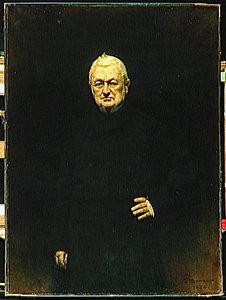
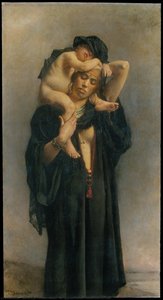
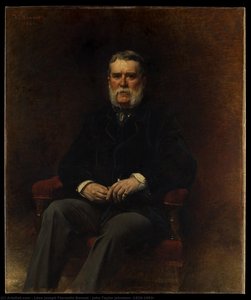
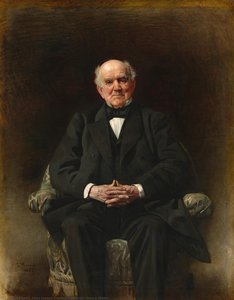
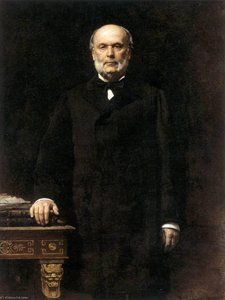
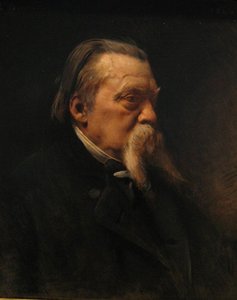
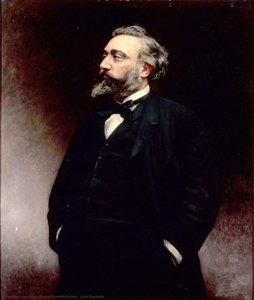
Bonnat quickly established himself as a leading portraitist in Paris, consistently receiving commissions. His portraits reflect the influence of his admired Spanish predecessors, characterized by realism, dramatic lighting, and psychological depth. He also explored religious themes and genre paintings depicting Italian peasants, and occasionally ventured into Orientalist scenes. Bonnat’s work is marked by a stark naturalism and a lack of excessive surface finish, qualities praised by critics like Théophile Gautier, who contrasted him favorably with the more polished style of Bouguereau.Major Achievements and Recognition
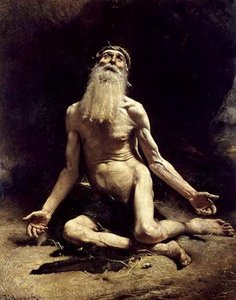
Bonnat achieved significant recognition throughout his career. He received a Medal of Honor in Paris in 1869 and was appointed Grand Officer of the Légion d'honneur. In 1882, he became a professor at the École des Beaux-Arts, where he mentored numerous aspiring artists, including John Singer Sargent, Toulouse-Lautrec, and Gustave Caillebotte. He eventually succeeded Paul Dubois as director of the École in 1905. Bonnat’s teaching philosophy emphasized simplicity, overall effect, and rigorous drawing skills. His most important works include religious paintings such as *Christ on the Cross*, *Job*, and *St Vincent taking the place of two galley slaves*.Historical Significance and Legacy
Bonnat occupied a unique position within the art world of his time, bridging the gap between academic painting and the emerging Impressionist movement. He was a member of the Institute, holding administrative power over the Academy and École des Beaux-Arts. Despite this affiliation with traditional institutions, he supported independent artists like Edgar Degas, Auguste Rodin, and even defended Gustave Courbet’s submissions to the Salon. In a testament to his gratitude for early support, Bonnat founded the Musée Bonnat in his hometown of Bayonne, housing an exceptional collection of Old Master drawings alongside his own works. His legacy endures through his paintings, his influential teaching career, and the museum he established, preserving artistic heritage for future generations.Notable Works
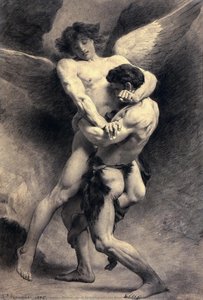
- Jacob Wrestling with the Angel
- Job
- Christ on the Cross
- Portrait of Prince Viacheslav Tenishev
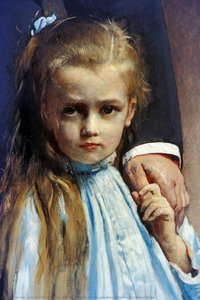
- Pasteur and his granddaughter Camille Vallery-Radot
よくあるご質問
レオン・ボナ)には、他にどのような別名や通称がありますか?
レオン・ボナ)は、レオン・ジョセフ・フロランタン・ボナ, レオン・ボナという別名でも表記されます。
レオン・ボナ)の出身地(都市および国)はどこですか?
レオン・ボナ)は、フランスのバイヨンヌで生まれました。
レオン・ボナ)は、どの時代に活動していましたか?
レオン・ボナ)は19世紀に活動していました。この時代背景は、その画家の足跡を歴史の中に位置づけるものです。