The Visionary Lines of Thomas Shotter Boys
Born in Pentonville, London, Thomas Shotter Boys emerged as a master of light and architectural detail, carving out a unique space in the nineteenth-century art world. His journey began not with a brush, but with the precise, disciplined hand of an engraver, having been articled to George Cooke. This early foundation in the meticulous craft of engraving would later inform the incredible depth and clarity found in his more fluid works. A pivotal moment in his artistic evolution occurred when he traveled to Paris, where he encountered the profound influence of Richard Parkes Bonington. It was this encounter that encouraged him to set aside the rigid confines of engraving in favor of the expressive possibilities of painting and lithography.
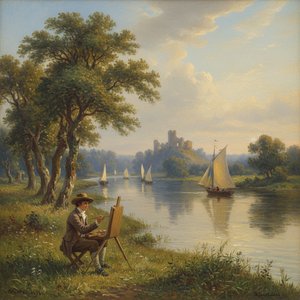
His artistic spirit was deeply nomadic, shaped by the vibrant atmospheres of the great European cities. From the bustling streets of Paris to the historical grandeur of Brussels, Boys possessed a rare ability to capture the soul of a location. His work often focused on cityscapes and architectural marvels, yet he frequently drifted into the realms of rural landscapes and maritime subjects, imbuing each with a sense of romantic atmosphere. Whether depicting the panoramic vistas of Constantinople or the quiet charm of a continental quayside, his hand moved with a delicate balance of topographical accuracy and poetic suggestion.
A Master of Color and Lithography
The true brilliance of Boys lay in his ability to marry technical precision with a soft, evocative palette. He became a pioneer in the realm of chromolithography, a feat most notably realized in his celebrated collection, Picturesque Architecture in Paris, Ghent, Antwerp, Rouen, etc. This monumental work, which drew widespread admiration and even earned him recognition from King Louis-Philippe, showcased his ability to translate the nuances of watercolor into the medium of stone. His use of muted tones and loose, atmospheric brushwork allowed him to capture the ephemeral qualities of light and weather, making his depictions of shipping off the Normandy coast or the winding streets of London feel vibrantly alive.
Beyond his solo achievements, Boys played a significant role in the wider artistic community through his collaborative efforts. He lent his immense skill to lithographing the works of other masters, such as David Roberts and Clarkson Stanfield, ensuring that their visions were preserved with exceptional clarity. His contributions extended into the literary world as well, providing illustrations for historical texts and etching plates for the profound writings of John Ruskin. Through these diverse endeavors, Thomas Shotter Boys left an indelible mark on the visual record of his era, blending the structural permanence of architecture with the fleeting beauty of the natural world.
よくあるご質問
トマス・ショッター・ボーイズは、どの時代に活動していましたか?
トマス・ショッター・ボーイズは19世紀に活動していました。この時代背景は、その画家の足跡を歴史の中に位置づけるものです。
トマス・ショッター・ボーイズの出身地(都市および国)はどこですか?
トマス・ショッター・ボーイズは、イギリスのペントンヴィルで生まれました。
トマス・ショッター・ボーイズには他にどのような名で知られているものがありますか?
トマス・ショッター・ボーイズは、トマス・S・ボーイズ, トマス・ボーイズ, トーマス・ショッター・ボイズという名でも知られています。