
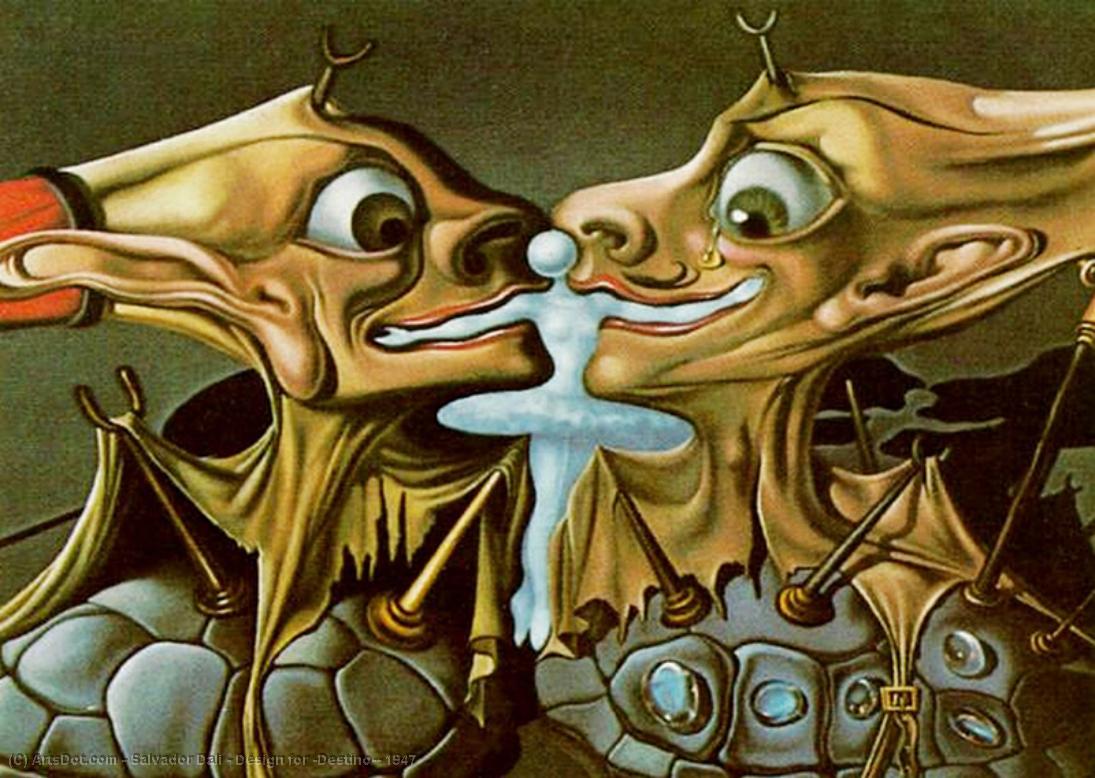
Design for 'Destino', 1947
 Acrylic On Canvas
- WallArt
- Surrealism
 Modern
Design for 'Destino', 1947 – Salvador Dalí
“Design for ‘Destino’” stands as a cornerstone of Salvador Dalí’s oeuvre, encapsulating the very essence of Surrealism and marking a pivotal moment in his artistic trajectory. Created in 1947 during Walt Disney's ambitious foray into animated filmmaking—a project ultimately abandoned due to financial constraints—this painting transcends mere visual representation; it embodies a profound exploration of the subconscious mind and the dreamscape, mirroring Dalí’s fascination with mythology and psychoanalysis.
Background and Historical Context
The genesis of “Design for ‘Destino’” lies in Dalí's collaboration with Walt Disney Studios Paris. Initially conceived as a film featuring a fantastical tale centered around a woman named Dahlia—a figure inspired by Gala Dalí’s own anxieties about motherhood—the project faced insurmountable obstacles before its eventual completion in 2003. The animation test itself, painstakingly reconstructed by John Hench and meticulously analyzed by art historians, reveals the immense effort invested in translating Dalí's visionary concepts into a cinematic medium.
Symbolism and Imagery
The painting’s imagery is rife with symbolic references to Dalí’s artistic lexicon. Dominating the composition are two figures—a woman adorned with flowing hair and a man whose face appears to be dissolving—representing Dahlia and Chronos, respectively. These characters embody opposing forces: femininity and time—themes recurrent throughout Dalí's work. The inclusion of melting clocks—a trademark motif—underscores Dalí’s preoccupation with the relativity of perception and the disintegration of rational thought.
Technique and Artistic Style
Executed in oil on canvas, “Design for ‘Destino’” exemplifies Dalí’s mastery of Surrealist technique. Characterized by meticulous detail and a disconcerting juxtaposition of disparate elements—such as a sink, a cup, and floating objects—the painting achieves an unsettling beauty through its deliberate distortion of reality. Hench's painstaking reconstruction of the Animatic—Dalí’s original storyboard—provides invaluable insight into the artist’s creative process and underscores the importance of collaboration in achieving artistic vision.
Legacy and Significance
"Design for ‘Destino’” remains a testament to Dalí’s enduring influence on art history. Its inclusion in Walt Disney's Fantasia 2000—a film that cemented Disney’s reputation as an innovator—further highlights the intersection of artistic movements and the transformative potential of cinematic storytelling. The painting continues to inspire artists and collectors alike, serving as a powerful reminder of Dalí’s unwavering commitment to pushing the boundaries of imagination and confronting the complexities of human consciousness.
- Walt Disney Studios Paris
- John Hench
- Animatic Reconstruction
- Mythology & Psychoanalysis
- Melting Clocks: Relativity of Perception
サルバドール・ダリ(1904 – 1989)
シュルレアリスムの巨匠、サルバドール・ダリの世界へ。溶ける時計や夢幻的な風景など、独創的なイメージと卓越した技術で時代を魅了しました。彼の作品は芸術界のみならず、ポップカルチャーにも多大な影響を与え続けています。
作品詳細
- 作品名: Design for 'Destino', 1947
- 作家: サルバドール・ダリ
- 技法: Landscape
- 著作権の状態: 著作権保護対象
- 技法・素材: WallArt
- コーパスの文脈: exploring subconscious, disney collaboration
- カラーパレット: Dark
- キーワード: surrealism, melting clocks, twentieth century art
- 色相: Ochre to Sepia
- 知覚輝度: shadow
作品詳細
- Location: Walt Disney Studios Paris
- Subject or theme: Fate, Relationships
- Title: Design for 'Destino'
- Notable elements or techniques: Melting clocks, Surreal imagery
- Year: 1947
- Medium: Oil on Canvas
- Artistic style: Dreamlike
QRコード
