


The History of Canons Ashby House
Canons Ashby House is a Grade I listed Elizabethan manor house that traces its origins to approximately 1550. For over four centuries, the house has remained the seat of the Dryden family, who occupied the property from its construction in the 16th century through many generations. The lineage of the house is deeply intertwined with the history of the local area, maintaining a continuous presence on this site for much of its existence.
The preservation of the estate reached a critical juncture in 1981 when the National Trust took ownership of the property. At that time, the house was in a precarious state, facing the threat of collapse. The surrounding landscape had also undergone significant changes, with the once-ordered gardens having reverted to a meadow. Through the efforts of the Trust, the structural integrity of the manor was addressed, ensuring the survival of the building for future study.
The Architecture and Design of the Manor
The structure of Canons Ashby House reflects a long history of gradual expansion and modification. Originally developing from a mid-16th-century farmhouse, the building was expanded in the 1590s and again in the 1630s. These additions transformed the house from an H-plan layout with a tower into a more complex courtyard plan form. Further architectural changes occurred around 1710, which altered the floor levels, room layouts, and the overall aesthetic of the manor.
Inside, the house retains significant decorative elements from several eras. The interior is noted for its Jacobean plasterwork and Elizabethan wall paintings. In the Spenser Room, grisaille wall paintings provide a subtle visual presence, while the Drawing Room is centered around a dramatic fireplace. The spatial organization of the house also reveals its domestic evolution; for instance, the room once known as the Winter Parlour later became the Servant’s Hall.
The Formal Gardens and Surrounding Grounds
The house sits within a formal garden, a structured space defined by terraces, walls, and gate piers dating from 1710. These architectural elements provide a sense of enclosure and order around the manor. Within these boundaries, colourful herbaceous borders offer a seasonal change in texture and hue. An orchard is also part of the grounds, containing varieties of fruit trees that date back to the 16th century.
The landscape holds deeper layers of history through its religious remains. The site contains the remains of a medieval priory church. Nearby, the remnants of the monastic building, which once centred on the parish church of Maidford, are still present. These fragments connect the current grounds to the earlier Augustinian priory that once occupied the area.
Masterpieces of the Dryden Collection
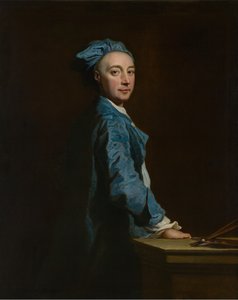
The collection within the house offers a continuous presence of the Dryden lineage through several centuries of portraiture. In 1710, Jonathan Richardson the Elder captured The Dryden Family, a work that anchors the family's historical continuity. Nearby, a portrait of Elizabeth Cornwallis (d.1708), Mrs Edward Allen, as Diana the Huntress, by Jacob Huysmans, presents a mythological characterization of the subject. Joseph Highmore is represented by his portrait of Elizabeth Rooper, while a work in the school of Sir Godfrey Kneller depicts Sir John Dryden, 7th Baronet Dryden of Canons Ashby (1704 - 1770).
The later years of the family are recorded through more recent likenesses. William Staveley painted Sir John Turner Dryden (1752–1797), 1st Bt of Canons Ashby and 4th Bt of Ambrosden, about 1795. This is followed by the 1904 portrait of Sir Alfred Erasmus Dryden, 5th Bt Dryden of Canons Ashby and 8th Bt Turner, of Ambrosden, by Charles Ernest Butler. These paintings exist as quiet witnesses to the generations that occupied the manor.


