


Origins and History of Geelong Art Gallery
The presence of the Geelong Art Gallery in the local landscape began with a petition in 1895. This request for a dedicated space for art preceded the formal opening of the institution, which took place on 31 May 1900. Established in 1896, the gallery has grown to become one of Australia's oldest and leading regional art galleries.
The institution occupies a central position within Geelong's Cultural Precinct. It sits alongside the Geelong Library and Heritage Centre, the Geelong Arts Centre, and the Geelong Courthouse. This arrangement places the gallery at the heart of the city's civic and creative life. The history of the site reflects a long-standing commitment to the preservation of Australian and European painting, sculpture, and decorative arts.
The Building and its Architecture
The current structure of the Geelong Gallery was officially opened in 1915. It was erected as a memorial to the late George M. Hitchcock. The initial building was composed of a portico and a vestibule that faced the park, including the G. M. Hitchcock Gallery. This original layout established the foundation for a space that has expanded through several distinct phases of construction.
Growth occurred in stages throughout the twentieth century. The Henry P. Douglas Gallery was opened in 1928, followed by the addition of the H.F. Richardson Gallery in 1937. A significant shift in the building's orientation occurred in 1938, when the main entrance was moved to Little Malop Street. This change altered the way the institution interacts with the surrounding streetscape.
The physical fabric of the gallery has been updated to meet contemporary needs. Renovations were carried out in 2001 and again in 2017. These interventions ensure the architecture remains functional for the diverse collection held within its walls. The site continues to evolve, maintaining its presence within the local Cultural Precinct.
Major Collections and Artworks
The collection spans from the 18th century to the present day, encompassing a significant breadth of Australian and European painting, sculpture, printmaking, and decorative arts. Many of these works hold national significance, providing a deep record of artistic development across centuries. A particular focus is placed on early images of the Geelong region, documenting the evolution of the local environment and the city itself.
The presence of works by artists such as Clarice Beckett, Emily Kame Kngwarreye, and Frederick McCubbin allows for a study of diverse stylistic movements within the same space. These pieces exist as physical records of changing perspectives, from the landscape traditions of the 19th century to contemporary expressions. The assembly of objects reflects a long-standing commitment to preserving both local history and broader international movements.
- View of Geelong, 1856 - Eugene von Guérard
- A bush burial, 1890 - Frederick McCubbin
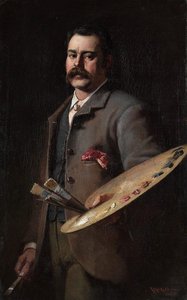
- Portrait of Louis Buvelot, about 1880 - Julian Ashton
Masterpieces of the Collection
The presence of Eugène von Guérard’s View of Geelong, painted in 1856, offers a specific window into the landscape of the region. This oil painting on canvas measures 154.5 x 89 cm. It entered the permanent collection following a purchase from the English composer Andrew Lloyd Webber. The work provides a detailed record of the environment as it appeared in the mid-nineteenth century.
Another significant presence in the gallery is Frederick McCubbin’s A bush burial, dated 1890. This work belongs to a collection that has amassed significant Australian and European paintings, sculpture, and printmaking over many decades. The physical reality of these objects allows for a direct encounter with the historical development of the local landscape and its representation.
Exhibitions and Research
The programming at the Geelong Gallery frequently examines the evolution of artistic practice, such as the first comprehensive survey of Rone’s career presented here. The current calendar offers a deep look into the history of light and form, with the Claude Monet and Australian Impressionism exhibition and the Discovering the Impressionists exhibition both running through late 2026. These presentations sit alongside the Milestones in Collecting—130th Anniversary Exhibition, which also continues until October 2026.
The gallery maintains a focus on contemporary and structural perspectives through varied seasonal offerings. The A New Universe—Architecture in Print exhibition and the Jon Campbell—yEAH / dUNNO exhibition are scheduled for the first half of 2026. Later in the year, the 2026 Geelong Contemporary Art Prize begins in November, followed by the Eric Thake—Do You See What I See? exhibition in mid-November. These rotations ensure the space remains a site of constant visual inquiry.


