Introduction
The early twentieth century was a period of profound global transformation. Between approximately 1916 and 1921, two major movements emerged from the trauma of the First World War and subsequent revolutions: Dada and Constructivism. Dada began in neutral Zurich in 1916 as a visceral response to the chaos of war, using irony and nonsense to reject traditional logic. Meanwhile, Constructivism emerged in Soviet Russia following the 1917 Revolution, viewing the artist as an engineer tasked with building a new society through industrial materials and geometric order.
Readers often compare these movements because they both rejected traditional easel painting and the idea of the unique masterpiece. Both groups experimented with new media, such as photography, typography, and collage, to break away from the past. However, their fundamental goals were opposites: Dada sought to dismantle meaning through chaos, while Constructivism sought to assemble meaning through structure. This article will help you distinguish between these two responses by examining their unique philosophies, their use of fragmented materials, and their differing views on the purpose of art in a changing world.
| Dada | Constructivism | |
|---|---|---|
| Dates | c. 1916-1921 | c. 1916-1921 |
| Where | Zurich, New York, Berlin, Hanover, Cologne, Paris | Soviet Russia |
| Key painters | Raoul Hausmann, Kurt Schwitters, Hannah Höch | El Lissitzky, Naum Gabo, Alexander Rodchenko |
| Palette and light | Not specified | Red, black, and white |
| Typical subjects | Sound poems, masks, absurd juxtapositions, mocking photomontages | Geometry, functional design, metal, glass, and industrial language |
| Technique | Collage, assemblage, photomontage, and sound poems | Collage, typography, and geometric construction |
| One key work | Elikan (1925) by Kurt Schwitters | Beat the Whites with the Red Wedge (1919-20) by El Lissitzky |
The Chaos of Dada and the Rejection of Reason
 Porträt of Hannah Höch - Raoul Hausmann
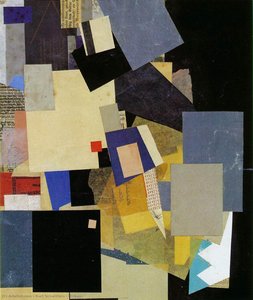 (Elikan) - Kurt Schwitters
 Creatures - Hannah Höch
The emergence of Dada was not a planned artistic style, but a visceral reaction to the trauma of World War I. As the conflict caused unprecedented destruction across Europe, a group of artists, poets, and intellectuals gathered in the neutral environment of Zurich, Switzerland. In February 1916, Hugo Ball and Emmy Hennings opened the Cabaret Voltaire, a nightclub that served as the epicenter for this new movement. Here, artists staged sound poems, wore masks, and performed simultaneous recitations to provoke and unsettle their audience.
Dadaists rejected the traditional concept of the unique masterpiece and the logic of the bourgeoisie, which they believed had led to the madness of global war. Instead of seeking beauty or reason, they embraced irony, chaos, and nonsense. This rejection of meaning was reflected in the very name "Dada," which was reportedly chosen at random by sticking a knife into a dictionary.
As the movement spread to cities like Berlin, Paris, and New York, its techniques became increasingly experimental. Key developments included:
- Photomontage: A technique used to assemble press photographs into complex compositions, such as Hannah Höch's Cut with the Kitchen Knife Dada through the Last Weimar Beer-Belly Cultural Epoch of Germany (1919-20).
- Assemblage: The use of found objects to create three-dimensional works, exemplified by Raoul Hausmann's Mechanical Head (The Spirit of Our Age) (about 1920).
- Collage: The layering of scraps, such as Kurt Schwitters's Das Undbild (1919), which utilized tickets and various fragments to reconstruct reality.
Through these methods, Dadaists sought to dismantle established artistic conventions, using absurdity to respond to a world that no longer seemed to make sense.
Constructivism and the Art of Building a New Society
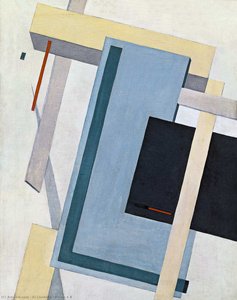
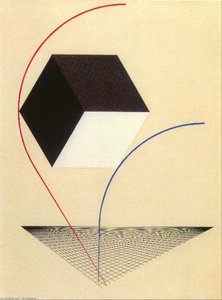
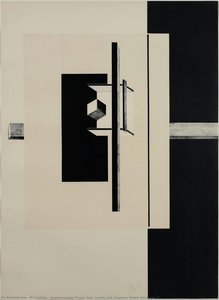 Kestnermappe Proun, Rob. Levnis and Chapman GmbH Hannover #7 - El Lissitzky
 Kinetic Construction (Standing Wave) - Naum Gabo
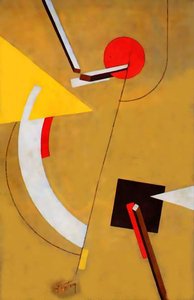
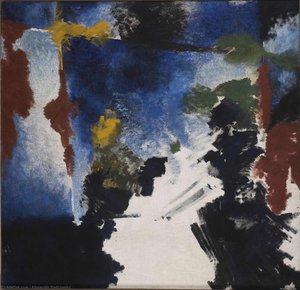 Abstraction (Rupture) - Aleksandr Rodchenko
Constructivism emerged in Soviet Russia following the 1917 Revolution. While other movements focused on individual expression, Constructivists sought to build a new society. They viewed the artist not as a dreamer, but as an engineer. The goal was to create art that served practical, social needs through architecture, furniture, textiles, and industrial design.
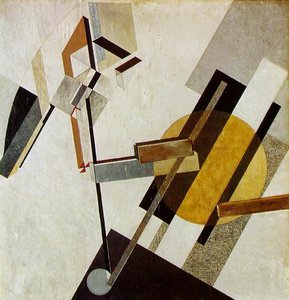
The movement drew inspiration from earlier works, such as the 1914–1915 counter-reliefs by Vladimir Tatlin. By 1921, the First Working Group of Constructivists in Moscow, which included Alexander Rodchenko and Varvara Stepanova, officially adopted the name. These artists moved away from traditional easel painting to embrace the language of industry, using geometry, primary colors, and materials like metal and glass.
Several key works and artists define this period:
- Alexander Rodchenko: In 1920, he created Abstraction (Rupture), a work that moved toward structural abstraction. He also exhibited three monochrome canvases in 1921, including Pure Red Colour, Pure Yellow Colour, Pure Blue Colour, which he used to declare the end of traditional painting.
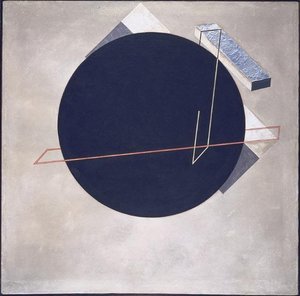
- El Lissitzky: He created the propaganda poster Beat the Whites with the Red Wedge (1919–20) and developed his Proun compositions, which functioned as an intersection between painting and architecture. His 1923 lithograph, Kestnermappe Proun, Rob. Levnis and Chapman GmbH Hannover #7, is a significant example of this geometric language.
- Naum Gabo: Along with his brother Antoine Pevsner, he issued the Realistic Manifesto in 1920. His work Kinetic Construction (Standing Wave) (1920), currently in the Tate Modern, demonstrates his interest in using metal, glass, and plastic to create transparent, modern sculptures.
Comparing Chaos and Order in Early 20th Century Art
While Dada and Constructivism shared a common origin in the trauma of the First World War, they utilized similar techniques to achieve opposite results. Both movements moved away from traditional easel painting, instead experimenting with new media such as typography, photography, and collage. However, their intentions regarding these materials were fundamentally different.
Dada used fragmentation to reflect a world that felt nonsensical and broken. The movement employed collage and photomontage to dismantle meaning and mock the logic of the society that had caused the war. For example, Hannah Höch used press photographs to create her 1919-20 photomontage, Cut with the Kitchen Knife Dada through the Last Weimar Beer-Belly Cultural Epoch of Germany. Similarly, Kurt Schwitters created collages from discarded scraps, such as his 1919 work Das Undbild, as part of his Merz style. In Dada, the assembly of fragments was an act of chaos intended to destroy established order.
In contrast, Constructivism used these same tools to build a new, rational structure. Rather than using fragments to show decay, Constructivists used geometry and industrial materials to create order and serve a new society. This is evident in the work of El Lissitzky, who created the propaganda poster Beat the Whites with the Red Wedge (1919-20). His Proun compositions acted as an intersection between painting and architecture, using precise lines to organize space. While Dada used the collage to highlight the absurdity of existence, Constructivism used it to assemble a blueprint for a functional, revolutionary future.
- Dada: Uses fragments to destroy meaning through irony and chaos.
- Constructivism: Uses geometry and assembly to create order and social utility.
Conclusion
When visiting a museum, a viewer can distinguish these two movements by looking for the intent behind the composition. A work of Dada often relies on chance, absurdity, or the mocking juxtaposition of found objects. Look for torn tickets, nonsense words, or photomontages that seem to dismantle meaning through chaos. In contrast, Constructivism is defined by a sense of rational purpose and order. You will recognize it through precise geometric shapes, diagonal compositions, and the use of industrial materials like metal and glass to serve a social or architectural function.
Despite these opposing attitudes, the two movements share a fundamental foundation. Both emerged from the trauma of the First World War and the subsequent revolutions between 1916 and 1921. They both rejected traditional easel painting and the idea of the unique masterpiece, choosing instead to experiment with new media, typography, and photography to reflect a changing world.
We invite you to explore these historical styles on our website.
Frequently asked questions
What is the difference between Dada and Constructivism?
Dada and Constructivism both emerged from the trauma of the First World War. Dada responded with irony, chaos, and a rejection of meaning. Constructivism sought to build a new society through order, using geometry, primary colors, and the language of industry to serve practical, revolutionary purposes.
When did Dada and Constructivism begin?
Dada began in neutral Zurich in February 1916. Constructivism emerged in Soviet Russia following the 1917 Revolution, with the name being adopted by the First Working Group of Constructivists in Moscow in 1921.
Who are famous Dada and Constructivist painters?
Famous Dada artists include Raoul Hausmann, Kurt Schwitters, and Hannah Höch. Notable Constructivist artists include Alexander Rodchenko, El Lissitzky, and Naum Gabo.
What are some famous works of Dada and Constructivism?
Dada works include Hannah Höch's Cut with the Kitchen Knife Dada through the Last Weimar Beer-Belly Cultural Epoch of Germany and Kurt Schwitters's Elikan. Constructivist works include El Lissitzky's Beat the Whites with the Red Wedge and Naum Gabo's Kinetic Construction (Standing Wave).
Famous painters of Dada
- 1886 – 1971Raoul Hausmann
- 1887 – 1948Kurt Schwitters
- 1889 – 1978Hannah Höch

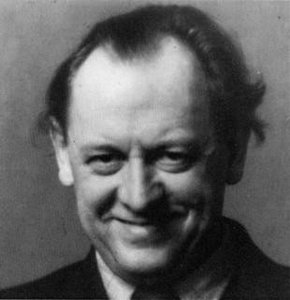

Famous artworks of Dada
- Raoul Hausmann · 1915Porträt of Hannah Höch
- Kurt Schwitters · 1925(Elikan)
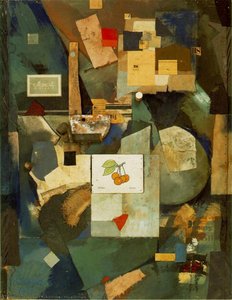
- Kurt Schwitters · 1921Merz Picture 32A (The Cherry Picture)
- Hannah Höch · 1927Creatures
- Hannah Höch · 1921Man and Machine

Famous painters of Constructivism
- 1890 – 1941El Lissitzky
- 1890 – 1977Naum Gabo
- 1891 – 1956Alexander Rodchenko

Famous artworks of Constructivism
- El Lissitzky · 1923Kestnermappe Proun, Rob. Levnis and Chapman GmbH Hannover #7
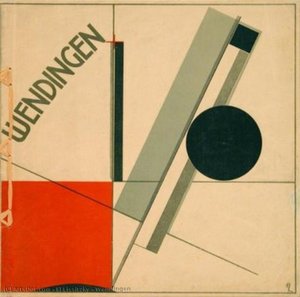
- El Lissitzky · 1921Wendingen
- Naum Gabo · 1920Kinetic Construction (Standing Wave)
- Naum Gabo · 1928Model for 'Torsion'
- Aleksandr Rodchenko · 1920Abstraction (Rupture)
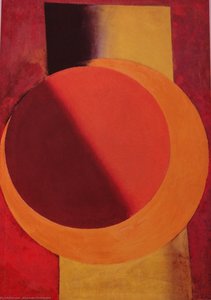
- Aleksandr Rodchenko · 1918Red and Yellow