Introduction
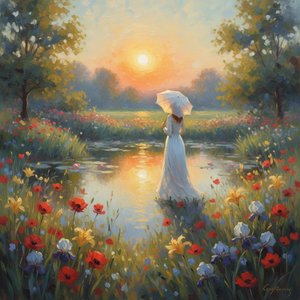
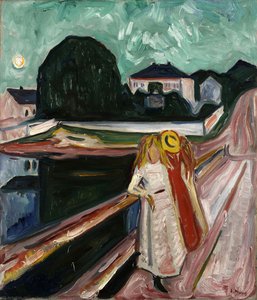
Impressionism and Expressionism are two pivotal movements in art history that, despite their distinct objectives, are frequently compared due to their shared departure from traditional academic realism. Impressionism emerged in France during the 1860s and 1870s, focusing on the objective recording of light, atmosphere, and the fleeting sensations of the visible world. In contrast, Expressionism arose in Germany and Northern Europe around 1905, prioritizing the internal psychological state and the subjective experience of the artist over external accuracy.
The confusion between these movements often stems from their mutual rejection of polished, formal techniques in favor of visible brushwork and non-traditional color application. However, where the Impressionist seeks to capture the "sensation in the eye," the Expressionist seeks to manifest the "sensation in the soul." This article provides a technical and historical comparison of these two eras, examining how one movement looked outward to capture the ephemeral beauty of light, while the other looked inward to navigate the complexities of human emotion and spiritual longing.
| Impressionism | Expressionism | |
|---|---|---|
| Dates | c. 1860s-1880s | c. 1905-mid-1920s |
| Where | France, Paris | Germany and Northern Europe |
| Key painters | Claude Monet, Edgar Degas, Berthe Morisot | Edvard Munch, Ernst Ludwig Kirchner, Franz Marc |
| Palette and light | Bright unmixed colors, colored shadows, high-keyed palette, capturing shifting light | Harsh, unnatural, acid, or arbitrary colors |
| Typical subjects | Modern life, leisure, boating, cafés, gardens, and the countryside | Alienation, sexuality, spiritual crisis, war, and urban life |
| Technique | Broken, visible brushstrokes, loose and rapid touch | Distorted forms, simplified jagged shapes, thick outlines, rough brushwork |
| One key work | Impression, Sunrise (1872) by Claude Monet | The Scream (1893) by Edvard Munch |
Impressionism: Capturing the Fleeting Effects of Light
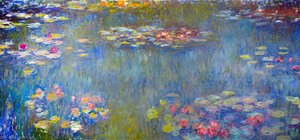
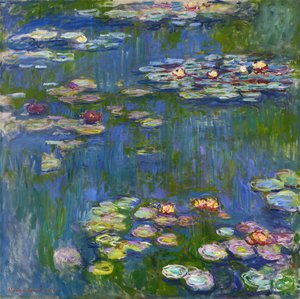 Water Lilies (or Nympheas) - Claude Monet
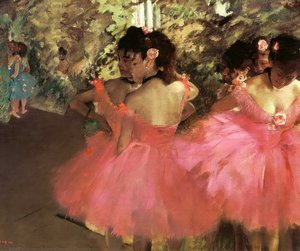 Dancers in Pink - Edgar Degas
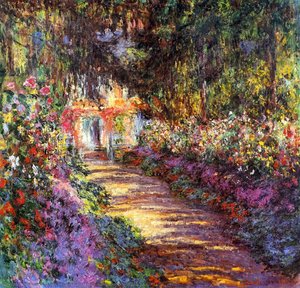
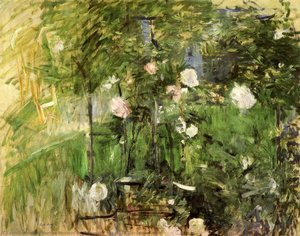 A Corner of the Rose Garden - Berthe Morisot
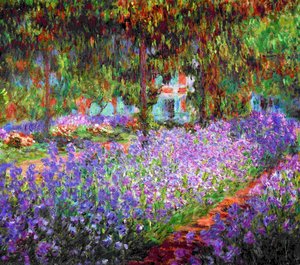
Impressionism emerged in France during the 1860s and 1870s as a rejection of the polished finish characteristic of academic art. This movement sought to record the momentary, fleeting impressions that light and atmosphere make upon the eye. Rather than focusing on precise anatomical or architectural detail, Impressionists prioritized the sensation of a single moment in time, often utilizing unusual visual angles that resemble a snapshot.
Technically, the movement is defined by several distinct characteristics:
- Broken Brushstrokes: Artists applied paint in loose, visible, and rapid strokes to capture movement and the flickering quality of light.
- High-Keyed Palette: The use of bright, unmixed colors placed side by side was common, often avoiding the use of black to maintain a sense of luminosity.
- Colored Shadows: Instead of using grey or black for shadows, Impressionists utilized complementary colors to reflect the actual light of the environment.
Key figures of the movement include:
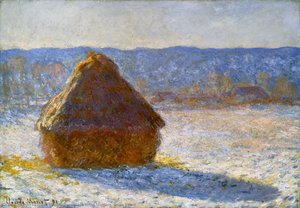
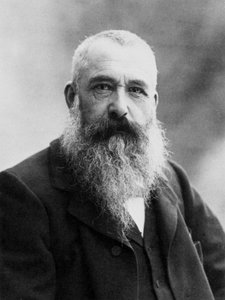
- Claude Monet: Known for his focus on shifting light, such as in his Water Lilies (Nympheas) series or Impression, Sunrise (1872), which gave the movement its name.
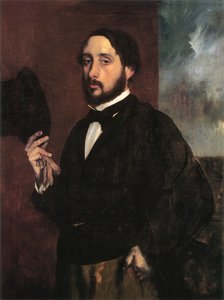
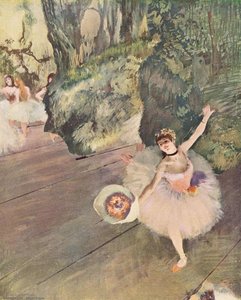
- Edgar Degas: Who observed the movement and grace of dancers, as seen in The Dance Class (1874) and Dancers in Pink (1885).
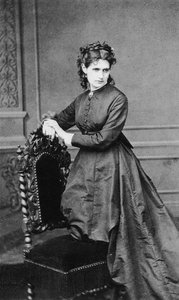
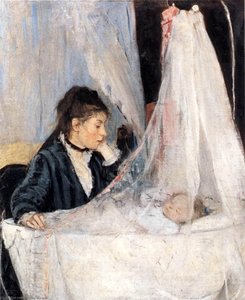
- Berthe Morisot: Who utilized a light, rapid touch to depict intimate scenes, such as The Cradle (1872) and A Corner of the Rose Garden (1885).
By moving away from the rigid constraints of the official Salon, these painters transformed the canvas into a medium for capturing the ephemeral beauty of modern life, from Parisian boulevards to the tranquil reflections of a garden pond.
Expressionism: The Subjective Turn Toward Inner Experience
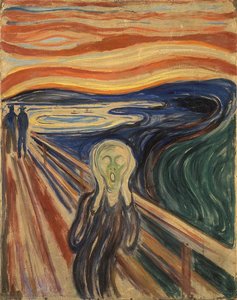 The Scream - Edvard Munch
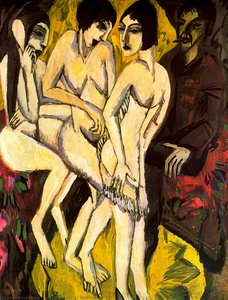 The Judgement of Paris - Ernst Ludwig Kirchner
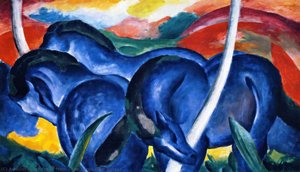 The Large Blue Horses - Franz Marc
While Impressionism focused on the external mechanics of light, Expressionism emerged in Northern Europe around 1905 as a movement that prioritized the internal psyche. Rather than documenting the world as it appeared to the eye, Expressionists sought to translate subjective experiences—such as anxiety, spiritual longing, or alienation—onto the canvas. This shift required a deliberate departure from anatomical and perspectival accuracy, utilizing distortion and non-naturalistic color to mirror the turbulent landscapes of the human soul.
The visual language of the movement is characterized by several distinct technical approaches:
- Distortion of Form: Artists often simplified figures into jagged, angular shapes to convey tension or psychological unrest.
- Arbitrary Color: The use of harsh, acid, or symbolic colors that do not correspond to the physical object, but rather to an emotional state.
- Rough Brushwork: Thick, heavy contours and energetic, often aggressive brushstrokes that emphasize the artist's hand and emotional intensity.
Several canonical works exemplify these principles:
- The Scream (1893) by Edvard Munch, currently held in the Nasjonalgalleriet: This work translates an internal psychological storm through a gaunt figure reacting to an overwhelming sensation, turning a sunset into a visual cry of anxiety.
- The Large Blue Horses (1911) by Franz Marc, held in the Walker Art Center: This piece utilizes bold, primary colors—specifically deep blues against vivid reds—to express a spiritual essence of nature rather than a realistic depiction.
- Street, Dresden (1908) by Ernst Ludwig Kirchner: A work that depicts the urban environment as a nervous, alienating space, reflecting the pressures of modern life.
Visual Perception Versus Emotional Reality
The fundamental distinction between Impressionism and Expressionism lies in the direction of the artist's gaze. Impressionism is an outward-looking movement focused on the "sensation in the eye." It seeks to record the momentary, optical effects of light and atmosphere as they are perceived in a single, fleeting instant. This is achieved through technical methods such as broken, visible brushstrokes and a high-keyed palette of bright, unmixed colors, often avoiding the use of black to maintain a sense of luminosity. For example, Claude Monet utilized these techniques in his Water Lilies series to capture the ephemeral qualities of light reflecting on water, prioritizing the visual impression of the scene over precise anatomical or structural detail.
In contrast, Expressionism is an inward-looking movement that prioritizes emotional reality over visual accuracy. Rather than documenting how the world looks, Expressionists sought to depict how the world feels, often through deliberate distortion of form and the use of harsh, unnatural colors. This movement moves away from objective observation toward a subjective, often anxious or visionary, psychological state. Key differences include:
- Subjectivity: Impressionism captures the external, naturalistic effects of light; Expressionism captures internal psychological turmoil.
- Form: Impressionism uses loose brushwork to suggest movement; Expressionism employs jagged shapes and heavy contours to convey tension.
- Color: Impressionism employs a bright, sunny palette to reflect light; Expressionism uses symbolic or acid colors to express mood.
This shift is evident in the works of Edvard Munch, whose The Scream (1893) at the Nasjonalgalleriet translates an internal psychological storm into a visual experience through distorted figures. Similarly, Franz Marc utilized symbolic color in The Large Blue Horses (1911) at the Walker Art Center to express spiritual longing, moving entirely beyond the realm of mere visual perception.
Conclusion
To distinguish these movements in a museum, a visitor should focus on the direction of the artist's gaze. When standing before an Impressionist work, look for the "sensation in the eye"—the flickering, broken brushstrokes and bright, unmixed colors used to capture a fleeting moment of light and atmosphere. In contrast, an Expressionist work directs the gaze inward; look for distorted forms, jagged shapes, and harsh, unnatural colors used to convey intense psychological states such as anxiety or spiritual longing.
While their objectives are nearly opposite, both movements share a fundamental rejection of the polished, precise rules of academic realism. Both sought to break away from traditional representation to find a deeper truth, whether that truth was found in the optical play of light or the turbulent depths of the human soul.
Explore these iconic masterpieces in our collection.
Frequently asked questions
What is the difference between Impressionism and Expressionism?
Impressionism looks outward at the visible world to capture the momentary impression of light and atmosphere. Expressionism looks inward at the artist's feelings, using distorted forms and unnatural colors to express internal states such as anxiety, joy, or isolation rather than objective reality.
Who are the famous Impressionist painters?
Key painters of the Impressionist movement include Claude Monet, Edgar Degas, and Berthe Morisot. Monet is noted for his series capturing light on water and fields, Degas for his observations of dancers and café life, and Morisot for her intimate scenes of women and children.
What are some famous Expressionist artworks?
Notable works include Edvard Munch's The Scream, which translates an internal psychological storm onto canvas, Ernst Ludwig Kirchner's The Judgement of Paris, and Franz Marc's The Large Blue Horses, which uses bold colors to capture the spiritual essence of nature.
When did Impressionism and Expressionism occur?
Impressionism took shape in France during the 1860s and 1870s. Expressionism emerged in Germany and Northern Europe around 1905 and lasted until approximately the mid-1920s.
Famous painters of Impressionism
- 1840 – 1926Claude Monet
- 1834 – 1917Edgar Degas
- 1841 – 1895Berthe Morisot
Famous artworks of Impressionism
- Claude MonetWater Lilies (or Nympheas)
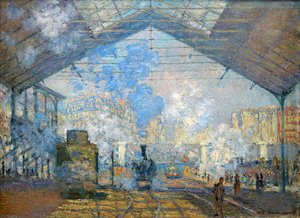
- Claude Monet · 1877Gare Saint Lazare, Pari
- Edgar Degas · 1885Dancers in Pink
- Edgar Degas · 1878Dancer with a bouquet of flowers (The Star of the ballet)
- Berthe Morisot · 1885A Corner of the Rose Garden
- Berthe Morisot · 1872The Cradle
Famous painters of Expressionism
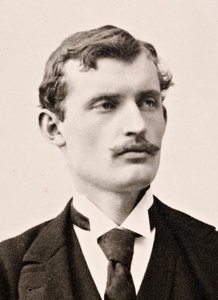
- 1863 – 1944Edvard Munch
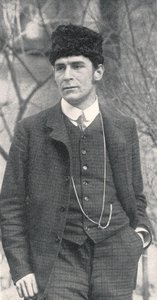
- 1880 – 1938Ernst Ludwig Kirchner
- 1880 – 1916Franz Marc

Famous artworks of Expressionism
- Edvard Munch · 1893The Scream
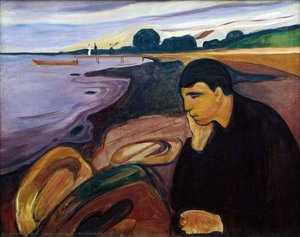
- Edvard Munch · 1894Melancholy
- Ernst Ludwig KirchnerThe Judgement of Paris
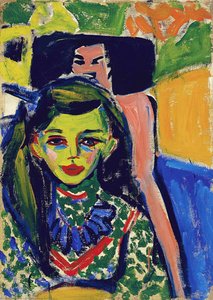
- Ernst Ludwig Kirchner · 1910Fränzi vor geschnitztem Stuhl
- Franz Marc · 1911The Large Blue Horses
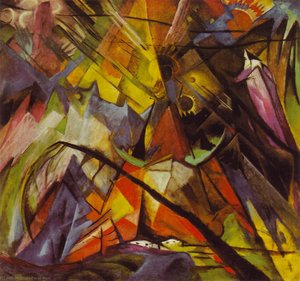
- Franz Marc · 1914Tyrol