Introduction
The 20th century was a period of profound transformation for Polish painters, a century defined by the tension between deep-rooted national identity and the radical avant-garde movements sweeping across Europe. Born into a landscape of shifting borders and intense cultural rebirth, these artists navigated a complex intersection of styles, from the ethereal symbolism of the fin de siècle to the bold, geometric abstractions of modernism. What unites this remarkable group is a shared ability to translate the turbulent spirit of their era into a visual language that is both intensely personal and universally resonant.
Throughout the 1900s, Polish art became a crucible for experimentation. While some masters sought to capture the psychological depth of the human condition through soft, atmospheric textures, others embraced the vibrant colors and fractured forms of Cubism and Fauvism. This era saw the rise of unique aesthetic philosophies that challenged traditional perspectives, blending folk motifs with high-modernist sensibilities to create a visual heritage that was distinctly their own. Their work serves as a vital bridge between the classical traditions of the past and the fragmented, high-energy dynamism of the contemporary age.
Today, the legacy of these creators continues to influence the way we perceive color, form, and emotion in art. Their ability to harmonize classical technique with revolutionary concepts ensures that their influence remains palpable in modern galleries and private collections alike. By examining the lives and works of these ten essential figures—ranging from the iconic Art Deco elegance of Tamara de Lempicka to the profound psychological landscapes of Olga Boznańska—we gain a deeper understanding of a golden age of Polish creativity that continues to captivate the global art world.
Tamara de Lempicka
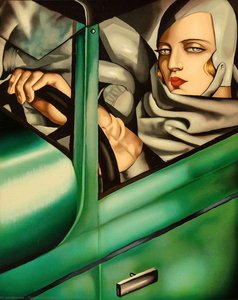
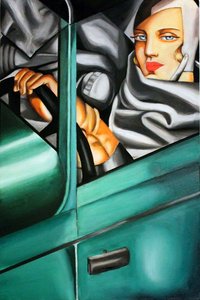
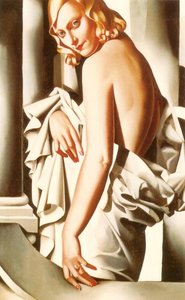
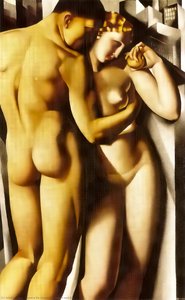
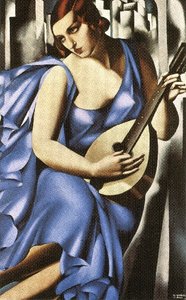
In her iconic 1925 masterpiece, Self-Portrait in the Green Bugatti, the artist captures the very essence of the Roaring Twenties. This work serves as a definitive testament to the glamour and speed of the era, presenting a woman of independence behind the wheel of a vintage machine. Born Maria Teresa Górska in Warsaw, this Polish-born artist became the preeminent voice of the Art Deco movement, defining the visual language of 20th-century modernity.
Lempicka’s style is characterized by a striking fusion of classical precision and Cubist geometry. Influenced by the teachings of Maurice Denis and André Lhote, she transformed her subjects into sculptural, monumental figures. Her technique utilizes smooth, fluid lines and a sophisticated palette where earthy tones meet vibrant, dramatic accents—such as the striking red of a lip against the deep sea green of a luxury car. Her portraits do not merely depict individuals; they construct an image of the liberated, sophisticated woman through polished surfaces and a sense of quiet prestige. Through her unique ability to blend the structural rigor of Ingres with the fragmented energy of the modern age, she remains a central figure among 20th century Polish painters.
Sigmar Polke
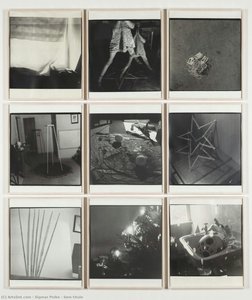 Sem título - Sigmar Polke
Born in Olsztyn, Poland, in 1941, Sigmar Polke’s artistic identity was forged through the profound displacement of the mid-20th century. His journey from his Polish birthplace to West Germany instilled a lifelong skepticism toward fixed ideologies, a trait that would define his subversive approach to art. After training as a stained-glass worker, he studied at the Kunstakademie Düsseldorf under Joseph Beuys, eventually co-founding the provocative Kapitalistischer Realismus movement. This movement sought to critique both Western consumerism and Soviet Socialist Realism, cementing his place as a vital voice among 20th century Polish-born painters who navigated the complexities of a fractured Europe.
His 1968 work, Sem título, serves as a profound meditation on this sense of dislocation. Presented in a rigid grid of black-and-white frames, the piece captures fragments of life—a leaping figure, furniture, and poised individuals—stripping them of grand narrative to focus on the unsettling beauty of the mundane. The systematic arrangement acts as a deliberate attempt to impose order upon chaos, mirroring the artist's own experience of existing between worlds. Through this interplay of light and structure, Polke transforms simple observation into a complex reflection on the instability of perception.
Stanisław Ignacy Witkiewicz
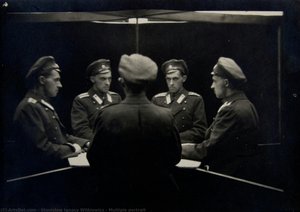 Multiple portrait - Stanisław Ignacy Witkiewicz
A true polymath of the interwar era, Stanisław Ignacy Witkiewicz—often known simply as Witkacy—stands as a cornerstone of 20th century Polish painters. His work transcends mere canvas, bridging the gap between philosophy, drama, and visual experimentation. His life was marked by a profound engagement with the turbulent shifts of the early 1900s, including a formative anthropological expedition to Australia and the harrowing experiences of the Russian Revolution, which instilled in him a deep preoccupation with the fragility of civilization and the fragmentation of the human psyche.
This existential tension is masterfully captured in his 1917 work, Multiple portrait. In this experimental piece, Witkacy utilizes the reflections of a taxi's mirrors to create a series of fragmented likenesses. By depicting himself in the structured, formal uniform of the Pavlovsky Regiment against a backdrop of shifting, mirrored perspectives, he explores the complexity of identity through a lens of profound introspection. His ability to blend Symbolist surrealism with an avant-garde sensibility ensures his place among the most enigmatic and influential figures of the Polish Modernist movement.
Aleksandra Ekster
 Venice - Aleksandra Ekster
Born in Białystok, Aleksandra Ekster stands as a vital figure among 20th century Polish painters due to her origins in what was then the Russian Empire, now part of Poland. Her artistic odyssey was defined by a restless, cosmopolitan energy that bridged the cultural spheres of Eastern and Western Europe. After receiving formal training at the Kyiv School of Art, she moved to Paris, where the avant-garde ferment of Montparnasse ignited a lifelong passion for experimentation, leading her to master Cubo-Futurism, Suprematism, and Constructivism.
A profound example of her ability to synthesize these radical movements is seen in her 1924 work, Venice. Created following her participation in the organization of the 14th Venice Biennale, the painting captures the vibrant pulse of the Italian city through a sophisticated, fractured lens. In Venice, Ekster employs a bold palette of red, yellow, blue, and green to deconstruct an urban scene into a rhythmic dance of planes. Boats, cars, and pedestrians are transformed into a layered, energetic composition, reflecting the dynamism of a modern world in constant motion.
Jacek Malczewski
 Portrait of artist's sister Helene with lute - Jacek Malczewski
As a foundational figure whose influence extended deep into the modern era, Jacek Malczewski stands as the preeminent father of Polish Symbolism. His creative vision was forged in the crucible of national longing, shaped by a childhood steeped in the patriotic ideals of his father, Julian. This profound connection to Polish identity allowed his work to bridge the gap between the romanticism of the previous century and the complex, psychological landscapes of the 20th century. His presence in this group is cemented by his enduring impact on the aesthetic development of Polish art well into the 1900s, providing a symbolic language that subsequent generations of Polish painters would navigate.
In his evocative work, Portrait of artist's sister Helene with lute (1906), Malczewski captures a moment of profound, quiet introspection. The composition is defined by a sharp diagonal, leading the eye from the warm, ochre tones of the lute toward a wintry, desaturated landscape visible through a window. Through a masterful interplay of light and shadow, he creates a melancholic atmosphere where the tactile textures of fabric and wood meet a sense of deep, soulful solitude.
Otto Mueller
 Self-Portrait - Otto Mueller
Born in Silesia in 1874, Otto Mueller remains a vital figure in the landscape of 20th century Polish painters due to his deep roots in the region and his profound impact on the European avant-garde. His artistic journey, which began in the landscapes of Liebau, led him from the academies of Dresden and Munich to the heart of Berlin, where he became a cornerstone of the Die Brücke movement. While his contemporaries often utilized jarring, aggressive colors, Mueller sought a unique harmony within distortion, bridging the gap between the raw emotion of German Expressionism and a rhythmic, lyrical sense of nature.
His Self-Portrait (1921) serves as a powerful testament to this psychological depth. In this work, the artist uses a muted palette of ochre and dark greens to carve a face of bone and light, creating a piercing, introspective gaze that confronts the viewer. Through thick, visible brushstrokes and a masterful use of chiaroscuro, he captures a sense of solitude and heavy contemplation. His ability to simplify forms while maintaining an intense emotional resonance allowed him to explore the human condition with a vulnerability that defined the era.
Olga Boznańska
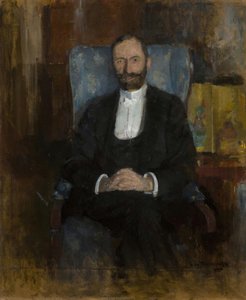 Portrait of Faliks Manggha Jasieński - Olga Boznańska
Olga Boznańska stands as a profound figure among 20th century Polish painters, bridging the cultural landscapes of Kraków and Paris. Born in 1865 to a Polish father and a French mother, her dual heritage allowed her to navigate the avant-garde circles of Europe with unique ease. While her career began in the late 19th century, her influence and continued presence in the art world defined the psychological landscape of the early 20th century, aligning her with the modern movements that shaped Polish identity during this era.
Her style is characterized by a masterful use of sfumato and a muted, sophisticated palette of silvery greys and deep blues. Moving beyond the purely optical experiments of Impressionism, Boznańska sought to capture the invisible essence of her subjects, creating portraits that feel like whispered secrets. This introspective approach allowed her to translate internal emotional states onto the canvas with ethereal, almost ghostly quality.
A significant example of her mastery is the 1907 work, Portrait of Faliks Manggha Jasieński. In this oil on cardboard, she captures her patron in a moment of quietude, utilizing a soft, blurred execution that emphasizes dignity and composure. The composition, which includes a subtle Buddhist shrine in the background, exemplifies her ability to blend personal connection with profound psychological depth.
Stanisław Wyspiański
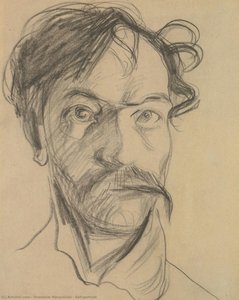 Self-portrait - Stanisław Wyspiański
A visitor recognizes the work of Stanisław Wyspiański by its intense, rhythmic line work and a profound sense of symbolic weight. His aesthetic bridges the delicate, organic curves of Art Nouveau with the heavy, emotional depths of Polish Symbolism. He possessed a unique ability to fuse botanical precision with a haunting, metaphorical energy, often utilizing vibrant colors and dramatic light to elevate simple subjects into cosmic narratives. His mastery extended from the intimate intimacy of graphite drawings to the monumental scale of stained glass, where color becomes a spiritual medium.
As a central figure of the Young Poland movement, Wyspiański’s creative output at the turn of the century defines the transition into 20th century Polish painting. His visionary approach helped redefine the cultural identity of a nation through a fusion of modernism and folk motifs. His Self-portrait from 1907 stands as a powerful testament to this era; a raw, expressionistic work that eschews academic smoothness for visceral, gestural lines. In this final gaze, the artist uses light and shadow to capture a profound psychological state, marking him as a pivotal architect of the Polish modern spirit.
Moïse Kisling
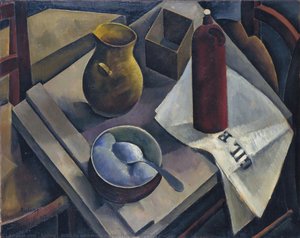 Still Life with News Paper [Nature Morte au Journal] - Moïse Kisling
Born in Kraków in 1891, Moïse Kisling stands as a vital figure among 20th century Polish painters, representing the profound artistic dialogue between Eastern European roots and the Parisian avant-garde. After studying at the Krakow Academy of Fine Arts under the mentorship of Józef Pankiewicz, Kisling moved to Paris in 1910, a transition that would define his legacy within the School of Paris. His journey from the academic traditions of Poland to the bohemian heart of Montmartre allowed him to synthesize diverse influences into a singular, expressive voice.
His evolution is masterfully captured in his 1913 work, Still Life with News Paper [Nature Morte au Journal]. This piece exemplifies his engagement with Early Cubism, showcasing a structural clarity reminiscent of Cézanne while navigating the radical new aesthetics of the era. Unlike many who merely imitated the trends of Picasso or Braque, Kisling maintained a fierce artistic independence, eventually shifting toward a more emotive Expressionism characterized by bold colors and intense brushwork. His ability to blend structural rigor with emotional depth ensures his enduring place in the history of 20th century Polish art.
Józef Mehoffer
 Wife’s portrait study, sketch for “Strange garden” - Józef Mehoffer
A central figure of the Young Poland movement, Józef Mehoffer (1869–1946) represents the vibrant transition of Polish art into the 20th century. His evolution from a student of Jan Matejko at the Academy of Fine Arts in Kraków to a wanderer through the artistic hubs of Vienna and Paris allowed him to bridge academic tradition with the avant-garde. By absorbing the currents of the Secession and Post-Impressionism, Mehoffer became a master of the Art Nouveau aesthetic, blending organic fluidity with a bold, symbolic intensity that defined the era's visual language.
His technical mastery extended from the easel to the monumental scale of stained glass, most notably in his celebrated cycle for the Cathedral of St. Nicholas in Fribourg. In his 1902 work, Wife’s portrait study, sketch for “Strange garden”, we witness the artist's profound ability to manipulate light and shadow. The piece serves as a dramatic study in chiaroscuro, where pale, luminous skin emerges from a nocturnal gloom. Through thick, tactile impasto and swirling, feather-like strokes, Mehoffer captures a sense of melancholic intimacy, proving his ability to transform a private moment into a profound exploration of form and texture.
Conclusion
The legacy of these masters reflects a profound era of transformation, where the avant-garde spirit of Lempicka met the soulful, introspective depths of Boznańska and the vibrant colorism of the Polish school. From the geometric precision of Cubist-inspired compositions to the haunting, symbolic landscapes of the early century, these artists collectively defined a visual language that bridged the gap between traditionalism and modernism. Whether through the bold, stylized elegance of Art Deco or the expressive, textured layers of late-century abstraction, their contributions continue to resonate with immense cultural power.
At Mus3ums.com, we invite you to bring this rich heritage into your own living space. Our artisans specialize in creating museum-quality, hand-painted oil reproductions that capture the unique brushwork and emotional intensity of these iconic works. You can explore our full collection to find the perfect piece and experience the tactile beauty of these masterpieces through our bespoke, handmade artistry.