The Essence of Atmosphere: Defining the Hague School Movement
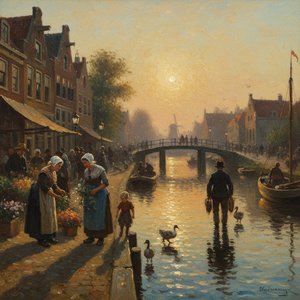
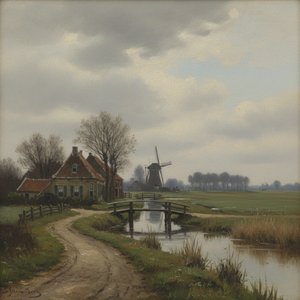
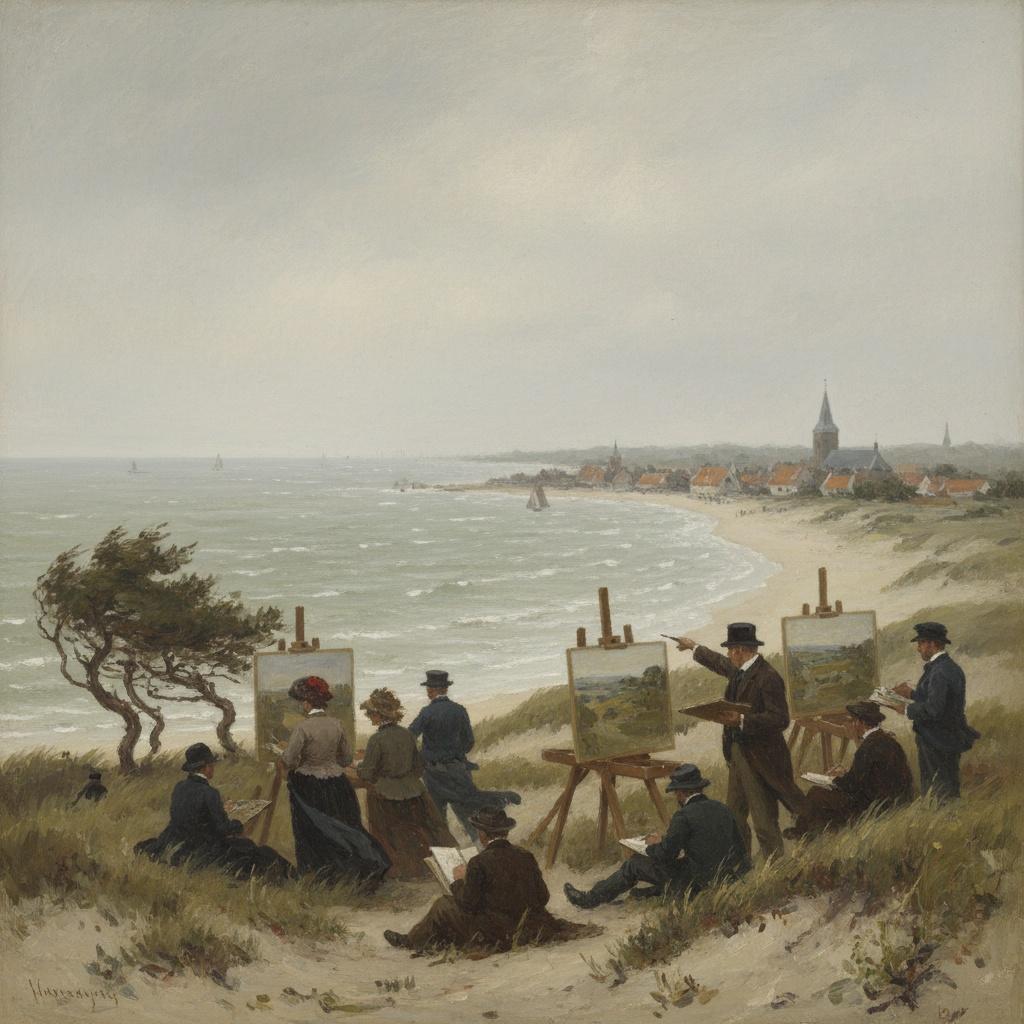
To step into a landscape painted by the Hague School is to enter a world where the air itself possesses weight, moisture, and a profound sense of quietude. Emerging in the mid-19th century, this illustrious group of Dutch painters sought to move beyond the rigid, hyper-detailed traditions of their predecessors, opting instead to capture the ephemeral soul of the Netherlands. They were not merely documenting scenery; they were translating the very breath of the Low Countries onto canvas. This movement, often described as a precursor to Impressionism, found its heartbeat in the damp, misty reaches of the Dutch countryside, where the boundary between earth and sky often dissolves into a seamless, silvery haze.
The Hague School was born from a desire for authenticity, a rejection of the idealized, sun-d'or landscapes of the past in favor of a more honest, somber reality. These artists looked toward the humble—the windswept polders, the quiet canals, and the rhythmic toil of rural life—and found a sublime beauty within the overcast. By prioritizing mood over meticulous anatomical or architectural accuracy, they pioneered an emotive style that resonated with the burgeoning Romantic sensibilities of the era. It was a movement defined not by what was seen, but by how the light felt as it filtered through a heavy, Atlantic cloud cover.
A Palette of Mist and Moonlight: The Mastery of Grey Light
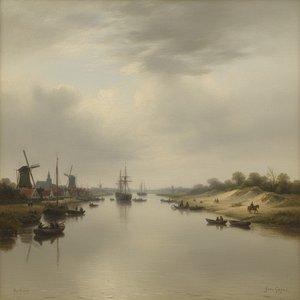
The true protagonist of any Hague School masterpiece is the light—specifically, the nuanced, monochromatic spectrum known as the "grey light." While other movements chased the vibrant, saturated hues of the Mediterranean, the masters of The Hague found infinite complexity within a palette of silver, pearl, slate, and muted ochre. This was not a lack of color, but rather an expansion of it. They mastered the art of tonalism, using subtle shifts in value to create depth and dimension amidst a seemingly monochromatic landscape.
This mastery allowed for the depiction of profound atmospheric phenomena: the way moonlight silvered a dark canal during twilight, or how a morning mist clung to the reeds of a marshland. There is a certain melancholy inherent in this light, a soft, diffused glow that avoids harsh shadows and instead wraps the world in a gentle, enveloping embrace. Through the careful application of glazes and delicate transitions, these artists captured the moisture in the air, making the viewer feel the cool dampness of a Dutch evening. It is a light that demands patience, inviting the observer to linger and discover the hidden textures within the shadows.
Masters of the Dutch Landscape: From Willem Maris to Jan Weissenbruch
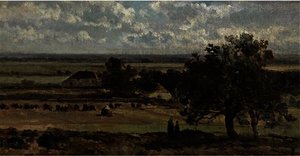
The movement’s greatness is anchored by a lineage of virtuosos, each bringing a unique perspective to the study of nature. Willem Maris, often celebrated for his ability to infuse even the greyest day with a sense of vitality, excelled in depicting the interplay of light and water. His works, such as A Dutch Landscape, serve as quintessential examples of how life and movement can be found within the serene beauty of rural scenes, using light to animate the ripples of a pond or the shimmer of a sun-drenched meadow.
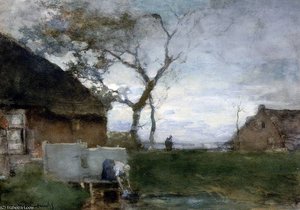
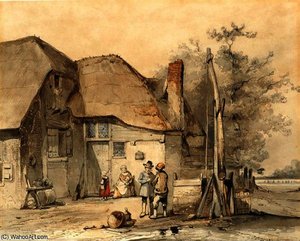
In contrast, Jan Weissenbruch brought a more profound, structural lyricism to the movement. His ability to compose vast, sweeping vistas—often featuring the iconic silhouettes of windmills against a twilight sky—demonstrates a masterful command of scale and atmosphere. In works like A Landscape with a Windmill, towards Twilight, we see the height of Hague School romanticism, where the landscape becomes a stage for the drama of fading light. Alongside figures such as Hendrik Potuyl, who captured the detailed, serene world of the Dutch countryside, these artists created a cohesive visual language that elevated the humble Dutch landscape to the status of high art.
Techniques of Texture: Capturing the Tactile Reality of Nature
To achieve such profound atmospheric depth, the Hague School painters relied heavily on the physical properties of their medium. The movement was characterized by a move toward more expressive brushwork, where the texture of the paint itself contributed to the narrative. Rather than hiding the artist's hand behind smooth, invisible strokes, they embraced the tactile quality of oil and watercolor to mimic the ruggedness of bark, the softness of mist, and the fluidity of water.
The use of impasto—the thick, sculptural application of paint—allowed certain elements of a painting to catch actual light, creating a three-dimensional effect that mimicked the physical world. This technique was essential for rendering the heavy, sodden earth or the frothy crest of a canal wave. Conversely, in their watercolor works, they utilized delicate washes to suggest the transparency of fog and the ephemeral nature of clouds. It is this tension between the heavy, textured earth and the light, translucent sky that gives Hague School paintings their enduring, living quality.
The Enduring Legacy: Bringing the Hague School into Modern Interiors
Today, the Hague School continues to exert a powerful influence on the aesthetic of the modern collector. In an era often dominated by digital sharpness and high-contrast imagery, the soft, tonal harmonies of these Dutch masters offer a sanctuary of calm and sophistication. Their works possess a timelessness that transcends the centuries, providing a sense of historical depth and emotional resonance that complements both classical and contemporary interior design.
Integrating such pieces into a home requires an appreciation for their subtle power. Because they rely on tonal shifts rather than jarring colors, they act as anchors of serenity in a room. Whether through a large-scale oil reproduction that serves as a dramatic focal point or a delicate watercolor print tucked into a gallery wall, the Hague School invites a slower, more contemplative way of living. They remind us that there is profound beauty to be found in the overcast, the quiet, and the grey, teaching us to find light even in the most muted of moments.
At Mus3ums.com, we are dedicated to preserving this legacy of human creativity. Our studio specializes in creating museum-quality, hand-painted reproductions that capture the very soul of the Hague School. From the thick, tactile brushstrokes of a Willem Maris to the atmospheric twilight of Jan Weissenbruch, our artists use traditional techniques and premium materials to ensure that every piece retains the "living" quality of the original masters. Whether you seek a bespoke oil painting or a high-fidelity Giclée print, we bring the timeless elegance of the Dutch masters into your personal collection.