Milos Urbásek: Pioneer of Geometric Abstraction and Lettrist Art
Milos Urbásek (1932 – 1988) stands as a pivotal figure in Czechoslovak art history, recognized for his uncompromising dedication to geometric abstraction and the innovative stylistic approach known as lettrism. Born in Ostrava, Czech Republic, Urbásek’s artistic journey began with a grounding in mechanical locksmithing but swiftly transitioned into a fervent exploration of modern art, particularly influenced by the visionary painter Bohumil Kubišta. This formative encounter ignited his passion for cubism and established a trajectory toward reducing visual expression to its purest form—a path that mirrored the burgeoning trends within Western European avant-garde movements.- Early Training & Influences: Urbásek’s formal education encompassed studies at the Uherské hradiště School for Junior Officers and the Air Connecting Training School in Chrudim, providing him with a foundational understanding of technical skills alongside exposure to artistic theory. However, it was Kubišta's compositional techniques that truly captivated him, shaping his aesthetic sensibilities and propelling him toward geometric abstraction.
- The Confrontations Group & Bratislava’s Artistic Landscape: Alongside Eduard Ovčáček, Urbásek founded the “Confrontations” exhibition series in Bratislava (1961–1964), marking a crucial moment of collaboration and artistic dialogue within Czechoslovakia's burgeoning art scene. This collective endeavor solidified his commitment to challenging conventional artistic norms and engaging with contemporary debates surrounding abstraction.
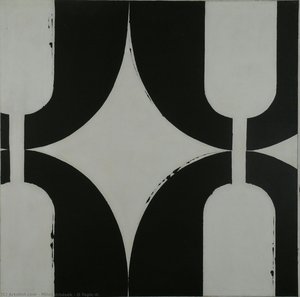
- Geometric Abstraction & Lettrism: Urbásek’s artistic evolution witnessed a decisive shift away from informel, embracing the structural principles of geometric abstraction—a movement championed by artists like Josef Albers and Barnett Newman. Simultaneously, he pioneered lettrism, utilizing letters as autonomous visual elements, mirroring the stylistic innovations of prominent European lettrist writers.
- Monochrome Painting & Structural Segmentation: Urbásek’s later works explored monochrome painting with remarkable precision, characterized by vertically and horizontally segmented surfaces punctuated by cross-hatching—a technique that became his signature style. This deliberate simplification aimed to distill visual information into its most fundamental components, reflecting a profound engagement with the philosophical implications of geometric form.
Notable Achievements & Recognition
- Folkwang-Presse Preis (1967): Awarded for his pioneering work in geometric abstraction and lettrism, solidifying his reputation as a leading figure in Czechoslovak art.
- Representation in Major Museums: His paintings are displayed prominently in galleries across Czechoslovakia, Slovakia, and Germany, guaranteeing the preservation of his artistic heritage for future generations.
Legacy & Historical Significance
Milos Urbásek’s unwavering pursuit of geometric abstraction and lettrism represents a significant reaction against the expressive tendencies of informel and embodies the spirit of experimentation that defined Czechoslovak art during the mid-20th century. His work continues to resonate with contemporary artists interested in exploring minimalist aesthetics and interrogating the relationship between visual language and conceptual thought.질의응답
Miloš Urbásek은(는) 어느 시대에 활동했나요?
Miloš Urbásek은(는) Modern 시대에 활동했습니다. 이 시기는 역사적 맥락에서 작가의 활동 위치를 보여줍니다.
Miloš Urbásek의 출생 도시와 국가는 어디인가요?
Miloš Urbásek은(는) Czech Republic의 Ostrava에서 태어났습니다.
Miloš Urbásek의 출생지와 출생 연도는 언제인가요?
Miloš Urbásek은(는) 1932년 Ostrava에서 태어났습니다.