The History and Identity of Kumu
Located in Tallinn, Estonia, Kumu is one of the largest museums in the country and a significant presence in Northern Europe. It functions as one of the five branches of the Art Museum of Estonia. The name Kumu is a stylised portmanteau of the Estonian words kunsti muuseum. This identity is rooted in the preservation of the nation's visual history, with a main collection that covers Estonian art from the 18th century onwards.
The institution occupies a central position in the Estonian art landscape. It holds a vast array of works that reflect the country's development through various eras. The collection spans from the 18th century to contemporary expressions, including the complexities of the 20th century. It remains a significant site for those seeking to understand the visual evolution of the region.
The Architecture and Design of the Building
The architectural form of Kumu possesses an ageless quality, achieved through a design that seeks to harmonize with the landscape rather than dominate it. Designed by Finnish architect Pekka Vapaavuori, the structure was the result of an international competition won in 1994. Following the competition, construction took place between 2003 and 2006. The building is set into the limestone slope of Lasnamäe hill, appearing to emerge from the natural terrain. This placement allows the large-scale structure to coexist with the surrounding greenery of Kadriorg Park.
The interior is defined by a circular design, centered around a large and lofty atrium. A ramp solution connects the different levels of the museum, creating a sense of continuous movement through the space. The architect utilized natural materials to ground the building in local tradition, specifically employing dolomite, wood, and copper. These materials provide a tactile presence that complements the curving exhibition halls and the closed inner courtyard.
The Diverse Art Collections at Kumu
The permanent collections within these walls trace the evolution of Estonian art from the 18th century through to the present day. On the second floor, the classics of Estonian art from the 18th century until the end of the Second World War are held. This collection provides a foundation for understanding the visual language of the region before the mid-20th century. The museum also presents temporary exhibitions that expand upon these permanent holdings, often focusing on contemporary expressions.
The third floor is dedicated to the period between 1945 and 1991. This era is characterized by the presence of both Socialist realism and Nonconformist art, reflecting the complex political and social shifts of the occupation period. These works offer a direct encounter with the aesthetic tensions of the 20th century. The museum's holdings from the occupation period (1940–1991) allow for a close study of how artists navigated the specific constraints and freedoms of that time.
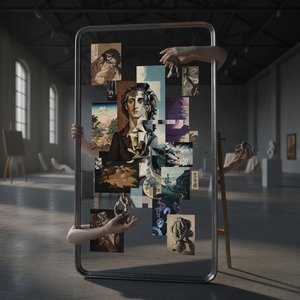
- Portrait of Professor Lorenz Ferdinand Ewers - Karl August Senff
- Death of the miser, about 1906 - Aleksander Promet
- Freight of Timber. Landscape with Lightning, 1894 - Oskar Hoffmann
- Plane, 1910 - Nikolai Triik
- Seashore at Tiskre, 1866 - Eugen Dücker
Exhibitions and Research at the Museum
The museum presents a continuous dialogue between permanent collections and temporary exhibitions. These rotating displays bring together Estonian modern and contemporary art alongside foreign works. On the fourth floor, the focus shifts toward the contemporary era, featuring exhibitions of art produced after 1991. This space allows for a direct encounter with the most recent developments in the regional and international art scenes.
Beyond the visual arts, the institution functions as a space for diverse cultural gatherings. The halls host theatre, concerts, and film nights, while art studios and various social events bring people into the building. Such programming ensures the museum remains a living part of the city's cultural life. Research also informs the museum's programming, such as the project examining the heritage of the Finno-Ugric peoples and the Sámi through a decolonial perspective.
Major Works in the Museum Collection
The collection contains several significant presences that define the visual history of the region. Karl August Senff’s Portrait of Professor Lorenz Ferdinand Ewers offers a study of character and stature. Nearby, Aleksander Promet’s Death of the miser, dated about 1906, presents a stark narrative through its composition. These works exist as quiet anchors within the halls, inviting a slow observation of form and intent.
Landscape and atmosphere find expression in the works of Oskar Hoffmann and Eugen Dücker. Hoffmann’s Freight of Timber. Landscape with Lightning, 1894 captures a specific, fleeting tension within the natural world. In a different light, Eugen Dücker’s Seashore at Tiskre, 1866 holds a steady, observational quality. These paintings do not merely depict scenery; they occupy the space with a particular weight.
The evolution of modern thought is visible in the works of Nikolai Triik. His 1910 piece, Plane, marks a moment of transition in the collection. Each of these paintings remains a physical point of contact with the past, existing as a tangible link to the artists who shaped the Estonian visual landscape.