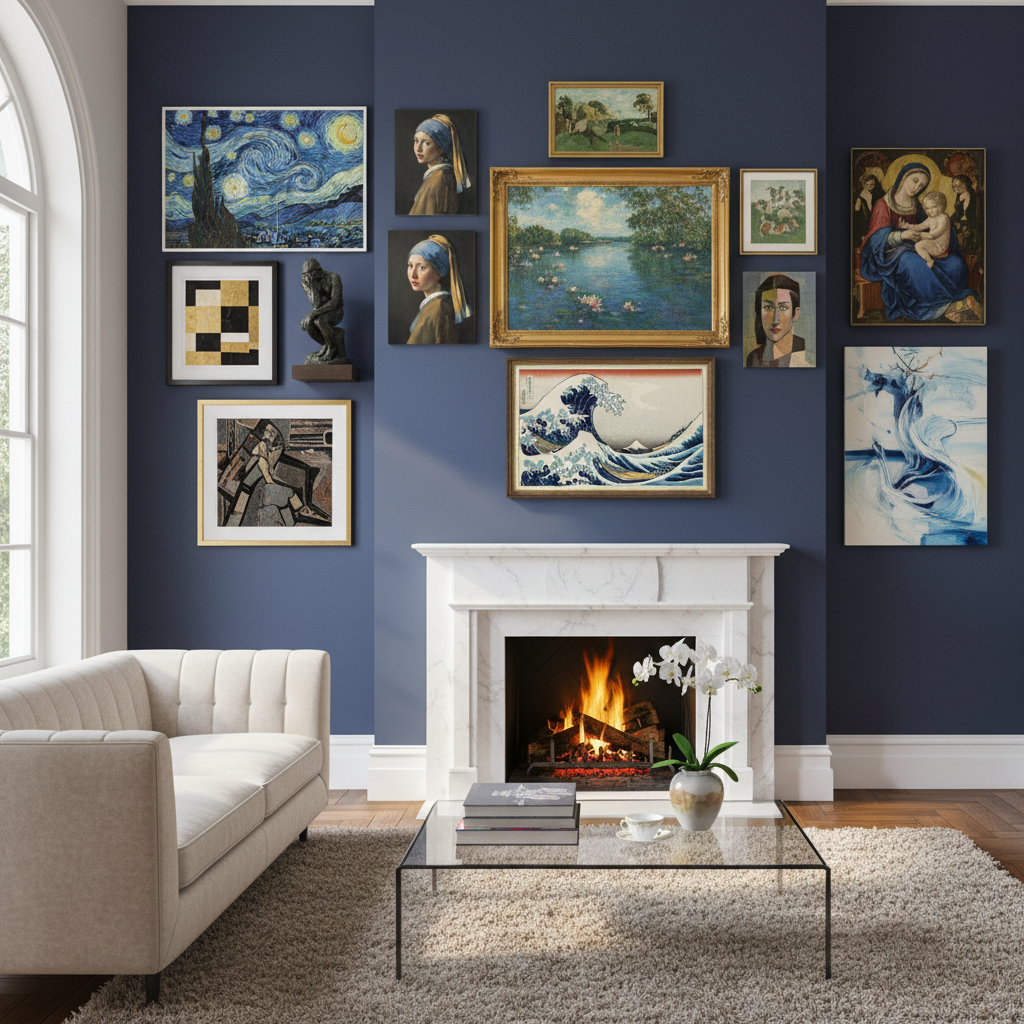


Introduction
What does it mean to feel elegant ? It’s a quality that transcends mere beauty, hinting at grace, refinement, and an inner poise that resonates through time. Throughout art history, certain works have possessed this elusive power – the ability to evoke not just admiration for skill, but a deeper sense of calm, sophistication, and enduring style.
From the opulent courts of Renaissance Italy to the serene landscapes of Impressionist France, artists have consistently sought to capture moments of elevated experience. The pursuit of elegance wasn’t simply aesthetic; it was often intertwined with social status, philosophical ideals, and a desire to reflect the harmony of the universe. Consider the meticulous detail in portraits commissioned by nobility – each brushstroke a testament to wealth, power, and cultural aspiration. Or the carefully balanced compositions of Japanese ukiyo-e prints, celebrating fleeting beauty and refined sensibilities.
These artworks weren’t created in isolation. They emerged from specific historical contexts—periods defined by unique social norms, artistic movements, and technological advancements. Understanding these origins enriches our appreciation for the works themselves, revealing layers of meaning beyond their visual appeal. The elegance we perceive today is not merely a reflection of the past, but a continuation of a dialogue across centuries.
But why do these particular pieces continue to captivate us? Why do they still feel relevant in our modern world? The answer lies in their ability to tap into universal human emotions – a longing for beauty, a desire for tranquility, and an appreciation for the finer things in life. They offer a respite from the chaos of everyday existence, inviting us to pause, reflect, and connect with something timeless.
Over the following list, we’ll explore ten artworks that embody this ‘elegant’ vibe or mood. Each piece represents a distinct approach to capturing grace, sophistication, and enduring style—a journey through art history designed to inspire and delight. Prepare to be transported by masterpieces that speak to the soul.
The Blue Boy (Jonathan Buttall) - Thomas Gainsborough
 The Blue Boy (Jonathan Buttall) - Thomas Gainsborough
A whisper of blue silk against a tempestuous sky—Thomas Gainsborough’s The Blue Boy isn't merely a portrait; it’s an embodiment of aristocratic grace and youthful contemplation.
Painted around 1770, this masterpiece challenged the conventions of its time with its relaxed pose and vibrant color palette. The sitter, believed to be Jonathan Buttall (though recent scholarship suggests his nephew), exudes a quiet confidence that belies a subtle undercurrent of melancholy. Gainsborough’s loose brushwork and masterful use of light create an atmospheric quality, enveloping the figure in a sense of both intimacy and distance.
The painting's enduring appeal lies not only in its technical brilliance but also in its symbolic richness. The blue attire—a deliberate artistic statement—and the distant ruins hint at themes of mortality and the fleeting nature of beauty. It’s a work that invites us to reflect on the complexities of youth, status, and the passage of time.
Today, The Blue Boy continues to inspire a sense of refined elegance in modern interiors. Its palette lends itself beautifully to serene bedrooms or sophisticated living spaces, evoking a mood of quiet luxury and timeless style. More than just an image, it’s a reminder that true elegance resides not in ostentation, but in the subtle harmony of color, form, and emotion—a cornerstone of any collection seeking to capture a truly ‘elegant’ vibe.
Madame X - John Singer Sargent
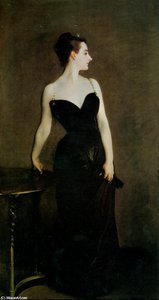 Madame X - John Singer Sargent
Before a gaze that holds both allure and reserve—a portrait emerges as an icon of aristocratic elegance, known as Madame X .
Though authorship is currently debated, this work resonates with the spirit of John Singer Sargent’s mastery. Painted during the Gilded Age, it captures a moment of refined beauty and subtle melancholy. The subject, enveloped in dark silk and pearls, embodies the era's fascination with wealth, status, and inner life.
What sets this portrait apart is its masterful use of light and shadow—loose brushstrokes creating an atmospheric quality that envelops the figure. The artist prioritizes tonal values over vibrant color, lending a sense of mystery and sophistication to the scene. Her averted gaze invites contemplation, hinting at complexities beneath the surface of high society.
Today, Madame X continues to inspire a sense of timeless elegance in modern interiors. Its subdued palette lends itself beautifully to sophisticated spaces, evoking a mood of quiet luxury and introspection. More than just an image, it’s a reminder that true style resides not in ostentation, but in the subtle power of suggestion—a cornerstone of any collection seeking to capture an ‘elegant’ vibe.
Lady with an Ermine - Leonardo da Vinci
 Lady with an Ermine - Leonardo da Vinci
A gaze that meets yours across centuries—Leonardo da Vinci’s Lady with an Ermine is not merely a portrait, but a captured moment of intelligence and serene beauty.
Painted around 1490, this work transcends representation through Da Vinci’s masterful use of *sfumato*, creating forms that gently melt into one another. Cecilia Gallerani, mistress to Ludovico Sforza, is depicted with a psychological depth rarely seen in Renaissance portraiture.
The inclusion of the ermine—a symbol of purity and moderation—adds layers of intrigue, potentially alluding to Cecilia’s virtue or her connection to the Duke. The painting's pyramidal composition lends stability, while her slight turn introduces a dynamic energy that draws the eye across the canvas.
Today, Lady with an Ermine continues to inspire a sense of refined elegance in modern interiors. Its soft palette and harmonious composition evoke a mood of quiet contemplation—a timeless reminder that true beauty resides not just in appearance, but in the subtle expression of inner life. It’s a cornerstone of any collection seeking to capture an ‘elegant’ vibe, bringing a touch of Renaissance grace into contemporary spaces.
Portrait of Bindo Altoviti - Raphael
 Portrait of Bindo Altoviti - Raphael
A quiet contemplation captured for eternity—Raphael’s Portrait of Bindo Altoviti is a testament to Renaissance grace and the power of subtle emotion.
Painted in 1515, this masterpiece embodies the High Renaissance ideal of harmonious beauty. Raphael presents Bindo Altoviti, a Florentine banker, not as a symbol of wealth, but as an individual lost in thought—a study in character and refinement.
The artist’s masterful use of *chiaroscuro* creates striking contrasts between light and shadow, emphasizing the three-dimensionality of the figure. Muted greens and soft blues envelop Altoviti, lending a sense of calm and sophistication to the scene. The smooth brushwork and delicate lines further enhance the portrait's realism.
Today, Portrait of Bindo Altoviti continues to inspire a sense of timeless elegance in modern interiors. Its serene palette and harmonious composition evoke a mood of quiet contemplation—a reminder that true style resides not just in appearance, but in the subtle expression of inner life. It’s a cornerstone of any collection seeking to capture an ‘elegant’ vibe, bringing a touch of Renaissance grace into contemporary spaces.
Nana - Édouard Manet
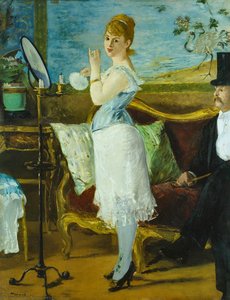 Nana - Édouard Manet
A whisper of lace and a gaze held in quiet contemplation—Édouard Manet’s Nana captures an intimate moment, radiating an understated elegance that continues to captivate.
Painted in 1877, this work transcends mere representation. It's a glimpse into the vibrant social world of 19th-century Paris, rendered with Manet’s signature blend of Realism and Impressionistic flair. The scene—a boudoir or dressing room—is bathed in soft light, highlighting the delicate textures of silk and lace.
The composition is both balanced and dynamic, drawing the eye to the central figure of Nana herself. Her elegant updo and refined attire suggest a world of sophistication, while the man’s presence adds an air of mystery. The large mirror reflects not just the room, but also a sense of self-awareness and introspection.
Today, Nana continues to inspire a sense of timeless elegance in modern interiors. Its muted palette and harmonious composition evoke a mood of quiet luxury—a reminder that true style resides not in ostentation, but in the subtle beauty of everyday moments. It’s a cornerstone of any collection seeking to capture an ‘elegant’ vibe, bringing a touch of Parisian grace into contemporary spaces.
Dancers in Pink - Edgar Degas
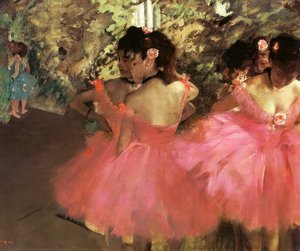 Dancers in Pink - Edgar Degas
A fleeting moment captured in a swirl of pink—Edgar Degas’ Dancers in Pink isn't simply a depiction of ballet; it’s an exploration of grace, dedication, and the ephemeral beauty of performance.
Painted in 1885, this work embodies the Impressionist spirit with its loose brushstrokes and vibrant palette. Degas meticulously observed the world around him—particularly the dancers of the Paris Opera Ballet—capturing their energy and movement with unparalleled skill.
The composition is bustling yet harmonious, drawing the eye to the swirling tutus and dynamic poses. Warm hues of pink, red, and yellow are contrasted by cooler tones in the background, creating a sense of depth and immediacy. The interplay of light and shadow further enhances the painting’s lively mood.
Today, Dancers in Pink continues to inspire a sense of timeless elegance in modern interiors. Its vibrant colors and dynamic composition evoke a feeling of passion and vitality—a reminder that true beauty resides not just in perfection, but in the fleeting moments of artistic expression. It’s a cornerstone of any collection seeking to capture an ‘elegant’ vibe, bringing a touch of Parisian grace into contemporary spaces.
A Dinner Table at Night (also known as Mr. and Mrs. Albert Vickers) - John Singer Sargent
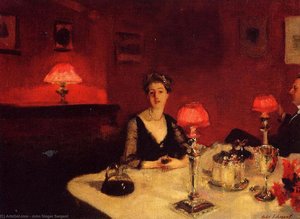 A Dinner Table at Night (also known as Mr. and Mrs. Albert Vickers) - John Singer Sargent
A hushed intimacy captured in crimson light—John Singer Sargent’s A Dinner Table at Night , also known as “Mr. and Mrs. Albert Vickers,” is more than a portrait; it's an invitation into the refined world of Victorian society.
Painted in 1884, this work embodies Sargent’s masterful blend of realism and Impressionistic flair. The scene—a private dining space—is bathed in warm hues, radiating a sense of quiet contentment. We are presented not with boisterous revelry, but with a composed elegance that speaks volumes about the era’s sensibilities.
Sargent’s visible brushstrokes and rich color palette create an enveloping warmth, while strategically placed silver accents introduce cooler tones for balance. The interplay of light and shadow sculpts the figures, enhancing their form and creating a sense of depth.
Today, A Dinner Table at Night continues to inspire a sense of timeless elegance in modern interiors. Its muted palette and harmonious composition evoke a mood of sophisticated intimacy—a reminder that true style resides not just in ostentation, but in the subtle beauty of shared moments. It’s a cornerstone of any collection seeking to capture an ‘elegant’ vibe, bringing a touch of Victorian grace into contemporary spaces.
Interior (My dining room) - Wassily Kandinsky
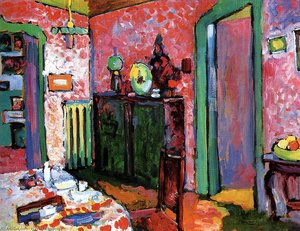 Interior (My dining room) - Wassily Kandinsky
A vibrant pulse of color and form—Wassily Kandinsky’s Interior (My dining room) isn't simply a depiction of domestic life; it’s an invitation into the artist’s emotional world.
Painted in 1909, this work marks a pivotal moment in Kandinsky’s transition towards abstraction. The scene—a lively dining space—is rendered with bold brushstrokes and intense hues, radiating energy and emotion. It's a testament to his belief that art should express inner spiritual truths rather than merely represent external reality.
The composition is dynamic yet harmonious, drawing the eye through various elements—furniture, decorative objects, and architectural features. Warm tones of red, orange, and yellow are contrasted by cooler shades of green and blue, creating a sense of depth and vibrancy.
Today, Interior (My dining room) continues to inspire a sense of refined elegance in modern interiors. Its bold colors and expressive brushwork evoke a mood of warmth and vitality—a reminder that true style resides not just in perfection, but in the celebration of individual expression. It’s a cornerstone of any collection seeking to capture an ‘elegant’ vibe, bringing a touch of artistic energy into contemporary spaces.
The Musician - Georges Braque
 The Musician - Georges Braque
A fragmented melody visualized—Georges Braque’s The Musician isn't simply a painting of an instrument; it’s an exploration of the very essence of musical expression, distilled through the revolutionary lens of Cubism.
Created in 1918, this work embodies the innovative spirit of Synthetic Cubism, challenging traditional perspectives and inviting viewers to experience sound as a series of dynamic forms. The interplay of geometric shapes, layered textures, and a vibrant palette creates a sense of depth and movement, radiating energy and creative power.
The bold depiction of musical themes—most notably the guitar—evokes a feeling of rhythm, harmony, and introspection. It’s a testament to Braque’s mastery of abstraction, transforming a familiar subject into a captivating visual experience.
Today, The Musician continues to inspire a sense of refined elegance in modern interiors. Its dynamic composition and expressive brushwork evoke a mood of passion and vitality—a reminder that true style resides not just in perfection, but in the celebration of artistic innovation. At , we’re proud to offer faithful reproductions of this masterpiece, allowing you to bring its emotion and texture into your home.
Memory of Oceania - Henri Matisse
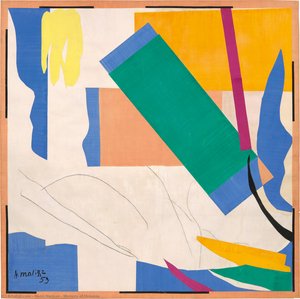 Memory of Oceania - Henri Matisse
A sun-drenched echo of paradise—Henri Matisse’s Memory of Oceania isn't a depiction of a place, but rather the lingering sensation of one, transformed into a symphony of color and form.
Created during a period of physical limitation, this late-career masterpiece embodies Matisse’s innovative *papiers découpés* technique—a liberation born from necessity. By cutting directly into vibrant, gouache-painted paper, he achieved a purity of expression previously unattainable, bypassing traditional constraints to create an immersive experience that envelops the viewer.
The large scale and fluid shapes evoke the vastness and energy of the Pacific islands, while ambiguous figures hint at tropical life and remembered journeys. It’s a testament to Matisse’s ability to translate personal feeling into a universal visual language—a celebration of light, warmth, and the sheer joy of existence.
Today, Memory of Oceania continues to inspire a sense of refined elegance in modern interiors. Its bold composition and evocative colors evoke a mood of tranquility and vitality—a reminder that true style resides not just in aesthetics, but in capturing the essence of life’s most cherished moments.
Conclusion
As the light fades on these ten masterpieces, we’re reminded that their enduring power lies not merely in their historical significance, but in their ability to transcend time and speak directly to the human heart. Each canvas—from Braque’s fragmented melodies to Matisse’s sun-drenched memories—offers a glimpse into the soul of its creator, inviting us to share in their vision and experience the world anew.
These artworks are not relics of the past; they are living presences that continue to move us, shape our interiors, and inspire creativity today. They remind us that elegance isn’t simply a matter of style, but a reflection of inner harmony, emotional depth, and a profound appreciation for beauty.
At , we believe in making these treasures accessible—not as mere reproductions, but as opportunities to cultivate your own artistic statement. Whether you're envisioning a refined hotel lobby, a tranquil villa retreat, or simply seeking to elevate the atmosphere of your home, our team is dedicated to partnering with you every step of the way.
From custom collections tailored to your unique aesthetic to art mockups that bring your vision to life, we offer museum-quality reproductions designed to inspire and delight. Explore our full collection and discover the artwork that speaks to you—and begin crafting a space that reflects your own enduring elegance.