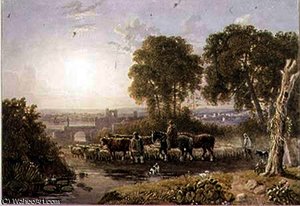
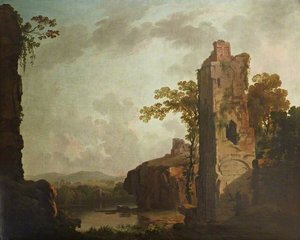
Introduction
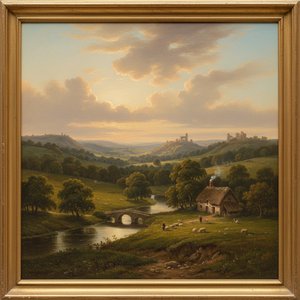
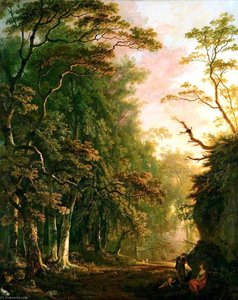
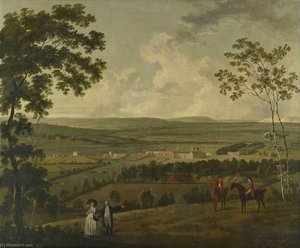
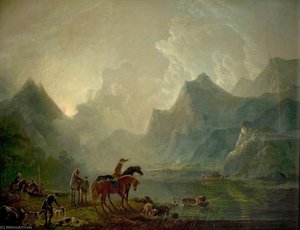
The 18th century marked a transformative era for Irish art, a period where the island's visual culture began to assert its own distinct identity amidst the shifting political and social landscapes of the Enlightenment. This century saw a movement away from purely religious iconography toward a sophisticated mastery of portraiture, landscape, and the burgeoning sensibilities of the Rococo and Neoclassical styles. As Ireland became increasingly integrated into the broader European artistic dialogue, its painters began to capture the essence of a changing society, from the grandiosity of the landed gentry to the raw, atmospheric beauty of the Irish countryside.
What unites these artists is their remarkable ability to navigate the tension between local character and international trends. Whether working in the intimate, psychological style of portraiture or the expansive, light-drenched vistas of the landscape, these painters reflected a nation in transition. Their works serve as vital historical documents, capturing the fashion, the light, and the very spirit of an era that laid the groundwork for modern Irish aesthetics. Today, their legacy persists through the enduring power of their compositions and the technical precision that continues to fascinate scholars and enthusiasts alike.
In the following exploration, we traverse the diverse talents of this golden age, highlighting ten significant figures—including George Barret, Sr., Nathaniel Hone the Elder, and Charles Jervas—whose brushstrokes helped define the visual soul of 18th-century Ireland.
John Ramage
 Portrait of a Gentleman - John Ramage
Born in Dublin in 1748, John Ramage represents the profound artistic diaspora of the 18th century, carrying the refined training of the Dublin Society of Artists to the shores of North America. His journey from the meticulous world of Irish goldsmithing to the burgeoning colonial art scene allowed him to master the delicate art of the miniature. This technical precision is palpable in his Portrait of a Gentleman (c. 1780), a work that exemplifies the era's fascination with intimate, high-status portraiture.
As a painter born in Ireland during this transformative century, Ramage’s legacy is defined by his ability to navigate turbulent political landscapes. Despite his staunch Loyalist allegiances during the American Revolution, his craftsmanship remained unshakeable. In this specific miniature, he eschews color in favor of a sophisticated grayscale palette, utilizing subtle tonal values and delicate hatching to define the subject's features. The result is a dignified, reflective study that captures the composure of a gentleman through the precise, disciplined hand of a master miniaturist.
Honora (Nano) Nagle
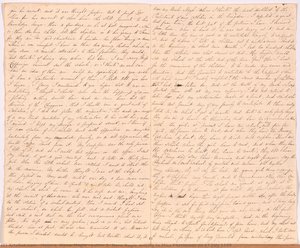 Letter 1: Nano Nagle writing to Miss Fitzsimons on 17 July 1769 - Honora (Nano) Nagle
While the 18th century Irish painters of this era are often defined by their mastery of oil and pigment, Honora (Nano) Nagle represents a different, profound form of artistry: the architecture of social change. Born in 1718 in County Cork, Nagle’s contribution to the cultural and intellectual landscape of 18th-century Ireland was one of defiance and enlightenment. Rather than using a brush, she used education as her medium, navigating the restrictive Penal Laws to provide light to the impoverished through the founding of the Presentation Sisters.
Her legacy is captured not in a portrait, but in the delicate, cursive script of her historical correspondence. The representative work, Letter 1: Nano Nagle writing to Miss Fitzsimons on 17 July 1769, serves as a poignant manuscript copy of her intent to establish schools for the poor in Cork. This document, characterized by its aged, putty-toned paper and reflective tone, reveals the immense risks she undertook to bypass legislation that prohibited Catholic education. To encounter her work is to witness the intersection of spiritual conviction and the courageous pursuit of literacy during a transformative century in Irish history.
Charles Jervas
 John Campbell, 3rd Earl of Breadalbane, 1696 - 1782. (as a child in highland costume) - Charles Jervas
Born in Clonlisk, County Offaly, around 1675, Charles Jervas stands as a central figure among 18th century Irish painters, bridging the gap between the Baroque era and the Enlightenment. His journey from the Irish countryside to the prestigious studios of London—where he trained under Sir Godfrey Kneller—allowed him to develop a sophisticated style that defined the portraiture of the age. A master of capturing the intellectual essence of his sitters, Jervas became the preferred painter for the era's most brilliant minds, including Jonathan Swift and Alexander Pope.
His work is instantly recognizable by its refined characterization and the ability to convey the specific temperament of the subject through subtle lighting and poised composition. In the Portrait of John Campbell, 3rd Earl of Breadalbane (1708), we see this mastery on display. The painting depicts the young heir in elaborate Highland attire, utilizing a rich palette of deep blues and vibrant tartan patterns that contrast beautifully against a lush, wooded landscape. Through his brush, Jervas does more than record a likeness; he captures the weight of lineage and the quiet dignity of a life destined for the highest circles of European diplomacy.
Nathaniel Hone the Elder
 Portrait of a Gentleman - Nathaniel Hone the Elder
Born in Dublin around 1718, Nathaniel Hone the Elder stands as a pivotal figure among 18th century Irish painters, bridging the gap between Rococo elegance and Neoclassical idealism. His formative years in Ireland were shaped by the instruction of prominent portraitists Francis Bacon and Jonathan Richardson Sr., whose dramatic, theatrical style instilled in him a profound ability to capture psychological insight and expressive gestures in his subjects.
A transformative period in Paris, where he studied under Jean-Simon Bailly and Jacques-Louis David, significantly broadened his stylistic horizons, introducing him to the principles of Enlightenment Neoclassicism. Upon returning to London, Hone became known for his innovative approach to landscape, often utilizing atmospheric perspective and tonal modulation to evoke a sense of grandeur reminiscent of the Barbizon spirit. His versatility is perfectly captured in the Portrait of a Gentleman (c. 1769), a work that demonstrates his precision in depicting the status and character of the era's aristocracy. Through his mastery of both intimate portraiture and expansive landscapes, Hone remains a vital representative of the artistic evolution occurring within the Irish and European traditions during this period.
Thomas Hickey
 Double Portrait of Arthur Wolfe and his Wife Anne - Thomas Hickey
Born in Dublin in 1741, Thomas Hickey stands as one of the most cosmopolitan figures among 18th century Irish painters. While his early training under Robert West at the Royal Dublin Society schools provided him with a rigorous classical foundation, his life’s journey took him far beyond the borders of Ireland. His career was defined by a remarkable ability to document diverse cultures, from the diplomatic circles of Peking to the opulent courts of India, where he captured the nuanced essence of local customs and the likenesses of figures such as Tipu Sultan’s family.
In his Double Portrait of Arthur Wolfe and his Wife Anne, painted in 1769, we see the artist’s mastery of the portraiture style that characterized his early career. This oil on canvas presents the couple within an atmospheric, pastoral landscape, utilizing a sophisticated interplay of soft light and deep shadows to establish their presence. The composition, featuring the man seated and the woman standing with graceful poise, is enriched by the inclusion of a small dog, adding a touch of domestic intimacy to the grand, dramatic setting. Through such works, Hickey bridged the gap between the traditional training of his Irish roots and the expansive, global perspective of an international traveler.
Thomas Frye
 Thomas Frye - Thomas Frye
Born in Edenderry, Ireland, Thomas Frye (1710–1762) represents the versatile spirit of 18th century Irish painters, a group characterized by artists who bridged the gap between local roots and international prominence. While his career flourished within the vibrant artistic circles of London, his Irish origins provided the foundation for a polymathic career that spanned portraiture, mezzotint engraving, and even the decorative arts of porcelain manufacturing.
Frye was a master of capturing both aristocratic grace and psychological nuance. His technical prowess is evident in his ability to navigate between the delicate intimacy of miniatures and the commanding presence of large-scale oil portraits. This duality is perfectly encapsulated in his 1759 work, A Self-Portrait by Thomas Frye. In this somber oil on canvas, he presents himself in a three-quarter view, utilizing a restrained palette of deep blacks and muted flesh tones to emphasize his dignity. Through a sophisticated use of chiaroscuro, the artist highlights the textures of his powdered hair and the contemplative expression of his gaze, offering a profound study of identity and professional status that remains a hallmark of his enduring legacy.
George Barret, Sr.
Born in Libertyville, Ireland, between 1728 and 1732, George Barret, Sr. emerged as a pivotal figure among 18th century Irish painters. His journey from an apprentice staymaker to a master of the landscape is a testament to his profound natural talent. After receiving formal training at Robert West’s Academy in Dublin, Barret’s artistic trajectory was deeply influenced by his friendship with Edmund Burke. This connection proved essential, as Burke’s philosophical inquiries into the sublime and the beautiful provided a conceptual framework for Barret’s approach to the natural world.
While his early works often reimagined classical Italianate scenes, Barret eventually moved to London in 1762, where he became a founding member of the Royal Academy. His style transitioned from idealized compositions toward a more naturalistic, atmospheric depiction of both English and Irish scenery. His representative work, The Drive, Norbury Park (1775), exemplifies this mastery. Through meticulous oil layering and a sophisticated use of atmospheric perspective, he captures a tranquil, misty landscape that balances human presence with the vastness of nature. His ability to translate the sensory experience of the outdoors into textured, luminous oil paintings solidified his legacy within the canon of Irish art history.
Walter Robertson
 Portrait of a Lady - Walter Robertson
Born in Dublin around 1750, Walter Robertson represents the exquisite technical precision of 18th century Irish painters. Known to many as "The Irish Robertson," he emerged from a lineage of skilled jewelers and miniaturists, a background that gifted him an unparalleled ability to manipulate light on a microscopic scale. His journey from the Dublin Society's School of Drawing to the sophisticated salons of London and eventually to the burgeoning cultural landscape of New York highlights the global reach of Irish talent during this era.
A defining chapter of his career was his 1793 move to New York, facilitated by a friendship with the renowned Gilbert Stuart. This transition allowed his delicate, intimate style to capture the likenesses of the American elite. In his Portrait of a Lady (1795), one can observe the ethereal luminosity that defined his mastery of watercolor on ivory. The work showcases a soft, gray-toned elegance, demonstrating how he could transform a tiny, precious surface into a profound psychological study. His ability to marry Neoclassical refinement with a glowing, translucent texture remains a testament to the high standard of portraiture produced by Irish masters of the eighteenth century.
Robert Hunter
 Portrait of Robert Rochfort, 1st Earl of Belvedere (1708-1774) - Robert Hunter
Born in Ulster around 1715, Robert Hunter emerged as a significant figure among 18th century Irish painters through his ability to infuse portraiture with profound psychological depth. His formative years were marked by personal instability, a struggle that many art historians believe contributed to the soulful, resilient character found in his later compositions. Hunter’s technical mastery began under the guidance of Thomas Pope, a prominent figure in the Dublin art scene, whose influence helped Hunter move beyond mere imitation toward a sophisticated command of light and character.
His style is defined by an elegant use of tonal gradations and a deep respect for the Old Masters, particularly the dramatic chiaroscuro of Rembrandt. This expertise allowed him to become a premier portraitist for the Irish aristocracy, capturing the essence of his subjects with a sense of permanence. His representative work, Portrait of Robert Rochfort, 1st Earl of Belvedere (1708-1774), exemplifies this skill. In this piece, Hunter utilizes a masterful interplay of light and shadow to render the heavy textures of a crimson cloak and delicate lace, creating a striking three-dimensionality that commands the viewer's attention while maintaining an atmosphere of quiet, somber dignity.
Martin Archer Shee
 John Philip Kemble - Martin Archer Shee
In the 1795 oil painting John Philip Kemble, Martin Archer Shee captures the likeness of the celebrated actor in a striking bust-length composition. The work is defined by a dramatic chiaroscuro effect, where the bright white of a crisp cravat cuts through a somber palette of deep browns and blacks. This intense light focuses attention on the subject's face, while his hand rests near his chest in a gesture of quiet introspection. The brushwork is fine and deliberate, utilizing soft, blended lines to render the textures of linen and skin with neoclassical precision.
Born in Dublin in 1769, Shee represents the significant talent emerging from Ireland during the 18th century. His journey from the Royal Dublin Society to the prestigious Royal Academy in London was shaped by the mentorship of Joshua Reynolds. His career saw a steady ascent from an associate to a full Royal Academician, eventually culminating in his knighthood and his presidency of the Academy in 1830. Known for his ability to capture the character of Regency-era figures, Shee’s style is marked by a formal, classical elegance and a mastery of light and shadow that immortalized the leading personalities of his time.
Conclusion
The 18th century was a transformative era for Irish art, a period where the landscape and the people were captured through a lens of increasing sophistication and stylistic diversity. From the sweeping, atmospheric vistas of George Barret, Sr. to the precise, character-driven portraiture of Nathaniel Hone the Elder and Charles Jervas, these artists collectively defined a visual identity for a nation in flux. Whether through the intimate sketches of personal likenesses or the grand, dramatic compositions of the era, these painters established a legacy of technical mastery that bridged the gap between local tradition and the broader European Enlightenment.
At Mus3ums.com, we invite you to bring this rich heritage into your own space. Our master artists specialize in creating museum-quality, hand-painted oil reproductions of these historical masterpieces, ensuring that the texture, light, and soul of the 18th century are preserved on canvas. You can explore our full collection to find the perfect piece and experience the timeless elegance of Irish art history through our bespoke, handmade artistry.