Gino SchmidtOskaras Kokoška · 1914
 Oil On Canvas
- WallArt
- Expressionist Portraiture
 1914
1914 95.0 x 68.0 cm
 Thyssen-Bornemisza Muziejus
Oskaras Kokoška (1886 – 1980)
Atraskite intensyvų Oskar Kokoschkos (1886–1980) ekspresionizmą. Žymus psichologiškai įkrauti portretais, kraštovaizdžiais ir kūriniu „Vėjo nuotaka“, jo menas atspindi turbulentinį gyvenimą ir novatorišką stilių. #Kokoschka #Ekspresionizmas
Thyssen-Bornemisza Muziejus (Madrido, Šiaurės Amerikos Sąjungos Federacija)
Pasikalkite apie europiečių dailę nuo Renesanso iki Po impresionizmo muziejuje „Thyssen-Bornemisza“ Madride! Išsiaiškinkite Van Gogą, Rembrandtą ir kt. įspūdingoje rūmų aplinka. Muziejus „Thyssen-Bornemisza“, Madridas, Ispanija, Europiečių dailė, Renesansas, Po impresionizmas, Van Gogas, Rembrandtas, Picasso, Goya Muziejus Nacionalinis „Thyssen-Bornemisza“ Ispanija Manuela Rijlaarsveld Madrid
The Enigmatic Figure: Gino Schmidt by Oskar Kokoschka
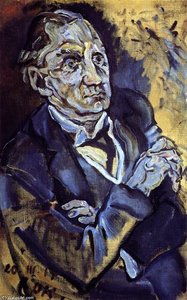
Oskar Kokoschka’s Gino Schmidt, painted in 1914 and currently residing within the hallowed halls of the Thyssen-Bornemisza Museum in Madrid, is not merely a portrait; it's an intensely psychological exploration rendered in oil on canvas. Measuring 95 x 68 cm, this work immediately draws the viewer into a world of quiet introspection, inviting us to decipher the unspoken narrative held within the subject’s downward gaze. Kokoschka, a pivotal figure in early Expressionism, was driven by a profound desire to capture not just appearances but the very essence – the anxieties and emotions – that shaped his subjects. This painting exemplifies that ambition with remarkable power.
A Study in Realism and Psychological Depth
The subject, identified as Gino Schmidt, is presented with a startling degree of realism – his meticulously rendered suit, tie, and the prominent lines of his beard all contribute to an immediate sense of familiarity. Yet, this apparent realism serves merely as a foundation for Kokoschka’s deeper exploration. The background, deliberately blurred, directs our attention entirely onto the man before us, isolating him within a space that feels both tangible and dreamlike. This technique isn't simply stylistic; it reinforces the painting’s central theme: the internal landscape of the individual. Kokoschka masterfully uses light to sculpt the figure, creating subtle shifts in tone that emphasize his features and contribute to an overall sense of dimensionality – a testament to his understanding of chiaroscuro.
The Expressionist Soul
Created during a period of immense social and artistic upheaval, Gino Schmidt is deeply rooted in the tenets of Expressionism. Kokoschka’s work was characterized by its raw emotionality and willingness to confront uncomfortable truths about the human condition. He rejected conventional portraiture, opting instead for a style that prioritized psychological insight over photographic accuracy. The man's contemplative posture, his downward gaze – these are not simply details; they speak volumes about an inner world grappling with uncertainty or perhaps even melancholy. It’s a visual embodiment of the anxieties prevalent in early 20th-century Europe.
Historical Context and Kokoschka’s Legacy
To fully appreciate Gino Schmidt, it's crucial to understand Oskar Kokoschka’s broader artistic trajectory. Born in Croatia (then part of Austria-Hungary) in 1886, his early career was shaped by the Jugendstil movement in Vienna before he embraced Expressionism with fervor. His tumultuous personal life – marked by passionate relationships and emotional instability – undoubtedly informed his art, lending a profound sense of vulnerability to his portraits. Kokoschka’s legacy extends far beyond this single painting; he remains one of the most significant figures in 20th-century art, renowned for his psychologically penetrating depictions of human nature. The Thyssen-Bornemisza Museum offers a rich context for viewing this work alongside other masterpieces by Kokoschka and his contemporaries.
Considering its historical significance and artistic merit, a high-quality reproduction of Gino Schmidt is an exceptional addition to any collection. Explore the exquisite detail and emotional depth of this iconic portrait at Mus3ums for a stunning representation of Kokoschka’s genius.
Apie šį kūrinį
- Pavadinimas: Gino Schmidt
- Autorius: Oskaras Kokoška
- Metai: 1914
- Originalūs matmenys: 95.0 x 68.0 cm
- Formatas: Tall
- Autorinių teisių statusas: Saugoma autorinių teisių
- Kur galima pamatyti: Thyssen-Bornemisza Muziejus
- Technika: WallArt
- Pagrindinė spalva: Phthalo Green
- Paskirtis: Statement
Trumpa informacija
- Artistic style: Expressionism
- Influences:
- Jugendstil
- Impressionism
- Location: Thyssen-Bornemisza, Spain
- Subject or theme: Contemplative man
- Title: Gino Schmidt
Klausimai ir atsakymai
Kiek harmoningai dera „Gino Schmidt“ – Oskaras Kokoška spalvos?
„Gino Schmidt“ spalvų harmonija yra apibūdinama kaip Softly Mixed Palette.
Kokio išdėstymo formatas tinka kūriniui „Gino Schmidt“ – Oskaras Kokoška?
Formatas (Tall) ir rekomenduojama erdvė (Living Room) yra du nurodyti išdėstymo faktai kūriniui „Gino Schmidt“ – Oskaras Kokoška.
Kokia technika ir stilius charakterizuoja „Gino Schmidt“ – Oskaras Kokoška?
Kūrybinėje darbe „Gino Schmidt“ Oil On Canvas technika susilieja su Expressionist Portraiture kryptimi.