
The Genesis of Orphism: From Cubist Structure to Lyrical Abstraction
 Orphism (art)
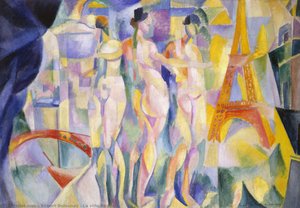
Orphism or Orphic Cubism, a term coined by the French poet Guillaume Apollinaire in 1912, was an offshoot of Cubism that focused on pure abstraction and bright colors, influenced by Fauvism, the theoretical writings of Paul Signac, Charles Henry and ...
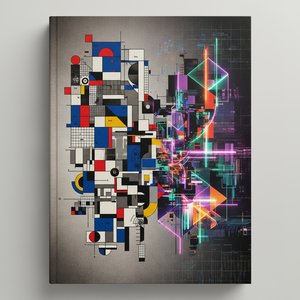
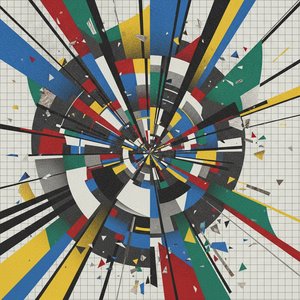
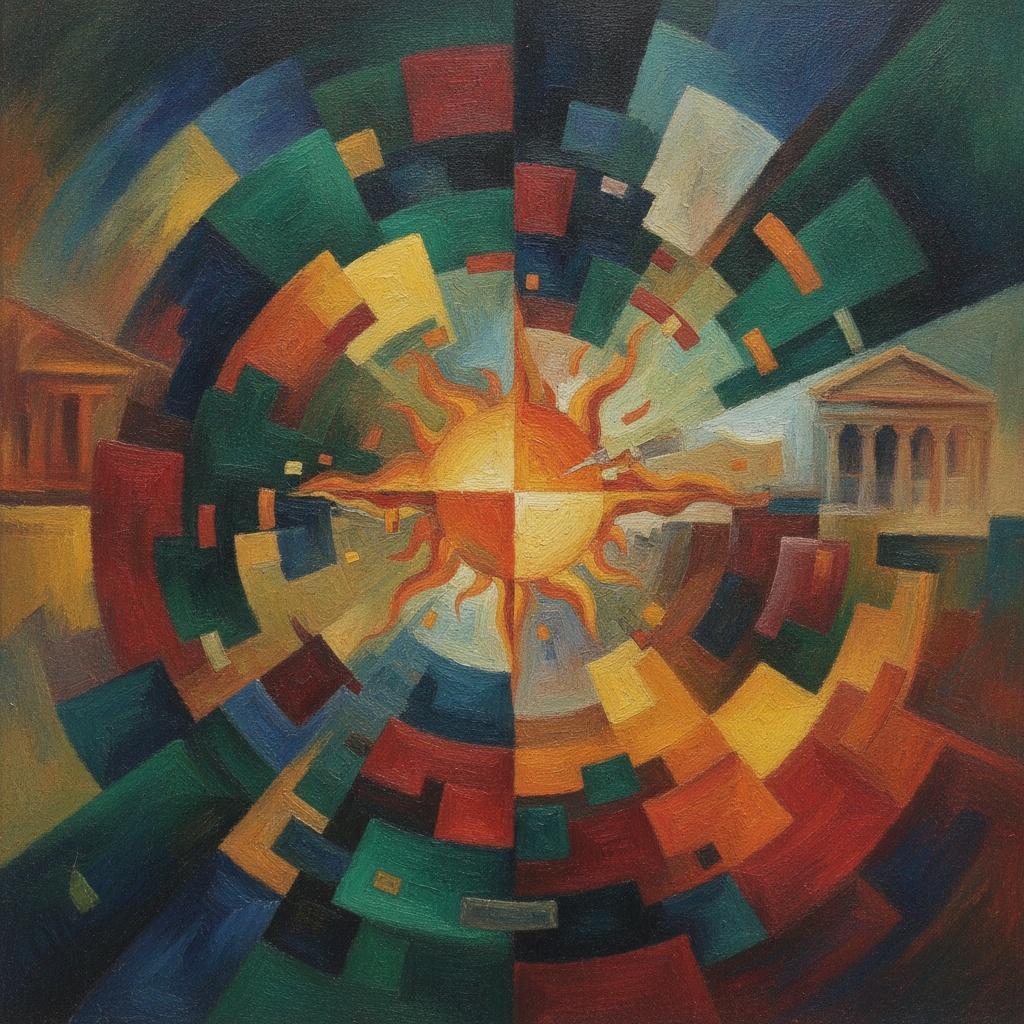
To step into the world of Orphism is to witness a profound moment of liberation in the history of modern art. For those of us who have spent decades admiring the soft, dappled light of Monet or the structured landscapes of Cézanne, the emergence of Orphism feels like a sudden, breathtaking dawn. It was a movement born from the very heart of Cubism, yet it sought to transcend the monochromatic, analytical constraints that had defined the early twentieth century. While the Cubists were busy dissecting the world into fragmented, earth-toned planes, a new group of visionaries looked toward the sun. The term itself, whispered by the poet Guillaume Apollinaire in 1912, evokes the mythical Orpheus—a figure whose music could charm the very essence of life. This was not merely a stylistic choice; it was an invitation to view painting as a lyrical, musical experience, where the rigid boundaries of subject matter dissolved into pure sensation.
This transition was far more than a rebellion against tradition; it was a sophisticated evolution. The Orphists did not reject the structural lessons learned from Cubism; rather, they infused those geometric foundations with a vibrant, pulsating energy. They moved away from the intellectualized deconstruction of objects and toward a synthesis of form and light. It was a movement that bridged the gap between the recognizable world and the entirely abstract, creating a space where the eye could wander through layers of color without being anchored by the weight of a specific landscape or figure. In this way, Orphism became a vital link in the chain of modernism, paving the way for a future where art could exist as an independent language of emotion and rhythm.
A Symphony of Sensation: The Role of Color Theory and Light
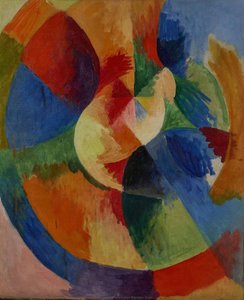
 Abstract art
Abstract art uses visual language of shape, form, color, and line to create a composition which may exist with a degree of independence from visual references in the world. Abstract art, non-figurative art, non-objective art, and non-representational...
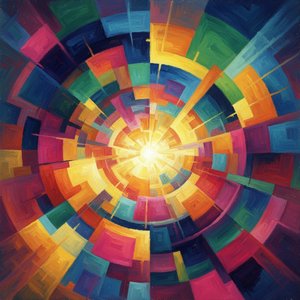
If Cubism provided the skeletal structure, then color was the very soul of Orphism. For the discerning lover of art, there is a particular joy in observing how these artists utilized the science of optics to create movement on a static canvas. Influenced by the theoretical writings of Paul Signac and the fascinating discoveries of the chemist Michel Eugène Chelam, the Orphists embraced the concept of simultaneous contrast. They understood that color does not exist in isolation; rather, it is defined by its relationship to the hues surrounding it. By placing complementary colors—vibrant oranges against deep blues, or radiant yellows against rich purples—in close proximity, they achieved an optical vibration that makes the canvas appear to breathe and shimmer.
This was a departure from the Impressionist focus on capturing a fleeting moment of light; instead, the Orphists sought to capture the essence of light itself. They utilized techniques such as layered paint application—sometimes even incorporating encaustic wax—to create surfaces with an ethereal, luminous depth. When you stand before a work from this era, you are not merely looking at pigment on canvas; you are experiencing a carefully orchestrated symphony of chromatic intensity. The light does not simply fall upon the painting; it seems to emanate from within the very layers of color, inviting a contemplative state where the viewer is submerged in a sea of pure, radiant energy.
The Visionaries: Robert and Sonia Delaunay’s Radiant Legacy
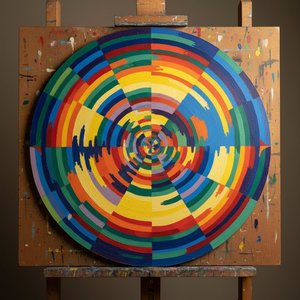 Sonia Delaunay: A Life in Color – Exploring the Rhythms of Abstraction and Synesthesia
Early Life & Influences: From Russia to the Parisian Avant-Garde Wikipedia: Sonia Delaunay Sonia Delaunay (French: [sɔnja dəlonɛ]; 14 November 1885 – 5 December 1979) was a French artist born to Jewish parents, who spent most of her working life in P...
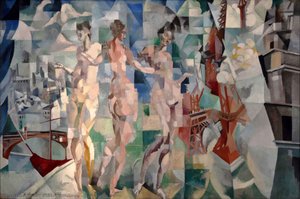
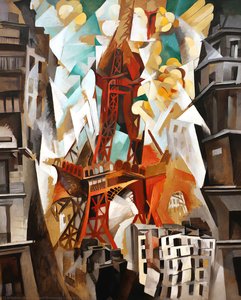
At the center of this luminous revolution stood one of the most remarkable partnerships in art history: Robert and Sonia Delaunay. Their shared journey was a testament to the power of collaborative vision. Robert, a pioneer whose early explorations in Neo-Impressionism laid the groundwork for his later abstractions, possessed an insatiable hunger for experimentation. He moved beyond the simple dots of Divisionism to create bold, interlocking geometric shapes that captured the dynamism of the modern age. His work, particularly his celebrated series of windows, serves as a masterclass in how color can generate depth and motion without the need for traditional perspective.
Beside him, Sonia Delaunay brought an unparalleled sense of rhythm and versatility to the movement. Her artistry was not confined to the canvas; she expanded the language of Orphism into textiles, fashion, and design, proving that the principles of abstract color could animate every facet of modern life. Together, they co-founded a movement that celebrated the beauty of the contemporary world—the pulse of the city, the brilliance of technology, and the infinite possibilities of light. Their legacy is one of profound joy, reminding us that even in times of great societal upheaval, art can serve as an enduring celebration of harmony and aesthetic splendor.
Windows of the Soul: Analyzing Masterpieces of Geometric Harmony
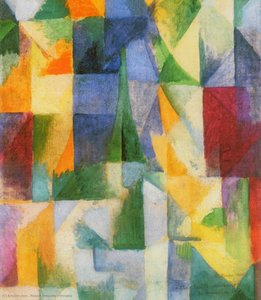 Window
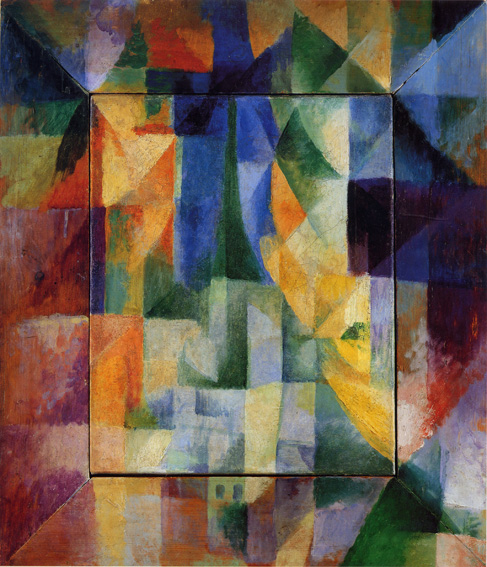
Robert Delaunay’s “Window”: A Fragment of Light and Geometric Harmony Robert Delaunay’s “Window,” painted in 1912, stands as an emblem of Orphism – a movement that irrevocably altered the course of European art. More than just depicting a simple pane...
Few motifs are as evocative of the Orphic spirit as the window. In works such as Robert Delaunay’s Window or his Simultaneous Windows, the pane of glass becomes a metaphor for the threshold between reality and abstraction. These are not mere depictions of architectural elements; they are portals through which we perceive the fragmentation of light. Through the use of meticulously arranged rectangles, squares, and disks, Delaunay creates a sense of "simultaneous depth." He refuses to use traditional lines to define edges, instead allowing the eye to travel from one patch of color to another, guided by subtle gradations in hue and value.
To observe these works is to engage in a dance of perception. The geometric precision provides a sense of order and mathematical purity, yet the vibrant palette ensures that the composition remains fluid and alive. There is a profound peace to be found in this balance—a structural stability paired with an unrestrained emotional release. These windows do not look out onto a street or a garden; they look inward toward the mechanics of sight itself, challenging us to find beauty in the very act of seeing.
Beyond Representation: The Emotional Resonance of Pure Form
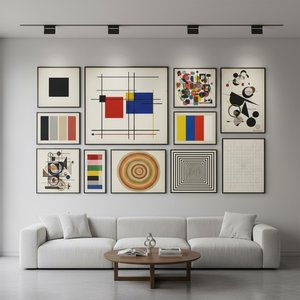 Geometric Abstraction's 10 Defining Masterpieces | Art for Your Home - Mus3ums
Introduction Imagine a world stripped bare to its essential forms – lines, colors, and shapes resonating with an almost mathematical purity. This is the realm of Geometric Abstraction, a movement that dared to abandon representational art in favor of...
Ultimately, the true triumph of Orphism lies in its ability to evoke deep, wordless emotion through the medium of pure form. As we reflect on the history of art, we see that the movement’s greatest contribution was the liberation of the viewer's subconscious. By stripping away the narrative and the recognizable subject, the Orphists removed the barriers between the artwork and the human spirit. There is no story to follow, no historical event to recall; there is only the immediate, visceral impact of color and shape.
In an increasingly complex and often chaotic world, the simplicity of geometric abstraction offers a sanctuary. It reminds us that beneath the surface of our perceived reality, there exists a universal order—a fundamental harmony expressed through the elegant interplay of light and form. Whether we are moved by the rhythmic energy of a Delaunay composition or the quiet intensity of a color field, Orphism teaches us that art can transcend the particular to connect with something eternal. It remains a radiant testament to the enduring human quest for meaning, beauty, and the sublime.