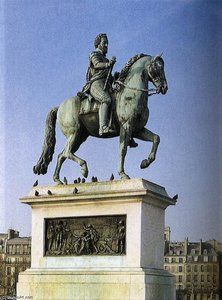
The Sculptor of Neoclassical Grandeur
Born amidst the vibrant atmosphere of Lyon in 1772, François Frédéric Lemot’s journey toward artistic immortality began with a path paved by both discipline and serendipity. His early studies in architecture at the Academy of Besançon provided a structural foundation that would later inform his profound understanding of form and space. However, it was a chance encounter in the park of Sceaux that truly ignited his career; while sketching a sculpture, the young Lemot caught the eye of those who recognized his burgeoning talent, leading him to the atelier of Claude Dejoux. This apprenticeship under a master of the Neoclassical tradition allowed Lemot to refine a style characterized by clarity, grace, and an unwavering devotion to the ideals of antiquity. His meteoric rise was cemented in 1790 when, at only seventeen, he secured the prestigious Prix de Rome with his evocative bas-relief, The Judgement of Solomon, an achievement that granted him entry into the elite circle of the French Academy in Rome.A Legacy Cast in Bronze and Marble
As Lemot’s career unfolded, his work became a testament to the enduring power of Neoclassicism, bridging the gap between the weight of history and the elegance of the early 19th century. His mastery was most strikingly evident in his ability to command monumental scale without sacrificing the delicate nuances of human emotion. One of his most celebrated triumphs remains the Equestrian Statue of Henri IV, a work that captures the rhythmic strength of the horse and the regal dignity of the monarch with breathtaking precision. Through his use of bronze and marble, Lemot breathed life into stone, creating works that felt both timeless and immediate. His technical prowess was not limited to large-scale monuments; he possessed an extraordinary ability to render intricate details in bas-reliefs, where light and shadow danced across surfaces to tell stories of classical myth and historical significance.The Architect of an Eternal Landscape
Beyond the confines of the sculptor's studio, Lemot’s creative spirit sought to harmonize art with the natural world. This ambition found its most personal expression in the creation of the La Garenne Lemot estate. In this magnificent undertaking, he transitioned from the sculptor of figures to the architect of entire environments, designing a neo-Palladian villa and sprawling gardens that served as a profound tribute to the landscapes of Italy. The estate, featuring fabriques and statues in the Antique style, stands as a living sculpture—a curated experience where architecture, greenery, and stone coalesce into a singular, poetic vision. Though he passed away in 1827, Lemot’s influence persists not only in the museums that house his bronzes but in the very landscapes he shaped, leaving behind a legacy of beauty that continues to invite contemplation and awe.Vraag & Antwoord
Onder welke pseudoniemen of andere namen is François Frédéric Lemot bekend?
François Frédéric Lemot staat ook bekend onder de namen Francois Frederic Lemot.
In welke stad en welk land is François Frédéric Lemot geboren?
François Frédéric Lemot werd geboren in Lyon, in France.
Waar en wanneer is François Frédéric Lemot geboren?
François Frédéric Lemot werd geboren in Lyon in 1771.