The Philosophy of Reduction: Defining Minimalism in Art History
To understand the profound impact of minimalism, one must first look beyond the mere absence of ornament and recognize it as a deliberate, intellectual pursuit of essence. In the grand tapestry of art history, where the Baroque era sought to overwhelm the senses with dramatic chiaroscuro and complex ornamentation, minimalism emerged as a radical counter-narrals. It is not simply about "less"; it is about the pursuit of the fundamental. This movement challenges the viewer to confront the raw materiality of the medium—the texture of the canvas, the weight of the pigment, and the purity of form. For the student of art, minimalism represents a stripping away of the anecdotal and the figurative to reveal a structural truth that exists independently of external narrative. This philosophical reduction seeks to eliminate the "distraction" of representation. When an artist removes the recognizable subject—the face, the landscape, the still life—they force the spectator into a direct, unmediated relationship with the work itself. It is a meditative state where the boundary between the object and the observer begins to blur. This era of thought suggests that meaning is not something hidden behind a layer of paint, but rather something found within the very presence of the work's physical existence. By embracing the void, minimalism invites a deeper level of contemplation, turning the act of looking into an act of profound recognition.From Formalism to Void: The Evolution of Minimalist Movements
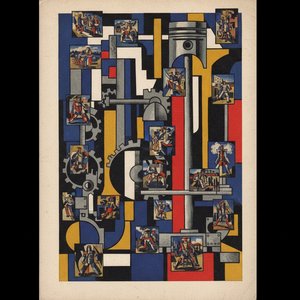
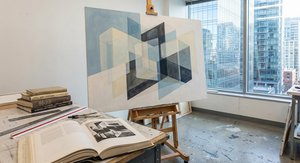
The trajectory of minimalism is marked by a transition from the rigid structures of mid-century Formalism to more expansive, philosophical explorations of space and nothingness. In the 1960s, artists like Frank Stella revolutionized the canvas through what became known as Formalist Abstraction. Works such as his Wolfeboro IV demonstrate how bold geometric shapes and dynamic color blocking can define a composition without the need for traditional depth or illusionistic perspective. Here, the painting is not a window into another world; it is an object in its own right, asserting its flatness and its physical boundaries with unapologetic authority. As the movement matured, it began to intersect with more subversive ideologies, such as the "Noart" concept explored by pioneers like Dimitrije Bašičević. This era pushed the limits of what could be considered art, often utilizing unconventional materials like chalkboard surfaces to explore anti-art sentiments and the philosophical weight of the void. The evolution moved from the structured, mathematical precision of geometric abstraction toward a more existential inquiry into the nature of presence and absence. This progression teaches us that minimalism is not a static style but a living dialogue between the artist's intent and the physical reality of the medium, constantly redefining the limits of visual communication.Geometric Precision and Color Theory: Analyzing the Impact of Abstraction
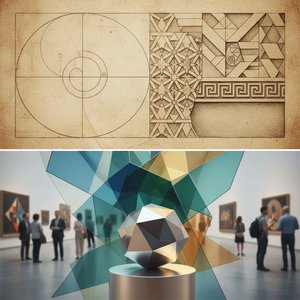
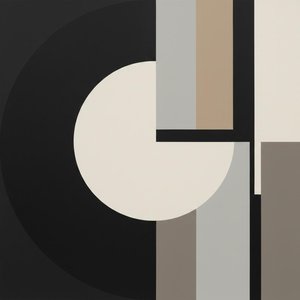
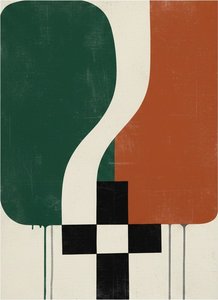
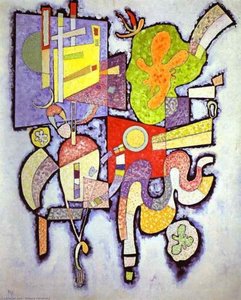
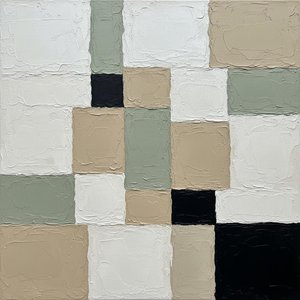
At the heart of minimalist efficacy lies a rigorous application of geometry and color theory. The movement relies on the mathematical harmony of shapes—circles, squares, and lines—to create a sense of equilibrium that feels both inevitable and eternal. When an artist utilizes precise geometric arrangements, they tap into a universal language of proportion. This precision serves to direct the eye through a controlled rhythm, where each edge and intersection carries significant weight. The absence of organic, unpredictable forms allows for a focus on how light interacts with flat planes, creating a subtle, almost architectural tension within the frame. Color, in this context, is stripped of its descriptive function. In traditional painting, blue might represent the sky or sadness; in minimalism, blue is simply blue—a frequency of light, a weight of pigment, and a structural component of the composition. This use of color blocking allows for an exploration of chromatic relationships that can evoke intense emotional responses through pure vibration rather than imagery. The interplay between high-contrast hues and monochromatic fields creates a visual tension that keeps the viewer engaged in a state of constant re-evaluation. For those looking to appreciate this depth, observing the way light hits the textured brushstrokes of a hand-painted reproduction can reveal nuances of color that a flat print simply cannot capture.The Aesthetic of Silence: Exploring Neo-Minimalism and Contemporary Nuance
most often found in the works of artists like Alfred Freddy Krupa, where the "New Ink Art" movement breathes fresh life into minimalist traditions. Neo-minimalism does not seek to repeat the austerity of the 1960s but rather to infuse it with a new, evocative lyricism. It is an aesthetic of silence—a quiet, powerful resonance that uses minimal markings to suggest vast, atmospheric spaces. This contemporary iteration allows for more emotional fluidity, blending the structural discipline of the past with a modern sensibility that embraces texture and subtle tonal shifts. This contemporary nuance is essential for the modern collector. It offers a way to navigate the complexities of the modern world by providing visual "breathing room." Neo-minimalism utilizes the concept of the "trace"—a single line or a soft wash of ink—to evoke memory and movement without cluttering the visual field. It is an art form that respects the viewer's intelligence, offering enough information to spark the imagination while leaving ample space for personal interpretation. This delicate balance between the seen and the unseen is what makes contemporary minimalism one of the most enduring and sophisticated movements in the modern era.Curating the Essential: Integrating Minimalist Masterpieces into Modern Interiors
Integrating minimalist art into a contemporary living space requires an understanding of balance and architectural intent. A minimalist masterpiece does not merely decorate a wall; it defines the atmosphere of a room. When selecting a piece, one must consider the relationship between the artwork's scale and the surrounding environment. A large-format geometric abstraction can serve as a powerful anchor for a room with high ceilings, acting as a focal point that organizes the visual chaos of modern life. Conversely, smaller, more intimate works can provide moments of quiet contemplation within a larger gallery wall or a curated collection. The true success of minimalist curation lies in the interplay of texture and light. To truly honor the spirit of these works, one should look toward high-quality, hand-painted oil reproductions. Unlike digital prints, which lack tactile depth, an oil painting on cotton canvas offers visible brushstrokes and a rich, impasto texture that interacts dynamically with ambient light. This physical presence is crucial for minimalism, as it reinforces the movement's focus on materiality. Whether you are looking to transform a personal milestone into a masterpiece or seeking to expand your collection with historically significant styles, the goal remains the same: to curate an environment where every element—much like the art itself—is essential, intentional, and profoundly impactful.For those seeking to explore these profound movements through museum-quality reproductions, Mus3ums.com offers an unparalleled collection of hand-painted works. From the bold geometries of Formalist masters to the evocative textures of Neo-Minimalism, our artists specialize in preserving the soul of every brushstroke. Whether you wish to commission a custom piece from a personal photograph or acquire a meticulously crafted replica of a canonical masterpiece, we provide the expertise and craftsmanship necessary to bring the power of less into your own home.