


Origins and History of the Museum
The Busch–Reisinger Museum was established in 1903. It was originally founded as the Germanic Museum, a name it held for several decades. In 1950, the institution was renamed the Busch-Reisinger Museum. This change reflected a shift in the museum's identity and its ongoing relationship with the study of art from central and northern Europe.
The history of the institution has been a subject of recent scholarly inquiry. A daylong discussion was held to examine the museum's identity through the lens of its historical development. This examination considered the museum's evolution from its founding as the Germanic Museum to its current role within the larger university framework. The museum's trajectory has been marked by shifts in space, role, and identity over the last century.
The Building and its Architecture
The museum is situated in Cambridge, United States of America, as an integral part of the Harvard Art Museums. Its current location is Werner Otto Hall at 32 Quincy Street. This facility was designed by Gwathmey Siegel & Associates. The museum moved to this site in 1991.
Before the move to Werner Otto Hall, the institution was housed in Adolphus Busch Hall at 29 Kirkland Street. This former location served the museum from 1921 until 1991. The transition to the current premises allowed for the integration of the museum into a larger, unified complex. The architecture of the current site reflects the modern expansion and renovation efforts of the Harvard Art Museums.
Art from Central and Northern Europe
The museum is the only institution in North America dedicated to the study of art from the German-speaking countries of Central and Northern Europe across all media and all periods. The collection focuses on the modes and periods of art from these regions, with a specific emphasis on German-speaking territories. This scholarly focus allows for a comprehensive examination of the aesthetic developments that shaped the region.
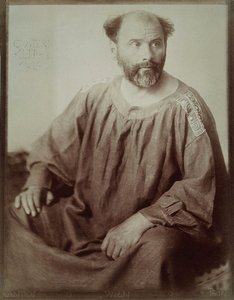
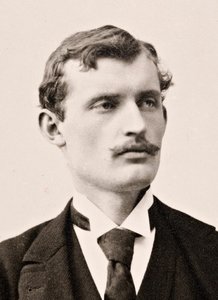
The holdings include significant examples of Austrian Secession and German Expressionism. The collection also encompasses 1920s abstraction and various materials related to the Bauhaus. These works represent the shifting visual languages of the early twentieth century. Beyond these historical movements, the museum maintains postwar and contemporary art from German-speaking Europe.
- Pear Tree, about 1903 - Gustav Klimt
- Winter Night, 1910 - Edvard Munch
- From Kragerø, 1910 - Edvard Munch
- Berlin Model, 1895 - Edvard Munch
Diverse Collections and Artworks
The holdings encompass a broad range of media and periods, from late-medieval sculpture to 18th-century art. The collection includes the Rubenstein murals, which were among the first modern artworks acquired by the Germanic Museum. Other significant works include Max Beckmann’s 1927 Self Portrait in Tuxedo and Arthur Kampf’s 1908 portrait of Kaiser Wilhelm II.
Beyond European traditions, the museum maintains a significant selection of Asian art. This includes archaic Chinese jades, Chinese bronzes, and ceramics from China and Korea. The collection also contains Japanese surimono, Japanese works on paper, and lacquer boxes. Other items include Buddhist cave-temple sculptures and ceremonial weapons.
- Pear Tree, 1903 - Gustav Klimt
- Winter Night, 1910 - Edvard Munch
- From Kragerø, 1910 - Edvard Munch
- Berlin Model, 1895 - Edvard Munch
- Venus and Adonis, 1581 - Hans von Aachen
The Harvard Art Museums Complex
The Busch–Reisinger Museum is part of the Harvard Art Museums in Cambridge, Massachusetts. This complex is a consolidation of three distinct institutions. These include the Fogg Museum, which was established in 1895, and the Arthur M. Sackler Museum, established in 1985. The third component is the Busch–Reisinger Museum itself. Together, these entities function as an integral part of Harvard University.
The museums are housed within a single facility. This unified structure was the result of a renovation and expansion completed in 2014. The architecture, designed by Renzo Piano Building Workshop, brought the three collections together under one roof. This arrangement allows for a continuous dialogue between the different eras and traditions represented by the various collections.
The complex occupies a significant presence in the Cambridge campus. It provides a space for both public viewing and scholarly research. The facility includes approximately 204,000 square feet of space, with 43,000 square feet dedicated specifically to exhibitions. This scale supports the diverse range of media and periods held within the institution's holdings.