
The Ephemeral Moment: Understanding the Impressionist Philosophy of Light
To gaze upon an Impressionist landscape is to witness a profound dialogue between the eye and the passing second. Unlike the rigid, studio-bound traditions of the Académie, which sought to immortalize subjects in permanent, static forms, the Impressionists pursued something far more elusive: the fugitive nature of light. They understood that a meadow at dawn is fundamentally different from that same meadow under the midday sun, and that to capture the truth of a landscape, one must capture its atmosphere.
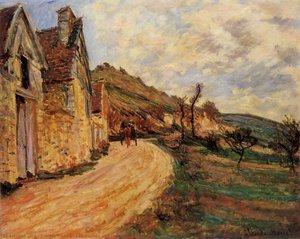
This movement was born from a desire to translate the sensory experience of sight into the language of pigment. The philosophy was not merely about depicting scenery, but about documenting the vibration of light as it dances across surfaces. When we observe works such as Claude Monet’s Lavacourt, we are not just looking at a riverbank; we are experiencing the way sunlight refracts through moisture and settles upon the water's edge. It is an art of the present tense, a continuous attempt to freeze the heartbeat of a moment before it dissolves into the next.
Ultimately, this pursuit of the ephemeral transformed the canvas from a window into a mirror of perception. The Impressionists taught us that reality is not composed of hard edges and immutable lines, but of shifting shadows, glowing horizons, and the soft, rhythmic pulse of light. By embracing the transient, they achieved a form of immortality for the most fleeting of natural phenomena.
Chromatic Vibrancy: The Science of Color and Optical Mixing in Landscapes
The brilliance of an Impressionist landscape relies heavily on a sophisticated understanding of color theory and the phenomenon of optical mixing. Rather than blending pigments into a singular, muddy hue on a palette, these masters often applied dabs of pure, unadulterated color side-by-side directly onto the canvas. This technique allows the viewer's eye to perform the work of the brush, blending the distinct strokes from a distance to create a luminosity that traditional blending simply cannot replicate.
This method relies on the principle that complementary colors—such as the soft violets found in shadows and the warm yellows of sunlight—enhance one another when placed in proximity. By avoiding the use of black for shadows, which can often deaden the vitality of a scene, Impressionists utilized deep blues, purples, and greens to create depth and dimension. This creates a sense of chromatic vibration, where the surface of the painting seems to shimmer with an internal energy.
The result is a landscape that feels alive with light. The eye does not rest on a single point but wanders through a field of interacting hues, mimicking the way our own vision perceives the complexity of the natural world. This scientific approach to color ensures that even the most tranquil scene possesses an underlying tension and brilliance, pulling the observer into a world of pure, radiant sensation.
En Plein Air: The Mastery of Capturing Atmosphere and Weathered Textures
The true revolution of the Impressionist era was the movement toward en plein air—the practice of painting outdoors, directly in the presence of the subject. This shift required a radical change in technique and temperament. To paint under the open sky is to contend with the elements; it is to race against the setting sun and to adapt to the sudden arrival of clouds or mist. This necessity birthed a style characterized by rapid, spontaneous brushwork that mirrors the urgency of the environment.
In works like The Road to Vetheuil, Snow Effect, we see how the artist grapples with the weight of the atmosphere. The texture of the snow is not merely described; it is built through layers of paint that suggest the cold, damp reality of a winter day. The mastery lies in the ability to translate the tactile qualities of the world—the roughness of bark, the softness of fog, or the crispness of frost—into visible, rhythmic strokes that convey more than just sight, but touch and temperature.
This connection to the physical landscape fosters an intimacy between the artist and nature. By working in situ, the painter absorbs the very air they are attempting to depict. The weathered textures and atmospheric haziness found in these landscapes serve as a testament to this direct engagement, offering the viewer a sensory journey that transcends mere representation to reach the level of true environmental immersion.
From Monet to Hoschedé: A Legacy of Luminosity and Natural Serenity
The lineage of Impressionism is one of shared vision and familial devotion to light. While Claude Monet stands as the undisputed titan of the movement, his influence extended through a circle of artists who breathed life into the landscapes of Giverny and beyond. Among these, Blanche Hoschedé Monet holds a significant place; as a painter in her own right, she carried forward the tradition of capturing the serene, light-drenched scenes of the French countryside.
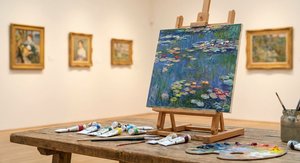
The legacy of this era is defined by a specific type of natural serenity—a quietude that does not feel stagnant, but rather deeply peaceful. The landscapes of this period often focus on the harmonious relationship between water, flora, and sky. Whether it is the iconic Water Lilies or the more intimate, localized scenes painted by Hoschedé, there is a consistent reverence for the way light can sanctify a landscape, turning a simple garden or a riverbank into a cathedral of color.
This continuity of style ensures that the Impressionist spirit remains a vital part of our cultural heritage. It is a legacy that celebrates the beauty of the mundane and finds the extraordinary within the ordinary. Through the works of these masters, we are reminded that serenity is not the absence of movement, but the perfect balance of light and life.
The Tactile Impression: How Brushwork and Impasto Evoke Sensory Depth
To truly appreciate an Impressionist masterpiece, one must look beyond the subject matter and observe the physical architecture of the paint itself. The use of impasto—the thick, heavy application of pigment—is central to the movement's success. These raised textures create a three-dimensional quality on the canvas, allowing the painting to catch actual light within its own ridges and valleys.
The brushwork serves as a rhythmic notation of the artist's movements. Short, staccato strokes can suggest the flickering of leaves in a breeze, while broader, sweeping applications might evoke the calm surface of a lake. This tactile depth ensures that the painting is not merely a flat image to be read, but a sculptural object to be experienced. The visible hand of the artist adds a layer of human emotion and physical presence that connects the viewer directly to the moment of creation.
When light hits these textured surfaces, it creates micro-shadows within the paint, adding an unexpected complexity to the colors. This interplay between the pigment and the physical relief of the canvas is what gives Impressionist works their "living" quality. It transforms the artwork into a sensory landscape where the eye can trace the energy, the struggle, and the ultimate triumph of capturing light on cloth.
Curating the Ethereal: Integrating Impressionist Masterpieces into Modern Interiors
In the realm of contemporary interior design, the inclusion of an Impressionist-style work offers a profound sense of balance and sophistication. These paintings possess a unique ability to soften the sharp lines and neutral palettes often found in modern architecture. An Impressionistic landscape acts as a focal point of organic warmth, bringing the restorative power of nature into the controlled environment of the home.
When selecting pieces for a collection, consider the emotional resonance of the color palette. A work dominated by cool blues and greens can instill a sense of tranquility in a study or bedroom, while more vibrant, sun-drenched compositions can energize a grand living space or an entryway. The key to successful curation lies in treating the artwork not as mere decoration, but as an atmospheric element that dictates the mood of the room.
For those seeking to bring this timeless beauty into their personal spaces, Mus3ums.com offers unparalleled access to high-quality reproductions and custom commissions. Whether through a meticulously layered oil painting that captures the tactile essence of a Monet or a sophisticated Giclée print, our mission is to preserve the soul of these masterpieces. By bridging the gap between historical grandeur and modern living, we enable collectors to surround themselves with the eternal, luminous beauty of the Impressionist tradition.