The Legacy of Utagawa Yoshiiku: A Master of the Floating World
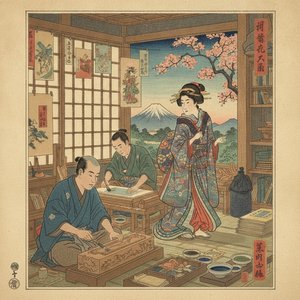
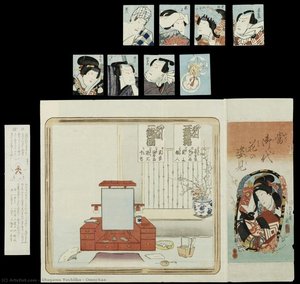
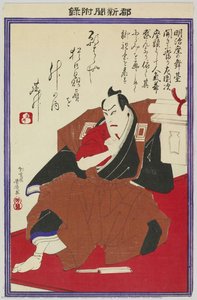
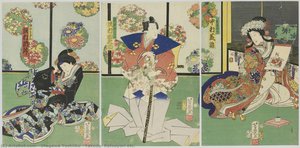
In the vibrant, shifting landscape of late Edo-period Japan, few artists captured the pulse of urban life as vividly as Utagawa Yoshiiku. Born in 1833 to a teahouse proprietor in Asakusa, Yoshiiku was destined to be immersed in the very heart of the "floating world." His artistic journey began under the tutelage of the legendary Utagawa Kuniyoshi, a master whose dramatic energy and narrative prowess left an indelible mark on his pupil. During the late 1840s, as an apprentice, Yoshiiku learned the meticulous discipline of woodblock printing—a craft where every line carved into cherry wood and every layer of pigment applied must harmonize to tell a story. By 1852, he was already contributing to the legacy of his master, providing intricate backgrounds for actor prints that hinted at the profound talent emerging from the Utagawa school.
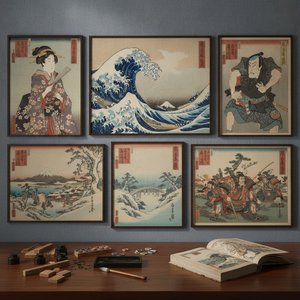
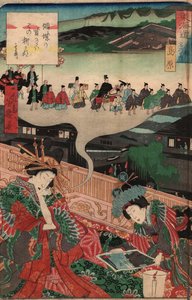
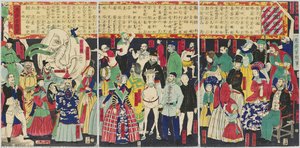
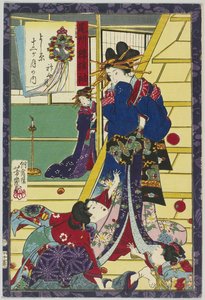
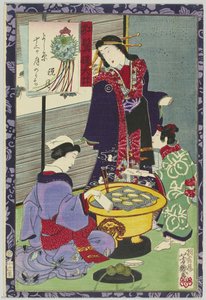
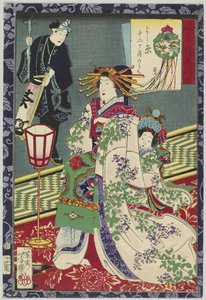
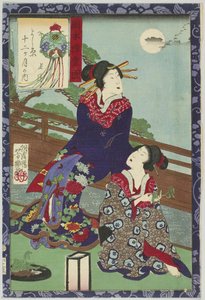
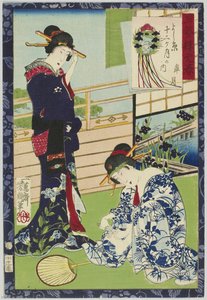
As the era of the Shogunate transitioned into the Meiji period, Yoshiiku’s work evolved alongside the changing social fabric of Japan. While he remained deeply rooted in the classical genres of ukiyo-e, his vision expanded to meet the demands of a modernizing nation. He became a master of several distinct styles, ranging from the delicate grace of bijin-ga (portraits of beautiful women) to the heroic intensity of musha-e (warrior prints). His ability to capture the ephemeral beauty of courtesans in the Yoshiwara district—documenting their exquisite kimonos and the atmospheric allure of the pleasure quarters—offered a window into a world that was both celebrated and disappearing. Yet, he was equally adept at the satirical and the grotesque, following Kuniyoshi’s footsteps into humorous pieces and even collaborating on the hauntingly beautiful muzan-e, or "cruel pictures," which explored the darker, more visceral aspects of human experience.
Innovation and the Illustrated Press
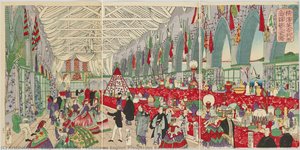
Beyond the traditional confines of the woodblock print, Yoshiiku demonstrated a remarkable versatility that allowed him to bridge the gap between fine art and journalism. In an era where visual storytelling was becoming increasingly intertwined with news, he took on the role of an illustrator for the Tokyo Nichi Nichi Shimbun (Tokyo Daily News) between 1874 and 1876. This period marked a significant shift in his career, as he helped pioneer the concept of the illustrated news, eventually co-founding the Tokyo E-iri Shinbun (Tokyo Illustrated News). Through these publications, Yoshiiku’s art became a medium for documenting contemporary events, bringing the drama of real-world happenings to the masses through the evocative power of printmaking.
His later works often reflected a complex blend of historical reverence and contemporary commentary. One notable achievement was his Kokkei Wanisshi-ki (Comical Record of Japanese History), where he utilized the traditional Hyakki Yagyō theme to comment on modern military actions in China. This ability to weave historical motifs with current political realities showcased a sophisticated intellectual depth. Despite the struggles of his final years and the decline of the traditional print market, Yoshiiku’s influence remained profound. He stood as a bridge between the classical traditions of the Edo period and the burgeoning modernity of Meiji Japan, ensuring that the aesthetic language of the Utagawa school would resonate long after the last block was inked.
Perguntas e Respostas
Por quais outros nomes ou pseudônimos Utagawa Yoshiiku é conhecido?
Utagawa Yoshiiku também é conhecido pelos nomes Ochiai Yoshiiku.
De onde é Utagawa Yoshiiku?
Utagawa Yoshiiku nasceu em Japan.