

Origins and History of Allentown Art Museum
The Allentown Art Museum began through a grassroots effort led by a teacher, painter, and critic. Organized by a dedicated group, the institution was established during the Great Depression. It was first founded in 1934 and subsequently incorporated in 1939. At its inception, the institution operated under the name Allentown Art Gallery.
The museum's early operations were guided by its first curator, John E. Berninger. This foundational period focused on establishing a presence for the arts within the Lehigh Valley. The institution has grown from these early local efforts into a permanent fixture of the regional landscape.
The Building and Its Architecture
The Allentown Art Museum is located at 31 N. 5th Street in Allentown, Pennsylvania. The institution has occupied several distinct spaces since its inception. It first opened within the Hunsicker School before moving to a city-owned Federal-style house situated in the Rose Garden in Cedar Park. The current facility, which houses the majority of the collection, was originally constructed as a church in 1902.
The physical footprint of the museum has expanded through several phases of construction. An expansion was completed in 1975 to increase the available space for the institution. Between 2010 and 2011, the museum underwent a significant renovation. This project added 10,000 square feet of gallery, storage, and public space to the existing structure.
The Renaissance and Baroque Collection
The museum maintains a strong core of Renaissance and Baroque works. This foundation was established through a significant gift from the collector and philanthropist Samuel H. Kress between 1960 and 1961. This acquisition brought fifty-three paintings and sculptures into the permanent collection, providing a basis for the study of European art in the Lehigh Valley. The selection includes Italian, Dutch, and Flemish works, alongside rare German paintings.
These holdings allow for a direct examination of the stylistic shifts occurring in Europe during these periods. The presence of Dutch and Flemish examples provides insight into the technical developments of the seventeenth century. The collection is organized to reflect these historical movements through its specific selection of paintings and sculptural forms.
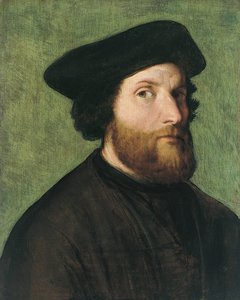
- The Penitent St Jerome, 1515 - Lorenzo Lotto
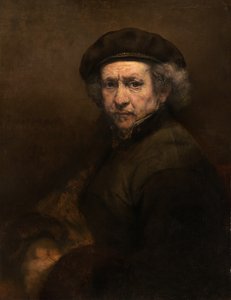
- Portrait of a young woman, 1632 - Rembrandt
- Bust of a young woman, 1632 - Rembrandt
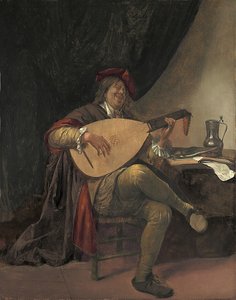
- The Hurdy-Gurdy Player, 1660 - Jan Steen
- Old Soldier Holding a Pipe, 1656 - Frans van Mieris the Elder
American and Modern Art Collections
The American collection spans from the mid-1700s to the present. These works reflect the evolving landscape of American painting and the regional influence of Pennsylvania Impressionism. The museum's holdings include significant pieces from the Arts and Crafts movement, alongside a diverse array of modern works. Among these is the restored Lehighton mural by Franz Kline.
The museum maintains a collection of more than 20,000 works of art. This breadth allows for a study of how American artistic expression has shifted from colonial-era portraiture to the abstraction of the twentieth century. The collection includes works by several nationally recognized artists who maintained connections to Eastern Pennsylvania.
- Franz Kline, Lehighton
Textiles and Works on Paper
The museum holds a celebrated collection of over 8,000 textile pieces. These works span sixteen centuries and represent six continents. The holdings focus on international needlework traditions and European lace. We also maintain a selection of American printed silks dating from the 1920s to the 1930s.
The works on paper collection includes nearly 400 prints. These pieces range from the Renaissance to the 21st century. This breadth allows for a study of printmaking techniques across several hundred years of artistic production.
Masterpieces of the Collection
The museum holds significant works from the Dutch Golden Age, including an authenticated 1632 Rembrandt. This period is represented by a portrait of a young lady from 1632, a work that exemplifies the artist's technical precision. These paintings form a core part of the institution's historical holdings.
American portraiture and landscape painting are also represented within the permanent collection. Gilbert Stuart's 1795 portrait of Ann Penn Allen provides a direct link to the region's history. Nearby, Gustav Johann Grunewald's 1834 depiction of Niagara Falls offers a different perspective on the American landscape.
- The Penitent St Jerome, 1515 - Lorenzo Lotto
- The Hurdy-Gurdy Player, 1660 - Jan Steen
- Old Soldier Holding a Pipe, 1656 - Frans van Mieris the Elder
- Columbus Circle, 1909 - Colin Campbell Cooper
- View of the Church of St. Gereon, Cologne, 1685 - Gerrit Adriaenszoon Berckheyde
Major Acquisitions and Donations
The development of the collection has been significantly shaped by the generosity of Samuel H. Kress. A major gift from Kress in 1959, followed by further contributions in 1960 and 1961, provided the necessary momentum for the institution. These acquisitions included 53 Renaissance and Baroque paintings and sculptures. This influx of works prompted community visionaries and museum supporters to fund the purchase and refurbishment of a dedicated building to house the growing holdings.
The qualitative standards of the museum were further defined by specific strategic acquisitions. In 1978, the museum acquired a portrait of Ann Penn Allen by Gilbert Stuart. This acquisition established a benchmark for the caliber of works sought for the permanent collection. Such acquisitions have helped maintain the museum's focus on high-quality American and European art.
Recent Projects and Future Plans
The Allentown Art Museum is currently undergoing a significant transformation. This period of change involves a move toward a purpose-built, modern cultural facility designed to better serve the region. The institution is transitioning to a new location at the northwest corner of 10th and Hamilton Streets in Allentown, Pennsylvania. This relocation aims to provide a more effective museum experience for all visitors.
This transition is the central focus of The Gateway Campaign: Building a Museum Where Everyone Belongs. The initiative seeks to establish a new physical presence that supports the museum's expanding role in the community. By moving to this new site, the institution intends to create a modern space that meets the requirements of its growing collection and its mission to provide accessible art and culture to the Lehigh Valley.


