

The Origins and History of Julius Böhler AG
The foundations of Julius Böhler AG were laid in 1880 in Munich. The founder, Julius Böhler (1860–1934), emerged from a family of craftsmen, being the eighth child of his household. His arrival in the art trade marked the beginning of an enterprise that would eventually become one of the most significant art dealerships within the German-speaking world. The firm established a presence that reached far beyond its initial local scope, eventually expanding its influence through international connections and a specialized focus on paintings, sculptures, and art crafts.
The continuity of the family name was maintained through the subsequent generations. Julius Wilhelm Böhler and Otto Alfons Böhler, the sons of the founder, became integral to the business, ensuring the firm's longevity. This lineage has seen the company navigate through various eras of art history and commerce, maintaining its position as a specialized entity for collectors and institutions alike. The enterprise has remained in family ownership through the fifth generation, preserving a specific continuity of expertise.
In 2004, the headquarters of Julius Böhler AG moved from Munich to Starnberg, Germany. This transition marked a change in geography while the core identity of the firm remained centered on the acquisition and handling of significant works. The history of the institution is one of steady presence, moving from the urban center of Munich to the surroundings of Starnberg, while continuing to engage with the complexities of the art market.
The Architecture of Palais Böhler
The Palais Böhler occupies a significant position at Briennerstraße 25 in Munich. Constructed between 1902 and 1904, the building reflects the architectural intentions of Gabriel von Seidl. It was designed in an Italian palazzo style, a choice that lends the structure a sense of permanence and historical weight within the urban fabric of the city.
The facade and spatial arrangement follow the principles of the palazzo, emphasizing a structured, dignified presence. This architectural language provides a specific context for the collection held by the firm, offering a setting where the physical environment and the objects within it exist in a quiet, formal relationship. The choice of Seidl as the architect ensured that the residence and place of business maintained a high level of aesthetic cohesion.
Exhibitions and Research Activities
The presence of Julius Böhler AG extends to significant international art fairs, including TEFAF Maastricht and TEFAF New York. These appearances maintain a connection to global collecting circles. A collaboration with Blumka Gallery New York further facilitates the movement of works between different regions. The firm also maintains a presence at Munich Highlights, ensuring its selections are part of the local cultural dialogue.
Scholarly interest in the firm's history is supported by the preservation of its extensive records. In 2015, the archive of the Julius Böhler Kunsthandlung was acquired by the Zentralinstitut für Kunstgeschichte in Munich. This collection of documents provides a foundation for understanding the transactions and provenance of many works. The digitized records and physical materials allow for a detailed examination of the gallery's historical impact on the art market.
- TEFAF Maastricht
- TEFAF New York
- Munich Highlights
Masterpieces of the Collection
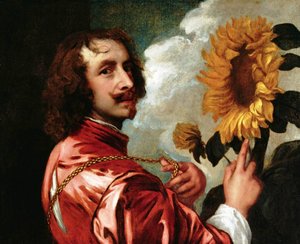
The presence of Anthony van Dyck is felt through several significant works that command the space. The 1630 portrait of Ferdinand van Boisschot, Lord of Saventhem, as a Knight of the Order of Santiago, offers a study in character and status. Nearby, the 1625 depiction of The Holy Family with Saint John the Baptist as a child provides a quiet moment of domesticity. These works exist alongside the 1627 Triumph of Faith by Peter Paul Rubens, a piece that carries a particular weight within the assembly. The collection also holds the 1653 Descent from the Cross by Salomon Koninck, which anchors the room with its solemnity.
Landscape and still life elements provide a different kind of focus. Meindert Hobbema’s 1663 A Woodland Glade with Cottages brings a sense of the natural world into the interior, capturing a specific light through the trees. This is balanced by the more intimate, everyday observation found in Pieter Claesz’s 1657 Still life with a cat and fish. Each object maintains its own distinct atmosphere, allowing for a quiet observation of brushwork and light without the need for distraction.