

The Machine Age Aesthetic: Why Precisionism is the Ultimate Industrial Vibe
 Precisionism: A Study of Industrial Aesthetics & Modern American Art
The Rise of Precisionism: Context & Origins Wikipedia: Industrial Revolution The Industrial Revolution, sometimes divided into the First Industrial Revolution and Second Industrial Revolution, was a transitional period of the global economy toward mo...
Imagine a world stripped of its messy, organic chaos—a world where every edge is razor-sharp, every surface is polished to a high sheen, and every composition feels as calculated as a master blueprint. This isn't just a design choice; it was the heartbeat of Precisionism. Emerging in the United States following the seismic shifts of World War I, this movement didn't just observe the changing world; it celebrated the raw, unyielding power of the Machine Age. While other movements were lost in the swirling emotions of expressionism or the fragmented chaos of early Cubism, the Precisionists looked at the rising skyline and saw a new kind of beauty: the beauty of efficiency, clarity, and structural perfection.
For the modern eye, accustomed to the sleek lines of contemporary tech and the high-definition crispness of digital design, Precisionism feels incredibly familiar. It captures that specific industrial edge—the moment where human ingenuity meets cold, hard steel. There is a profound sense of confidence in these works, an unapologetic embrace of the factory, the bridge, and the skyscraper. It is art that refuses to blink, presenting a vision of progress that is as visually striking as it is structurally sound. This wasn't about nostalgia for a pastoral past; it was about leaning into the future with a bold, metallic swagger.
Steel, Skyscrapers, and Symmetry: The Visual Language of Geometric Order
 Geometric Abstraction's 10 Defining Masterpieces | Art for Your Home - Mus3ums
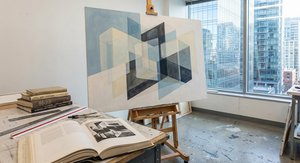
Introduction Imagine a world stripped bare to its essential forms – lines, colors, and shapes resonating with an almost mathematical purity. This is the realm of Geometric Abstraction, a movement that dared to abandon representational art in favor of...
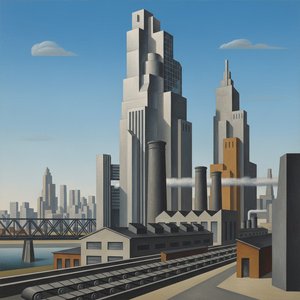
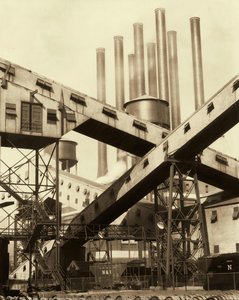
To step into a Precisionist canvas is to enter a realm of mathematical purity. The artists of this era—often referred to as the Immaculates due to their incredibly smooth and controlled technique—mastered the art of reduction. They took the overwhelming complexity of an urban landscape and distilled it down to its essential geometric DNA. You won't find frantic brushstrokes or muddy textures here; instead, you encounter clean outlines, minimal detail, and surfaces so smooth they suggest the very sheen of a newly minted machine part.
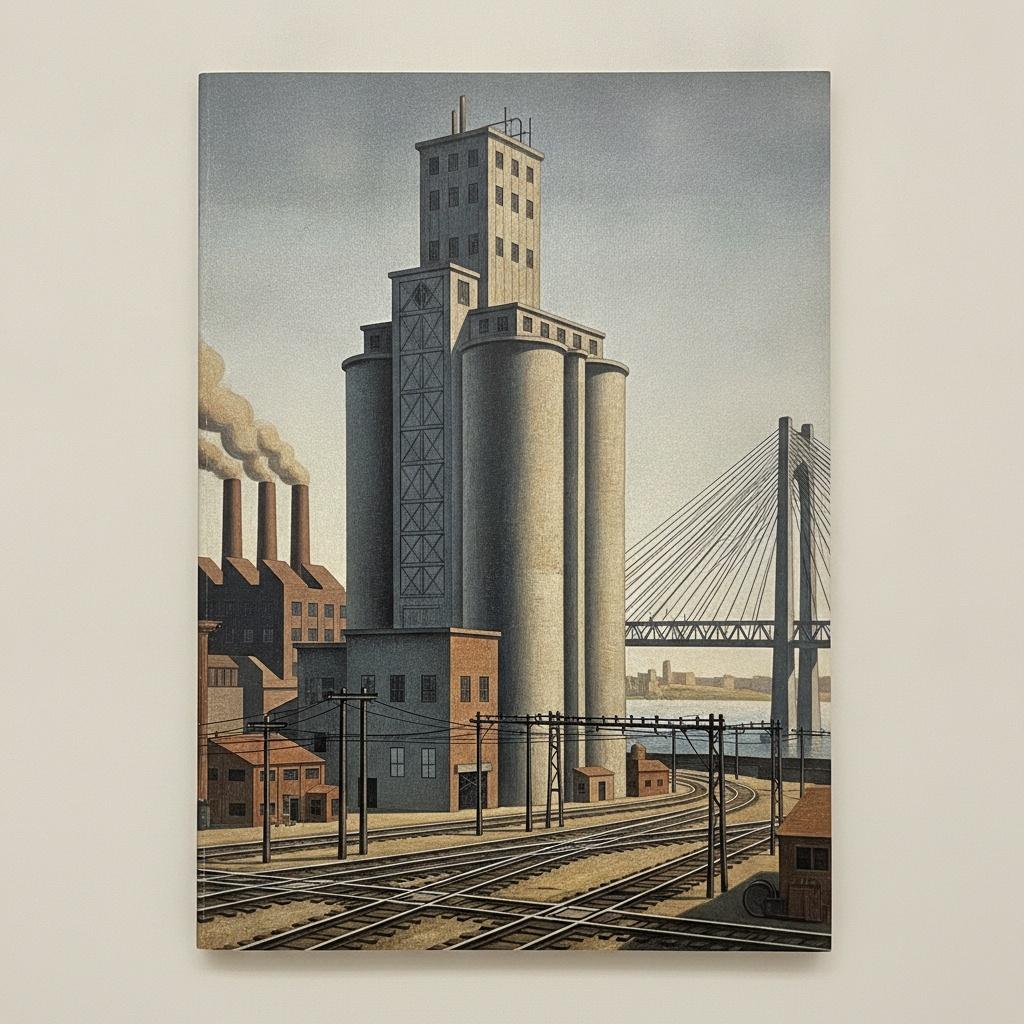
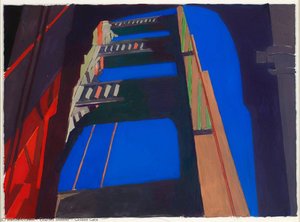
The magic lies in the interplay of light and geometry. By utilizing planes of light, these artists created a sense of crisp focus that makes the subject feel almost hyper-real. A factory chimney isn't just a pillar of smoke; it becomes a powerful vertical cylinder intersecting with the horizontal rhythm of a railway. A bridge is not merely a way to cross water, but a complex web of interlocking triangles and steel beams. This use of geometric abstraction within a representational framework—often called Cubist-Realism—allows the viewer to appreciate the architectural rhythm of the modern world. It is a visual journey through symmetry and scale, where every shadow is precisely placed to emphasize the weight and permanence of the industrial landscape.
Beyond the Blueprint: How Cubism and Futurism Fueled the American Edge
 Precisionism
Precisionism was a modernist art movement that emerged in the United States after World War I. Influenced by Cubism, Purism, and Futurism, Precisionist artists reduced subjects to their essential geometric shapes, eliminated detail, and often used pl...
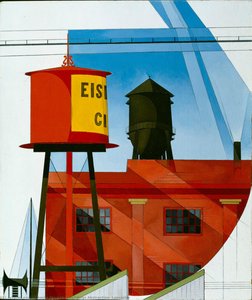
While Precisionism felt distinctly American in its subject matter, its soul was deeply connected to the avant-garde currents flowing from Europe. The movement didn't exist in a vacuum; it was a sophisticated remix of the most radical ideas of the early 20th century. From Cubism, the Precisionists borrowed the concept of geometric simplification and the use of overlapping, faceted planes to create depth. They took the fragmented perspective of Picasso and Braque and smoothed out the edges, making it more legible and grounded in a recognizable reality.
- Purism: Provided the call for visual order, clarity, and the elimination of unnecessary ornament.
- Futurism: Contributed an obsession with technology, speed, and the dynamic energy of the modern era.
- Photography: Influenced by masters like Paul Strand, Precisionists adopted sharp focus, unexpected cropping, and dramatic lighting to emphasize abstract forms within real subjects.
However, unlike the European Futurists who often glorified the chaotic speed and violence of machines, the American Precisionists sought a sense of stasis and stability. They weren't interested in the blur of motion; they wanted to capture the monumental stillness of a finished structure. They took the "shattered" look of European modernism and reassembled it into something solid, durable, and undeniably powerful. It was a selective assimilation of global trends, filtered through an American lens of industrial pride.
The Modernist Grind: Capturing the Power of the New American Landscape
--- title: Precisionism - The Metropolitan Museum of Art author: Jessica Murphy url: https://www.metmuseum.org/essays/precisionism hostname: metmuseum.org description: [The Precisionists] consistently reduced their compositions to simple shapes and u...
At its height during the 1920s and early 1930s, Precisionism became the visual soundtrack to a nation in transition. The landscape was no longer defined by rolling hills or quiet forests, but by the expansion of railway networks, the rise of colossal factories, and the vertical conquest of the city. Artists like Charles Sheeler and Charles Demuth acted as the chroniclers of this new frontier. Their work captures the sheer scale of progress—the way a massive steel mill can dominate the horizon with an almost religious reverence for industry.
_