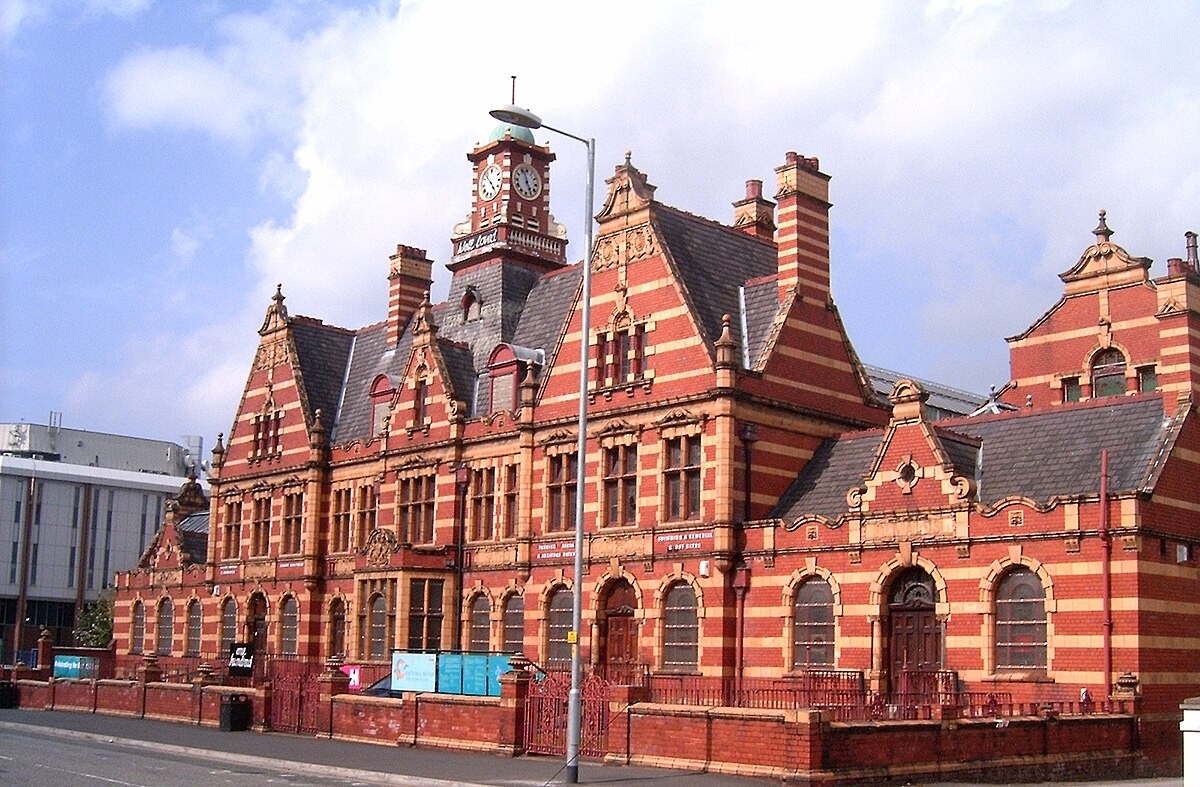


A Water Palace of Edwardian Grandeur
To step through the threshold of Victoria Baths is to transcend the modern bustle of Manchester and enter a meticulously preserved era of civic opulence. Often described by its inaugural visitors as a "water palace," this Grade II* listed masterpiece stands as a breathtaking testament to the architectural ambitions of Edwardian England. Opened in 1906, the complex was far more than a mere utility for hygiene; it was a grand stage for social interaction, designed with a fervent belief that public spaces should reflect the prosperity and well-being of the citizenry. The architecture itself tells a story of prestige, where the striking façade—a vibrant tapestry of multi-coloured brickwork and intricate terracotta detailing—commands the streetscape with a sense of permanence and classical grace.
The interior experience is one of shimmering light and immersive texture. As one wanders through the halls, the eye is immediately drawn to the floor-to-ceiling glazed tiles that clad the primary spaces. These luminous surfaces do not merely serve a functional purpose; they act as a canvas for light, reflecting the kaleidoscopic hues cast by the exquisite stained glass windows. These windows, adorned with delicate floral motifs and profound biblical scenes, infuse the atmosphere with a sacred, almost ethereal quality, bridging the gap between the secular world of leisure and the artistic sensibilities of the early twentieth century.
The Art of Ritual and Community
Beyond its structural splendor, Victoria Baths holds a unique place in the social fabric of the United Kingdom through its specialized architectural features. The inclusion of the Turkish Baths represents a fascinating intersection of cultural tradition and therapeutic innovation. These spaces, rooted in Ottoman practices, were designed to offer a holistic retreat for both body and spirit, featuring steam rooms and plunge pools that provided a sanctuary from the industrial grit of the surrounding city. This dedication to wellness is further echoed in the history of its swimming facilities, including the installation of Manchester's first public Aeratone™ bath in 1952, a moment that signaled a pioneering commitment to technological progress in public health.
For the art lover and the historian alike, the true magic of Victoria Baths lies in its ability to evoke the vanished rhythms of Edwardian life. The main swimming pool, which was famously floored over during winter months to host grand dances and festive celebrations, serves as a poignant reminder of how architecture can facilitate communal joy. Today, the building stands as a beacon of preservation and resilience. While it remains a cherished landmark for its architectural elements—from the meticulous terracotta carvings to its legendary tiling—it also serves as an evocative space for those seeking to reconnect with the soul of Manchester’s industrial and social heritage.