

Introduction
Twice in the nineteenth century, distinct groups of painters formed brotherhoods to reject contemporary academic teaching in favor of the styles preceding Raphael. The first, the Nazarenes, began in Vienna in 1809, seeking spiritual renewal through the revival of fresco painting and the traditions of Dürer and Perugino. The second, the Pre-Raphaelite Brotherhood, was founded in London in 1848, prioritizing a commitment to nature and intense, jewel-like color. These movements are frequently compared because both groups rejected established conventions, valued sincerity, and looked toward early Italian art for inspiration. However, their execution and philosophical goals diverged significantly. While the Nazarenes pursued an idealized, monumental, and often serene religious art, the Pre-Raphaelites focused on minute botanical precision and the scrutiny of real-world detail. This article examines the historical origins of both movements and clarifies their stylistic distinctions through the following points:
- The spiritual and nationalist motivations of the Nazarene Brotherhood.
- The naturalist rebellion and technical innovations of the Pre-Raphaelites.
- A comparative analysis of their surface textures, color palettes, and compositional structures.
| Nazarenes | Pre-Raphaelites | |
|---|---|---|
| Dates | active from 1809 | from 1848 |
| Where | Vienna and Rome | London |
| Key painters | Friedrich Overbeck, Peter von Cornelius, Julius Schnorr von Carolsfeld | William Holman Hunt, John Everett Millais, Dante Gabriel Rossetti |
| Palette and light | pure, rather flat colours; harmonious but subdued | brilliant colour; glowing greens, purples and reds |
| Typical subjects | Christian faith, national feeling, and biblical scenes | literature, contemporary life, and intense observation of nature |
| Technique | clear outlines, calm symmetrical compositions, and fresco painting | minute, sharply focused detail and painting on wet white ground |
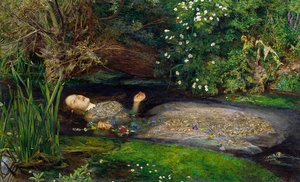
| One key work | Annunciation (1818) by Julius Schnorr von Carolsfeld | Ophelia (1852) by John Everett Millais |
The Nazarene Brotherhood and Spiritual Renewal
 Germania and Italia - Johann Friedrich Overbeck
 Joseph interpreting Pharaoh’s dreams - Peter von Cornelius
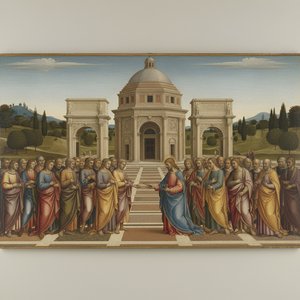
 Annunciation - Julius Schnorr von Carolsfeld
The Nazarene movement began in Vienna in 1809, when Friedrich Overbeck, Franz Pforr, and other students at the Academy established the Brotherhood of Saint Luke. Seeking a spiritual renewal of art in service of the Christian faith and national identity, the group moved to Rome in 1810. They resided in the disused monastery of Sant'Isidoro, adopting a lifestyle characterized by long hair and simple clothing.
The aesthetic goals of the Nazarenes involved a rejection of contemporary academic teaching in favor of models such as Dürer, Perugino, and the early works of Raphael. Their style is defined by clear outlines, symmetrical compositions, idealized figures, and the use of pure, relatively flat colors. This approach prioritized precise drawing over painterly effects. The movement was instrumental in the revival of fresco painting, as seen in the works executed at the Casa Bartholdy in Rome between 1816 and 1817, featuring scenes from the story of Joseph by Overbeck, Peter von Cornelius, and others.
Notable works from this period include:
- Italia und Germania by Johann Friedrich Overbeck (1811–1828), an allegory of cultural exchange.
- Annunciation by Julius Schnorr von Carolsfeld (1818), currently held in the Nationalgalerie in Dresden.
- Joseph interpreting Pharaoh’s dreams by Peter von Cornelius (undated), a tempera painting utilizing a classical pyramidal arrangement.
Through these methods, the Nazarenes sought to create a monumental and devotional art form that emphasized sincerity and religious intensity.
The Pre-Raphaelite Pursuit of Naturalism
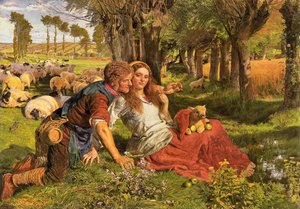 The Hireling Shepherd - William Holman Hunt
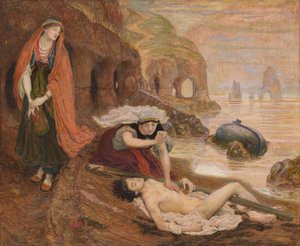 The finding of Don Juan by Haidée - Ford Madox Brown
The Pre-Raphaelite Brotherhood was founded in London in 1848 by William Holman Hunt, John Everett Millais, and Dante Gabriel Rossetti. This group rebelled against the Royal Academy's preference for the dark, brown tones established by Joshua Reynolds and the reverence for Raphael. Their primary objective was a commitment to "truth to nature," characterized by intense observation and the use of brilliant, jewel-like colors. To achieve this luminosity, artists often applied colors over a wet white ground.
The movement's focus on botanical and environmental precision is evident in several key works:
- Ophelia (1851-52) by John Everett Millais, which records riverbank plants with botanical precision.
- The Hireling Shepherd (1851) by William Holman Hunt, located in the Manchester Art Gallery, which depicts a pastoral scene with intricate details and vibrant colors.
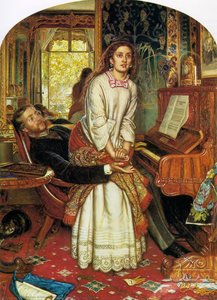
- The Awakening Conscience (1853) by William Holman Hunt, which utilizes dense religious and moral symbolism.
- The Last of England (1852-55) by Ford Madox Brown, which depicts modern life.
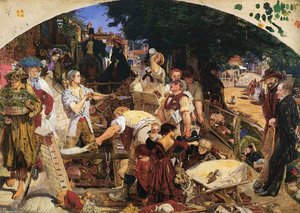
- Work (1852-65) by Ford Madox Brown.
- The Finding of Don Juan by Haidée (1870) by Ford Madox Brown, held in the National Gallery of Victoria.
While the Nazarenes sought an idealized, monumental style, the Pre-Raphaelites scrutinized the physical world. Their compositions often featured crowded, sharply focused detail and a sense of hallucinatory clarity. This approach extended to their treatment of human subjects; for example, Millais' Christ in the House of His Parents (1849-50) presented the Holy Family as ordinary workers, a departure from traditional academic depictions.
Key Differences in Style and Subject Matter
The stylistic divergence between the Nazarenes and the Pre-Raphaelites is defined by their opposing approaches to composition, color, and detail. Nazarene painting is characterized by a serene, linear quality. Their works often utilize clear outlines, symmetrical compositions, and a palette of pure, subdued colors. This style seeks to emulate the harmonious and idealized forms of Perugino and the early Raphael. For example, Annunciation (1818) by Julius Schnorr von Carolsfeld, held in the Albertinum in Dresden, demonstrates this intellectual rigor and serene beauty. Similarly, Peter von Cornelius’s tempera work, Joseph interpreting Pharaoh’s dreams, employs a classical pyramidal arrangement to direct the viewer's gaze, emphasizing structured, calm divinity.
In contrast, the Pre-Raphaelites rejected the dark, brown tones of the Royal Academy in favor of intense naturalism and brilliant color. Their technique often involved laying colors over a wet white ground, resulting in a jewel-like luminosity. While the Nazarenes idealized, the Pre-Raphaelites scrutinized. Their compositions are frequently crowded with minute, sharply focused botanical and anatomical details. This is evident in John Everett Millais’s Ophelia (1851-52), which records riverbank vegetation with botanical precision, and William Holman Hunt’s The Hireling Shepherd (1851), which features a pastoral scene teeming with intricate detail. While Nazarene surfaces appear smooth and simplified, Pre-Raphaelite works present a hallucinatory clarity. This distinction is further seen in the works of Ford Madox Brown, such as The Finding of Don Juan by Haidée (1870), which captures complex psychological and narrative tableaux through masterful, detailed technique.
Conclusion
To distinguish these two movements in a museum setting, one should observe the treatment of detail and color. A Nazarene work is characterized by a serene, linear quality, featuring harmonious but subdued colors and smooth surfaces that resemble the style of Perugino. In contrast, a Pre-Raphaelite painting presents a crowded field of minute, sharply focused detail and brilliant, jewel-like colors, such as glowing greens and reds, often rendered with hallucinatory clarity.
Despite these aesthetic differences, both movements share a fundamental rejection of the academic conventions of their respective eras. Both the Nazarenes and the Pre-Raphaelites sought a return to the sincerity of art produced before Raphael, looking toward the past to find a purer model for expression. Whether through the Nazarenes' pursuit of spiritual and monumental ideals or the Pre-Raphaelites' intense observation of the natural world, both groups prioritized a sense of authenticity over the established traditions of the Royal Academy or the German academies.
Explore these works on our website.
Frequently asked questions
What are the main differences between Nazarenes and Pre-Raphaelites?
Nazarenes sought spiritual renewal through idealized, symmetrical compositions and flat colors modeled on Perugino and Dürer. Pre-Raphaelites focused on truth to nature, utilizing intense observation of botanical details and brilliant, jewel-like colors. While Nazarenes aimed for a serene, monumental style, Pre-Raphaelites emphasized minute, sharply focused detail and real models.
Who were the famous Nazarene painters?
The Nazarene movement included Friedrich Overbeck, Peter von Cornelius, and Julius Schnorr von Carolsfeld. They formed the Brotherhood of Saint Luke in Vienna in 1809 and later moved to Rome.
Who were the famous Pre-Raphaelite painters?
The Pre-Raphaelite Brotherhood was founded in London in 1848 by William Holman Hunt, John Everett Millais, and Dante Gabriel Rossetti. Ford Madox Brown was also close to the group.
Where can I see famous Nazarene and Pre-Raphaelite works?
Nazarene works include Overbeck's Italia und Germania in the Neue Pinakothek, Schnorr von Carolsfeld's Annunciation in the Albertinum, and Cornelius's Joseph interpreting Pharaoh’s dreams in the Kupferstichkabinett. Pre-Raphaelite works include Millais's Ophelia, Hunt's The Hireling Shepherd in the Manchester Art Gallery, and Brown's The Finding of Don Juan by Haidée in the National Gallery of Victoria.
Famous painters of Nazarenes
- 1789 – 1869Johann Friedrich Overbeck
- 1783 – 1867Peter von Cornelius
- 1794 – 1872Julius Schnorr von Carolsfeld



Famous artworks of Nazarenes
- Johann Friedrich Overbeck · 1811Germania and Italia
- Johann Friedrich OverbeckItalia and Germania
- Peter von CorneliusJoseph interpreting Pharaoh’s dreams
- Peter von Cornelius · 1813The wise and the foolish virgins
- Julius Schnorr von Carolsfeld · 1818Annunciation
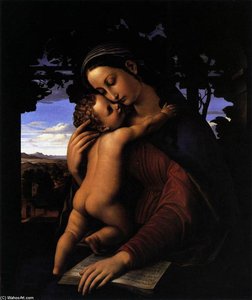
- Julius Schnorr von Carolsfeld · 1820Madonna and Child


Famous painters of Pre-Raphaelites
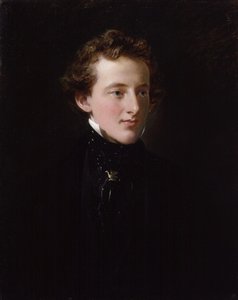
- 1829 – 1896John Everett Millais
- 1827 – 1910William Holman Hunt
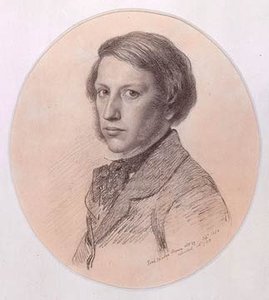
- 1821 – 1893Ford Madox Brown

Famous artworks of Pre-Raphaelites
- John Everett Millais · 1852Ophelia (Cropped)
- John Everett Millais · 1856Autumn Leaves
- William Holman Hunt · 1851The Hireling Shepherd
- William Holman HuntThe Awakening Conscience
- Ford Madox Brown · 1870The finding of Don Juan by Haidée
- Ford Madox Brown · 1852Work