

The Dawn of a New Vision: From Impressionist Light to Modernist Abstraction
Twentieth-century art—and what it became as modern art—began with modernism in the late nineteenth century. == Overview == Nineteenth-century movements of Post-Impressionism (Les Nabis), Art Nouveau and Symbolism led to the first twentieth-century ar...
To look back upon the trajectory of art is to witness a beautiful, unfolding metamorphosis of the human eye. For those of us who have spent decades finding solace in the soft, dappled sunlight of a Monet or the tender, rhythmic brushstrokes of Renoir, the transition into the era of Modernism can feel like a sudden awakening from a dream into a vibrant, sometimes jarring, reality. We began our journeys admiring how the Impressionists captured the fleeting essence of a moment—the way light dances upon a lily pond or settles upon a cathedral spire. It was an art of atmosphere, where the boundaries of objects were softened by the very air that surrounded them.
Yet, as the twentieth century dawned, a quiet revolution began to stir. The gentle vibrations of color that we loved in Post-Impressionism—the structural brilliance of Cézanne or the emotive intensity of Van Gogh—started to pave the way for something more radical. This was not a rejection of beauty, but an expansion of it. The focus shifted from the external observation of light to an internal exploration of form and feeling. We moved from the impression of a landscape to the very essence of its geometry, setting the stage for a movement that would eventually strip away the recognizable world to reveal the raw, pulsing energy beneath.
A Symphony of Form: The Geometric Elegance of American Modernism
![Abstract Composition [triptych]](/media/artworks/images/thumbnails/e5/3d/e53db42ea02644b9a8e722f9d4dd3742.jpg) Abstract Composition [triptych]
Abstract Composition [triptych]Abstract Composition [Triptych] by Vaclav Vytlacil (1937). Explore this dynamic black & white triptych featuring bold lines, textures & geometric shapes. A key example of American modernism.
As the artistic pulse migrated across the Atlantic, American artists began to find their own unique cadence, blending European structural influences with a distinctly New World dynamism. This era of American Modernism brought with it a fascination for the architecture of the canvas itself. One cannot contemplate this period without being moved by the rhythmic precision found in works like Vaclav Vytlacil’s Abstract Composition [Triptych]. Here, the soft edges of our beloved Impressionist landscapes gave way to bold lines and deliberate textures, creating a visual language that spoke of balance and structural integrity.
This was a period where the canvas became a site of architectural exploration. Artists like Hananiah Harari, a founding member of the American Abstract Artists, utilized dynamic forms and social commentary to breathe life into geometric shapes. There is a profound, quiet strength in these works; they do not rely on the charm of a recognizable subject but instead command attention through the sheer intelligence of their composition. It is a symphony where every line is a note and every shape a movement, inviting us to find beauty in the mathematical elegance of the modern age.
Emotional Landscapes: The Raw Power of Abstract Expressionism
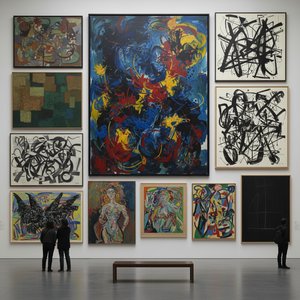 Abstract Expressionism's 10 Defining Masterpieces |
Introduction To gaze upon these ten canvases is to step into a realm where emotion reigns supreme, where the very act of painting became a visceral outpouring of the human spirit. The Abstract Expressionist movement, born in the aftermath of World Wa...
If Modernism provided the structure, then the emergence of Abstract Expressionism in the post-war era provided the soul—a soul grappling with the profound uncertainties of a world forever changed. To step into the realm of this movement is to enter a space where emotion reigns supreme and the act of painting becomes a visceral, almost spiritual, outpouring. The trauma and upheaval of the mid-twentieth century demanded a new way to articulate the inexpressible. The representational traditions that had sustained us for centuries suddenly felt insufficient to capture the depth of human anxiety and existential longing.
In the bustling art scene of New York, artists like Jackson Pollock and Willem de Kooning transformed the canvas into an arena of action. This was no longer about depicting a scene; it was about recording an event. The "drip" technique and the spontaneous, automatic gestures were not merely stylistic choices but attempts to tap into the subconscious mind. When we gaze upon these monumental canvases, we feel the weight of the artist's movement—the physical labor and the emotional intensity etched into every splatter and thick layer of pigment. It is a breathtakingly raw form of storytelling that bypasses the intellect to strike directly at the heart.
Beyond the Visible: Finding Subjectivity in Color and Texture
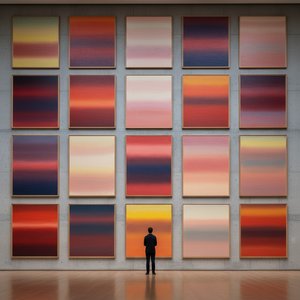
As we delve deeper into this era, we find that the true magic lies in the liberation of color and texture from their traditional roles. In the hands of masters like Milton Resnick, color ceased to be a tool for description and became an independent force of nature. His Abstraction from 1963 serves as a testament to this; through vibrant hues and intricate, dancing patterns, he proves that color alone can evoke a profound sense of movement and life. There is no need for a horizon line or a tree when the very vibration of a blue or a gold can transport the viewer to another state of being.
Texture, too, took on a new dimension of importance. The tactile quality of the paint—the thick impasto that we so admire in the works of Van Gogh—found a new purpose in modern abstraction. It became a way to add weight, shadow, and a sense of physical presence to the ephemeral. This exploration of the "materiality" of art allows us to connect with the work on a sensory level, feeling the ridges and valleys of the paint as if we were touching the very pulse of the artist's creativity. It is an invitation to look beyond the visible surface and experience the profound subjectivity of the human perspective.
Legacy and Light: How Modern Perspectives Redefined the Artistic Spirit
Reflecting on this journey, from the luminous gardens of Giverny to the energetic abstractions of New York, we see a continuous thread of human searching. The spirit of American Modernism did not destroy the beauty of the past; rather, it honored the search for truth by expanding the boundaries of what art could achieve. It taught us that truth is not only found in the light hitting a petal but also in the tension between two lines and the emotional resonance of a single, bold stroke of crimson.
For the lifelong lover of art, this evolution offers a richer, more complex tapestry to admire. We can cherish the delicate nostalgia of the Impressionists while simultaneously embracing the profound, transformative power of the Modernists. This legacy continues to inspire us today, reminding us that art is a living, breathing entity, forever capable of reinventing itself to reflect the ever-changing landscape of our own souls.
At Mus3ums.com, we celebrate this entire magnificent spectrum of art history. Whether you find your heart captured by the soft, light-drenched textures of a Monet or the bold, emotive energy of an Abstract Expressionist masterpiece, our mission is to bring that passion into your home. We specialize in creating exquisite, hand-painted oil reproductions that honor the true soul of the original—capturing every visible brushstroke and deep tonal range. From custom portraits that transform your personal memories into timeless treasures to large-scale murals that redefine your space, we invite you to explore a world where fine art is accessible, authentic, and eternally beautiful.