

Introduction
To understand the history of European art, one must distinguish between two transformative eras: the Gothic period and the Renaissance. Gothic art emerged in the twelfth century in northern France, characterized by its focus on spiritual devotion and the use of light in cathedrals. This movement spread across Europe until approximately 1400. The Renaissance began in Florence in the early fifteenth century, marking a shift toward the study of nature, mathematics, and classical antiquity. This movement eventually moved beyond Italy to influence the rest of Europe.
Readers often compare these two movements because they represent a gradual transition rather than a sudden break. For example, the works of Giotto around 1300 already began introducing weight and emotion to figures, bridging the gap between the two styles. This article will help you identify the specific characteristics of each era. We will examine:
- The use of hierarchical scale and gold leaf in Gothic spiritual compositions.
- The development of linear perspective and naturalism during the Renaissance.
- The fundamental differences between symbolic, decorative space and the measured, physical world.
| Gothic | Renaissance | |
|---|---|---|
| Dates | c. 1200-1400 | early 15th century |
| Where | Northern France and Europe | Florence, Italy and Europe |
| Key painters | Cimabue, Duccio, Simone Martini | Masaccio, Fra Filippo Lippi, Raphael |
| Palette and light | Gold leaf and symbolic light | Coherent light and blue skies |
| Typical subjects | Faith and sacred figures | Nature, mathematics, and classical antiquity |
| Technique | Tempera on wooden panels | Linear perspective and believable anatomy |
| One key work | Maestà (1308-1311) by Duccio | The School of Athens (1509-1511) by Raphael |
The Spiritual Focus of Gothic Painting
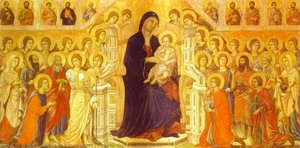
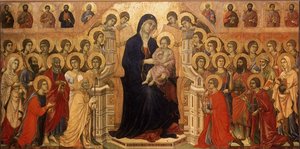 Maestà (Madonna with Angels and Saints) - Duccio di Buoninsegna
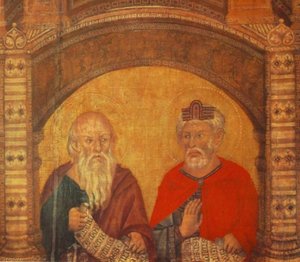
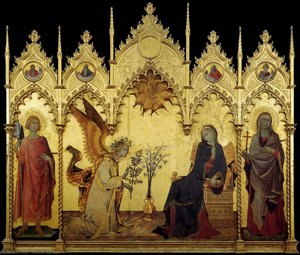
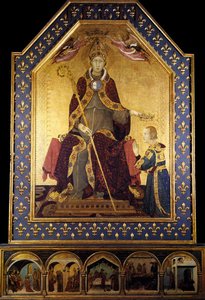 Altar of St Louis of Toulouse - Simone Martini
Gothic art emerged in the twelfth century in northern France and spread across Europe until approximately 1400. During this period, painting primarily served the needs of faith. The visual language of the era was designed to represent a heavenly order rather than the physical world. To achieve this, artists utilized specific techniques such as tempera on wooden panels and the extensive application of gold leaf to create a sense of divine light.
A defining characteristic of Gothic composition is hierarchical scale. In this system, the size of a figure is determined by its spiritual importance rather than its distance from the viewer. For example, holy figures are often depicted much larger than mortals to signal their status. The space in these works is frequently symbolic and flat, using rich decorative patterns instead of realistic landscapes to suggest a celestial realm.
Several key works illustrate these principles:
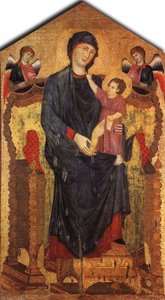
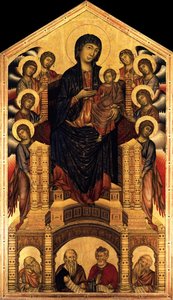
- Cimabue’s Santa Trinita Maestà (c. 1280-1290): This work features an enthroned Virgin set against a flat gold background, which represents heavenly light rather than a physical location.
- Duccio di Buoninsegna’s Maestà (1308-1311): Created for the Siena Cathedral, this monumental altarpiece combines Byzantine solemnity with delicate narrative panels and tender gestures.
- Simone Martini’s Annunciation (1333): Now located in the Uffizi, this painting demonstrates Gothic elegance through a slender, recoiling Virgin and a fluttering angel, with words of the greeting embossed in gold.
While the transition to new styles was gradual, these elements established a visual framework focused on the spiritual and the eternal.
The Human-Centered World of the Renaissance
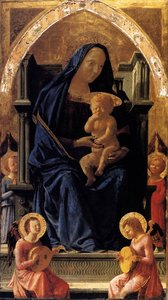 Madonna with Child and Angels - Masaccio
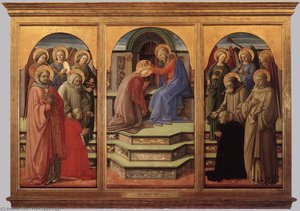 Coronation of the Virgin - Filippo Lippi
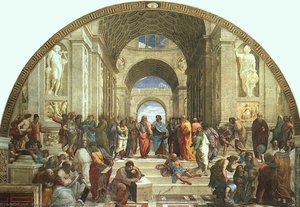 School of Athens - Raphael
While Gothic art focused on the symbolic and the divine, the Renaissance shifted the focus toward the natural world and the human experience. Beginning in Florence in the early fifteenth century, this movement was characterized by a renewed interest in mathematics, classical antiquity, and the study of nature. Artists sought to represent the world as it appeared to the human eye, moving away from the flat, decorative styles of previous eras.
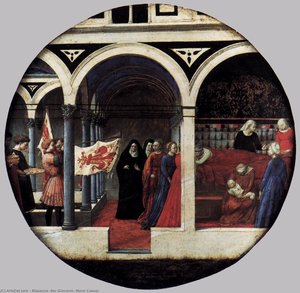
A primary tool for achieving this realism was linear perspective. This mathematical system allowed painters to create the illusion of three-dimensional space on a flat surface. For example, The Holy Trinity (about 1427) by Masaccio uses this technique to make the wall of the Santa Maria Novella chapel appear as if it were a real, receding architectural space. Similarly, in his Tribute Money (about 1425) in the Brancacci Chapel, Masaccio depicts apostles with heavy, sculptural weight, standing within a landscape illuminated by a single, consistent light source.
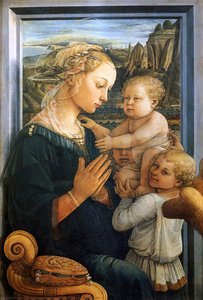
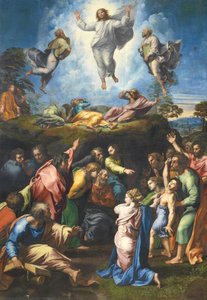
As the movement progressed, artists also focused on believable anatomy and human emotion. Fra Filippo Lippi brought a sense of warmth and tenderness to sacred subjects, seen in his Madonna and Child with Two Angels (about 1460-1465), where the Virgin Mary is depicted with the likeness of a real Florentine woman. By the High Renaissance, this pursuit of perfection reached a peak with Raphael. His works, such as The School of Athens (1509-1511) and the Sistine Madonna (1512), demonstrate a mastery of coherent light, classical motifs, and the harmonious integration of human figures within a logical, measurable environment.
Comparing Symbolic Space and Natural Realism
The transition from the Gothic era to the Renaissance is most visible in how artists organized the space behind their subjects. In Gothic painting, space is often symbolic rather than physical. Artists frequently used flat, gold backgrounds to represent a heavenly realm rather than a real, earthly location. For example, in the Santa Trinita Maestà (c. 1280-1290) by Cimabue, the Virgin is set against a flat gold background that signifies divine light. Similarly, Simone Martini’s Annunciation (1333) utilizes gold embossing to create an atmosphere of elegance and spiritual abstraction. In these works, the use of hierarchical scale—where holy figures are depicted larger than mortals—further emphasizes that the setting is a conceptual, spiritual space.
In contrast, Renaissance artists sought to create a window into a believable, three-dimensional world. This was achieved through the application of linear perspective and a focus on natural light. The following shifts define this movement:
- Perspective and Depth: Masaccio’s The Holy Trinity (c. 1427) uses linear perspective to make the wall of the Santa Maria Novella appear as if a real chapel is opening into the space.
- Natural Landscapes: Rather than gold patterns, Renaissance works often feature receding landscapes. Masaccio’s Tribute Money (c. 1425) depicts apostles standing within a landscape illuminated from a single, consistent direction.
- Human Anatomy and Light: As seen in the works of Raphael, such as The School of Athens (1509-1511), the focus shifted toward coherent light, believable anatomy, and classical architectural motifs that ground the figures in a measurable, human environment.
While Gothic art uses decorative patterns and gold to signal the heavenly order, Renaissance art uses geometry and light to depict the measured, natural world.
Conclusion
When visiting a museum, a viewer can distinguish these two eras by looking at the background and the scale of the figures. If a painting features a flat gold background and figures that vary in size based on their religious importance, it is likely Gothic. If the artwork shows a receding landscape, realistic shadows, or architecture drawn in linear perspective, it belongs to the Renaissance. While the Gothic style uses symbolic space to represent a heavenly order, the Renaissance uses mathematical perspective to represent the measured human world.
Despite these differences, both movements share a profound commitment to religious devotion. Whether through the elegant, decorative patterns of a Gothic altarpiece or the humanized, emotional depictions of the Renaissance, both eras sought to communicate the divine to the viewer. They represent two different ways of seeing the relationship between humanity and the eternal.
Explore these historical masterpieces on our website.
Frequently asked questions
How to tell Gothic and Renaissance art apart
Gothic art often features gold leaf, flat patterned spaces, and figures of different sizes based on importance. Renaissance art typically shows a blue sky, receding landscapes, architecture drawn in perspective, solid bodies casting shadows, and faces that look like real people.
When did Gothic and Renaissance art occur
Gothic art was born in the twelfth century in northern France and spread across Europe until around 1400. The Renaissance began in Florence in the early fifteenth century and later spread to the rest of Italy and to Europe.
Who are famous Gothic and Renaissance painters
Gothic painters include Cenni di Pepo (Cimabue), Duccio di Buoninsegna, and Simone Martini. Renaissance painters include Tommaso di Ser Giovanni di Simone (Masaccio), Filippo Lippi (Fra Filippo Lippi), and Raffaello Sanzio da Urbino (Raphael).
Where to see famous Gothic and Renaissance works
Gothic works include the Maestà by Duccio di Buoninsegna in Siena Cathedral and the Annunciation by Simone Martini in the Uffizi. Renaissance works include The School of Athens by Raphael in the Vatican Palace and The Holy Trinity by Masaccio in Santa Maria Novella.
Famous painters of Gothic
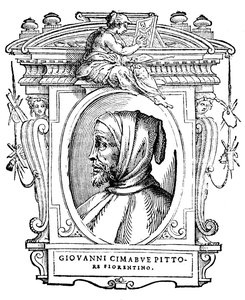
- 1240 – 1302Cimabue
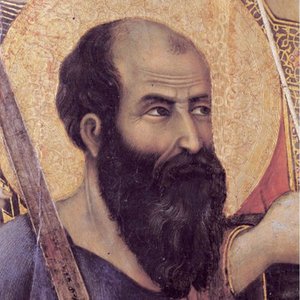
- 1255 – 1319Duccio di Buoninsegna
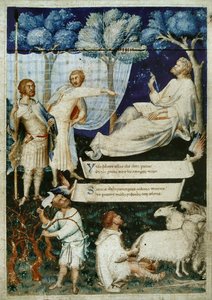
- 1284 – 1344Simone Martini
Famous artworks of Gothic
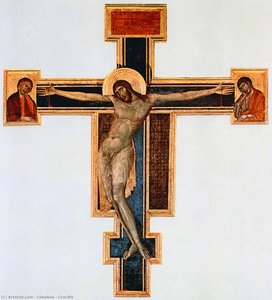
- Cimabue · 1287Crucifix
- Cimabue · 1285The Madonna in Majesty (Maestà)
- Duccio di Buoninsegna · 1308Maestà (Madonna with Angels and Saints)
- Duccio di Buoninsegna · 1311MaestÓ (front, central panel)
- Simone Martini · 1317Altar of St Louis of Toulouse
- Simone Martini · 1333The Annunciation and Two Saints
Famous painters of Renaissance
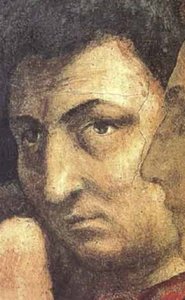
- 1401 – 1428Masaccio
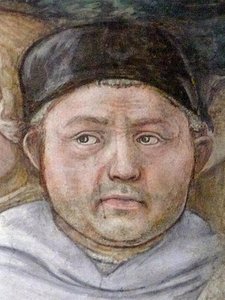
- 1406 – 1469Fra Filippo Lippi
- 1483 – 1520Raphael
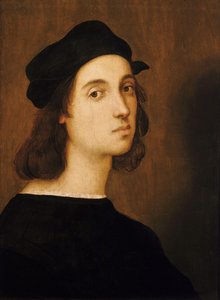
Famous artworks of Renaissance
- Masaccio · 1426Madonna with Child and Angels
- Masaccio · 1427Plate of Nativity (Berlin Tondo)
- Filippo Lippi · 1441Coronation of the Virgin
- Filippo Lippi · 1460Madonna with Child and Angels
- RaphaelSchool of Athens
- Raphael · 1520The Transfiguration