The Geometry of Vision: Understanding the Cubist Revolution
To gaze upon a Cubist masterpiece is to witness the dissolution of the single, unyielding perspective that had governed Western art since the Renaissance. For centuries, the canvas served as a window, a transparent pane through which a fixed viewpoint offered a singular, illusionistic reality. However, at the dawn of the twentieth century, a radical shift occurred, fundamentally altering how we perceive the relationship between object and space. This was not merely a change in style, but a profound philosophical inquiry into the nature of sight itself. The Cubist revolution sought to capture the totality of an object, acknowledging that our experience of reality is never static; it is a continuous, multi-faceted movement of the eye and mind.
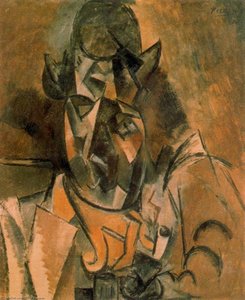
By breaking objects into their constituent geometric components—the sphere, the cone, and the cylinder—pioneers like Georges Braque and Pablo Picasso dismantled the traditional hierarchy of form. They replaced the soft, atmospheric transitions of Impressionism with a structured, analytical approach that emphasized the intellectual over the purely optical. This movement invited the viewer to participate in the reconstruction of the image, turning the act of looking into an active, cognitive process. In this fragmented landscape, the boundaries between foreground and background begin to blur, creating a rhythmic interplay of planes that challenges the very notion of depth and stability.
Deconstructing the Mundane: The Symbolic Language of Still Life
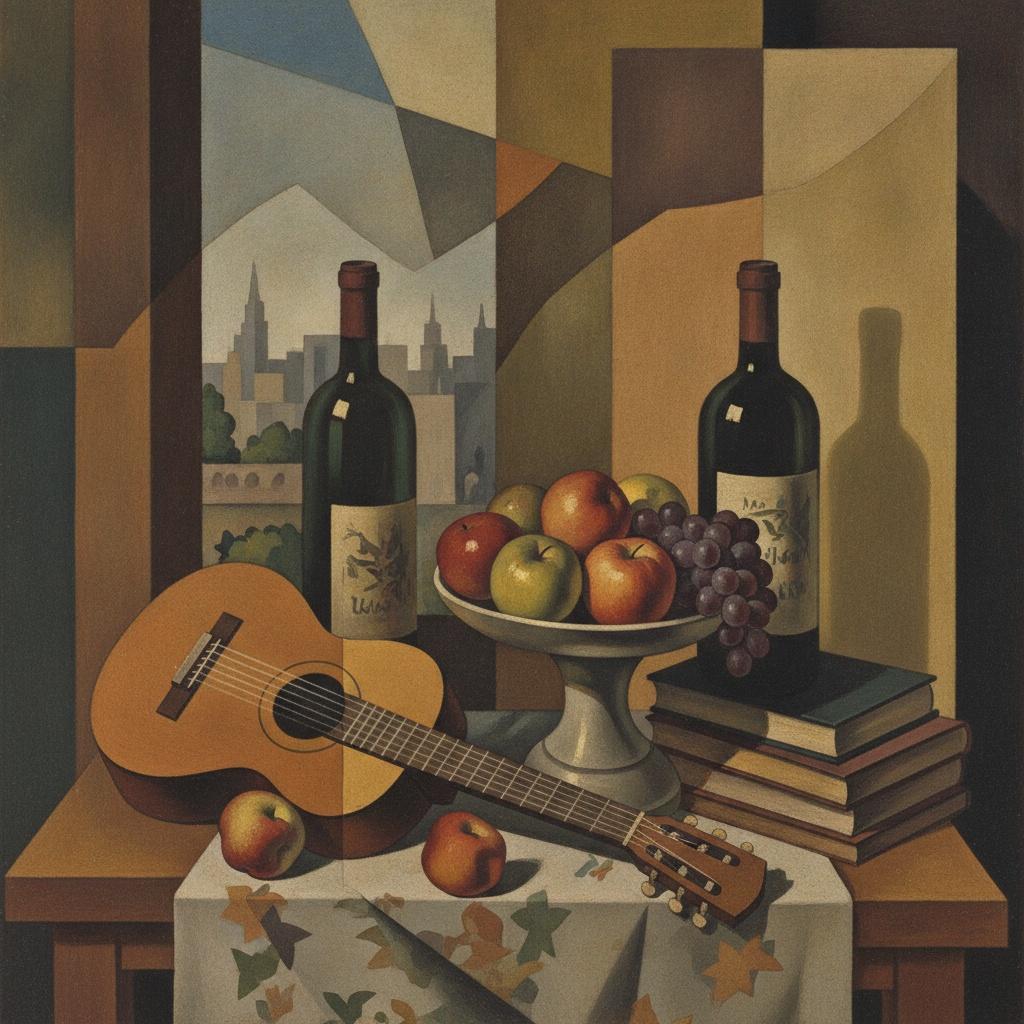
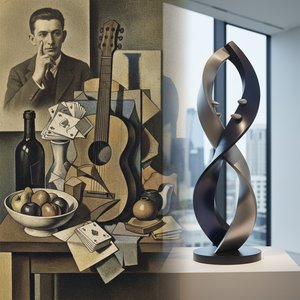
The choice of the still life as a primary vehicle for Cubist experimentation was both deliberate and deeply poetic. While grand historical or religious narratives might seem more appropriate for such a radical upheaval, the humble arrangement of fruit, glassware, and musical instruments provided the perfect laboratory for formal investigation. There is a quiet intimacy in the still life, a focus on the domestic and the tangible that allows the artist to manipulate familiar subjects without the distraction of complex human drama. In the hands of a Cubist master, a simple lemon or a common pitcher becomes a vessel for exploring light, shadow, and structural integrity.
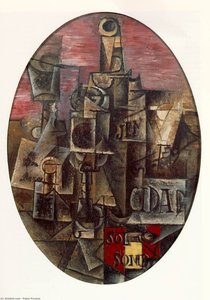
Within these compositions, every element carries a weight of symbolic significance. A fragment of a newspaper, a textured piece of wood, or the curve of a wine bottle serves as an anchor within the abstraction, providing just enough recognizable detail to guide the viewer through the labyrinth of geometric planes. This tension between the recognizable and the abstract creates a profound psychological resonance. The objects are no longer merely items on a table; they are symbols of a fractured modernity, representing the way our sensory perceptions are constantly being reassembled by the passage of time and the movement of our own consciousness.
From Cézanne to Picasso: The Evolution of Form and Fragment
The lineage of Cubism is inextricably linked to the late works of Paul Cézanne, the visionary who first suggested that nature should be treated through the lens of the cylinder, the sphere, and the cone. His ability to build form through deliberate, structural brushstrokes provided the essential blueprint for what would become Analytic Cubism. Picasso, in his early period, particularly in works such as Still Life with Lemons (1907), began to absorb these Cézannian influences, utilizing vibrant colors and bold geometric shapes to bridge the gap between late nineteenth-century Post-Impressionism and the avant-garde.
As the movement progressed, the fragmentation became more intense and the palette more restrained. The collaboration between Picasso and Georges Braque was so seamless that their works from certain periods are often difficult to distinguish, as they shared a singular mission to deconstruct volume into overlapping facets. This evolution eventually led to Synthetic Cubism, where the introduction of collage—incorporating real-world textures like sand or paper—reintegrated elements of reality back into the painted surface. This progression represents a journey from the observation of form to the construction of a new, entirely autonomous reality, forever changing the trajectory of modern art.
The Tactile Dimension: Analyzing Texture and Depth in Cubist Compositions
One of the most captivating aspects of Cubist still life is its profound emphasis on the tactile. Unlike the smooth, glazed surfaces of classical oil paintings, Cubist works often celebrate the physical presence of the medium itself. Through the use of impasto—the thick, textured application of paint—artists create a topographical landscape on the canvas. This texture does more than just mimic the surface of an object; it adds a literal dimension of depth that interacts with real-world light, casting tiny shadows within the grooves of the brushstrokes.
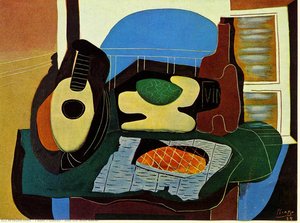
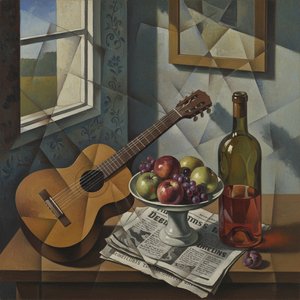
This tactile exploration extends to the very concept of space. In works like Picasso’s Still Life with Pitcher and Apples (1919), we see a masterful blending of realism and innovation. The artist uses varying degrees of texture to suggest weight and density, making the fruit feel tangible even as its form is being pulled apart by geometric forces. This interplay between the physical substance of the paint and the illusory depth of the composition creates a sensory experience that transcends mere sight. The viewer is invited to feel the ruggedness of the stone or the smoothness of the glass through the visual language of texture, making the fragmented reality feel remarkably present and visceral.
Modernizing Tradition: Integrating Cubist Aesthetics into Contemporary Interiors
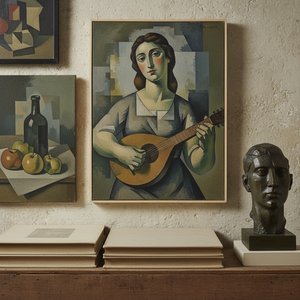
In the contemporary era, the principles of Cubism continue to offer profound inspiration for the curation of sophisticated living spaces. The movement’s emphasis on structure, balance, and the interplay of light makes it an ideal aesthetic for modern architectural design. Integrating a Cubist-inspired piece into a room does not require a complete abandonment of tradition; rather, it offers an opportunity to create a compelling dialogue between the classical and the avant-garde. A well-placed reproduction of a Braque or Picasso can serve as a powerful focal point, injecting energy and intellectual depth into a curated collection of furniture and decor.
The beauty of Cubist aesthetics lies in their versatility. The geometric precision of these works complements the clean lines of minimalist design, while their rich textures and complex compositions provide a necessary counterpoint to the starkness of modern materials like steel and glass. For the discerning collector, choosing art that explores these fragmented perspectives allows for a home environment that is both visually stimulating and philosophic. By embracing the power of the fragment, one can transform a static interior into a dynamic space of discovery, where every angle and every light source reveals a new layer of beauty and meaning.
At Mus3ums.com, we celebrate this enduring legacy of human creativity. Our mission is to make the profound beauty of the Old Masters and the revolutionary spirit of the modernists accessible to all. Whether you are seeking a meticulously hand-painted oil reproduction that captures the thick impasto of a Cubist masterpiece or a custom commission that reimagines your own memories through a historical lens, our academy-trained artists bring unparalleled expertise to every canvas. We invite you to explore our vast library and discover how the fragmented brilliance of art history can find a permanent, breathtaking home within your own walls.