

Introduction
The 16th century in the Low Countries was a period of profound transformation, where the transition from the late Middle Ages to the Renaissance birthed a visual language of unparalleled complexity. As the region evolved through shifting political borders and religious upheavals, a group of masters emerged who moved beyond mere decoration to capture the intricate details of the human condition. These painters from the Netherlands were united by a shared obsession with naturalism, the mastery of light, and a fascination with both the divine and the mundane, often blending profound symbolism with a startlingly realistic depiction of the physical world.
This era saw a dramatic expansion in subject matter, ranging from the surreal, moralizing landscapes of the early century to the sophisticated portraiture and genre scenes that defined the later years. The artists of this period were not merely observers; they were architects of atmosphere, utilizing oil pigments to achieve a depth of color and texture that had never before been seen in European art. Their ability to render the sheen of silk, the weathered skin of a peasant, or the vast, atmospheric distance of a horizon line set a standard for technical excellence that would influence generations of painters across the continent.
Today, these works remain vital because they capture the very moment when the modern eye was born. The tension between the spiritual and the secular, the grotesque and the beautiful, continues to resonate in contemporary visual culture. By examining the legacies of these masters, we gain insight into the roots of Western realism and the enduring power of storytelling through imagery. The following selection highlights ten essential figures who defined this golden age, including the visionary Hieronymus Bosch and the masterful Pieter Brueghel the Elder, whose works continue to captivate the imagination of the world.
Hieronymus Bosch
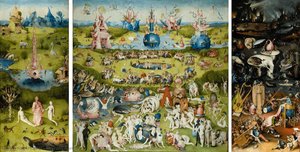 The Garden of Earthly Delights - Hieronymus Bosch
In his monumental triptych, The Garden of Earthly Delights, the viewer is thrust into a fever dream of flesh and flora where the boundaries between the natural and the impossible have dissolved. This masterpiece exemplifies the profound impact of Hieronymus Bosch, a pivotal figure who emerged from the Duchy of Brabant at the turn of the 16th century. Born Jheronimus van Aken into a lineage of painters in 's-Hertogenbosch, his work serves as a bridge between the late medieval era and the Northern Renaissance, defining the artistic landscape of the Netherlands during this transformative period.
Bosch’s vision was deeply rooted in the religious fervor and societal anxieties of his time. Unlike many of his contemporaries who sought serenity, he turned his gaze toward the grotesque and the symbolic. His technique involved layering thin, translucent glazes of oil paint to achieve a luminous depth, allowing skin to appear soft against the hard, unsettling edges of bizarre creatures. From the lush, primordial landscapes of Eden to the dark, architectural nightmares of Hell, his palette and meticulous detail capture the fleeting nature of human desire and the fragility of earthly existence through a highly individualistic, mystical lens.
Pieter Brueghel the Elder
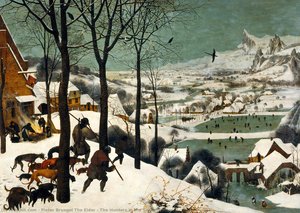
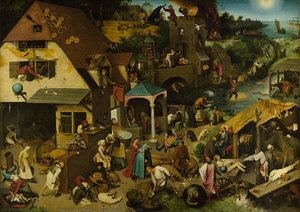
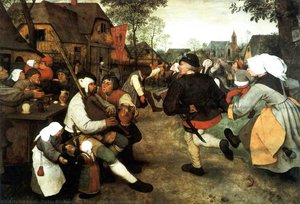
A true titan of the Northern Renaissance, Pieter Bruegel the Elder (1525–1569) redefined the visual language of the 16th century Netherlands. His artistry was born from a restless curiosity that led him from the Duchy of Brabant to the bustling urban centers of Antwerp and Brussels. Rather than focusing solely on the divine, he sought the essence of human existence within the rhythmic, often boisterous, realities of rural life. This profound observation of the human spirit makes him a cornerstone of 16th century Netherlandish painters.
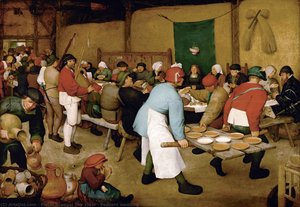
His masterpiece, Peasant Wedding (1568), serves as a vivid snapshot of this era, capturing a communal feast teeming with life. Through a masterful use of earthy tones—deep browns, muted greens, and sudden bursts of red—Bruegel constructs a dense, chaotic, yet perfectly balanced composition. The texture of the scene is palpable, from the rough grain of wooden beams to the smooth pottery on the tables. In this work, the mundane becomes monumental, transforming a simple celebration into a complex narrative of social interaction and prosperity that resonates with a timeless, nostalgic energy.
Lucas van Leyden
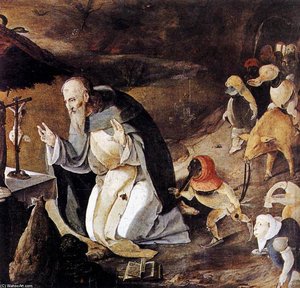 The Temptation of St Anthony - Lucas van Leyden
A visitor can recognize the hand of Lucas van Leyden through his remarkable ability to blend meticulous detail with a sense of aérienne perspective. His works are characterized by fresh, luminous colors and a precocious mastery of both oil painting and engraving. As a pivotal figure of the 16th century in the Netherlands, he transitioned from the early traditions of his father, Huygh Jacobsz, to become a pioneer of genre painting and landscape. His technical precision was so profound that it earned the admiration of contemporaries like Albrecht Dürer.
In his 1530 masterpiece, The Temptation of St Anthony, we witness the height of his psychological depth. The painting captures a moment of profound spiritual struggle, utilizing a composition that emphasizes the vulnerability of the hermit against demonic forces. Through delicate glazing techniques and a sophisticated use of light, he transforms a scene of religious fervor into a reflective study of moral fortitude. Whether through his intricate engravings or his expressive oil panels, van Leyden’s legacy remains anchored in his ability to infuse Northern Renaissance realism with a profound, quiet intensity.
Gerard David
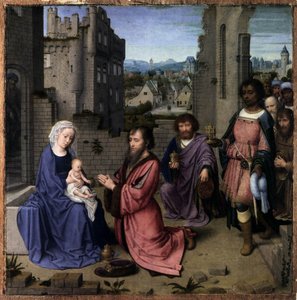 Adoration of the Kings - Gerard David
A master of the Flemish Renaissance, Gerard David represents a vital link in the evolution of 16th century Netherlandish painters. Though his career began in the late 15th century, his influence and active workshop presence in major hubs like Bruges and Antwerp firmly established his legacy within the artistic landscape of the 1500s. His work serves as a bridge between the meticulous traditions of the Early Netherlandish masters and the burgeoning complexities of the Renaissance.
David’s style is defined by a profound sensitivity to light and a capacity for creating immersive, spiritual atmospheres. His training, influenced by the likes of Dieric Bouts and Geertgen tot Sint Jans, allowed him to master the art of luminous glazing, a technique that gives his canvases an ethereal, jewel-like quality. This technical precision is epitomized in his 1515 masterpiece, Adoration of the Kings. In this work, David demonstrates his ability to weave intricate religious symbolism with expansive, detailed landscapes, creating a sense of calm and profound devotion. Through his ability to harmonize human emotion with divine narrative, David remains a central figure in the history of art from the Netherlands.
Jan van Scorel
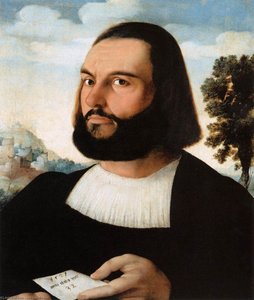 Portrait of a Man of Thirty-Two Years - Jan van Scorel
In his 1521 Portrait of a Man of Thirty-Two Years, Jan van Scorel demonstrates a profound ability to capture the psychological weight and quiet dignity of the Renaissance individual. This work serves as a masterful example of his ability to render texture and light, utilizing a palette of earthy ochres and muted greens to create a sense of atmospheric depth. The subject is presented with a serene, contemplative gaze, emerging from a softly diffused light that highlights the subtle nuances of the human form.
As a central figure of the 16th century Netherlandish painters, van Scorel acted as a vital bridge between Northern traditions and the Italian Renaissance. Born in Schoorl around 1495, his early training in the Netherlands paved the way for his transformative travels to Italy. It was during these journeys that he absorbed the Romanist style, incorporating the influence of masters like Giorgione into his native technique. This unique synthesis of Dutch precision and Italianate grace allowed him to introduce new spatial and anatomical perspectives to the Low Countries. His legacy is defined by this cultural exchange, blending the meticulous detail of his homeland with the grand, classical compositions of the South.
Hans Vredeman de Vries
 Palace Architecture with Bathers - Hans Vredeman de Vries
A central figure among 16th century Netherlandish painters, Hans Vredeman de Vries (1527–c.1607) bridged the gap between fine art and the mathematical precision of architecture. Born in Leeuwarden, his career was defined by a profound mastery of perspective and Mannerist design. His influence extended far beyond the borders of the Netherlands, as he served as a city architect and fortification engineer in Antwerp before his work took him to imperial circles in Wolfenbüttel, Hamburg, and Prague. This international trajectory, combined with his influential treatises on garden design and ornamentation, solidified his status as a premier specialist in the spatial logic of the Renaissance.
His technical expertise is vividly realized in the work Palace Architecture with Bathers (c. 1596). In this composition, de Vries utilizes his architectural training to construct a monumental, receding corridor of rhythmic arches and marble columns. The painting demonstrates a sophisticated command of linear perspective, pulling the viewer's gaze toward a sunlit courtyard. By populating this structured, geometric environment with elegantly dressed figures and animals, he provides a sense of scale that emphasizes the grandiosity of the classical architecture, creating a tranquil scene of noble activity.
Cornelis van Haarlem
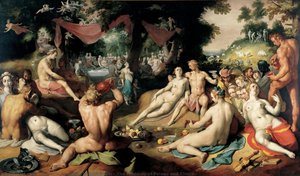 The Wedding of Peleus and Thetis - Cornelis van Haarlem
Born in 1562 within the burgeoning artistic hub of Haarlem, Cornelis van Haarlem stands as a pivotal figure of the 16th century Netherlands painters. His career serves as a vital bridge between the highly stylized conventions of Northern Mannerism and the dawn of the Dutch Golden Age. Trained initially under Pieter Pietersz in his native city and later by Gillis Coignet in Antwerp, van Haarlem’s evolution from exaggerated, Italianate compositions toward a more grounded realism profoundly influenced the trajectory of Netherlandish art, most notably serving as a precursor to the style of Frans Hals.
His mastery of narrative and form is brilliantly captured in his 1593 work, The Wedding of Peleus and Thetis. This monumental tableau demonstrates his ability to move beyond mere artifice to embrace a burgeoning naturalism. Through a sophisticated use of chiaroscuro, he sculpts the figures of the hero and the sea goddess, using light and shadow to create a profound sense of depth and solemnity. This transition from the dramatic, muscular poses of Mannerism to a more nuanced, atmospheric representation marks his essential contribution to the artistic identity of the Netherlands during this transformative century.
Abraham Bloemaert
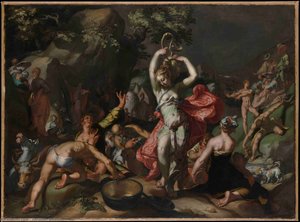 Moses Striking the Rock - Abraham Bloemaert
Abraham Bloemaert stands as a transformative force among 16th century Netherlandish painters, serving as a vital bridge between the stylized elegance of Mannerism and the burgeoning dynamism of the Baroque. Born in Gorinchem in 1564, his artistic foundation was laid by his father, the architect Cornelis Bloemaert I, and further refined through studies in Utrecht under Gerrit Splinter and Joos de Beer. A formative three-year sojourn in Paris allowed him to absorb the refined sensibilities of the French School, a period that deeply informed his evolving aesthetic as he transitioned from the elongated, complex compositions of Haarlem Mannerism toward a more emotionally intense realism.
His ability to infuse dramatic narratives with profound psychological depth is masterfully captured in his 1596 work, Moses Striking the Rock. This monumental piece exemplifies the fervor of the era, utilizing a sophisticated command of form to depict the biblical moment of divine providence. Through such works, Bloemaert demonstrated how the artistic language of the Netherlands was shifting, moving away from mere artifice toward a powerful, theatrical engagement with faith and human emotion that would influence generations of artists, including the Utrecht Caravaggisti.
Jacob Cornelisz van Oostsanen
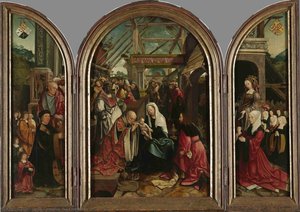 Triptych of the Adoration of the Magi - Jacob Cornelisz van Oostsanen
Jacob Cornelisz van Oostsanen stands as a pivotal figure in the transition of Northern Netherlandish art, bridging the stylistic gap between the late Gothic tradition and the burgeoning Renaissance spirit. As a prominent painter active in the early 1500s, his work exemplifies the evolution of the 16th century painters from Netherlands, moving away from medieval shadows toward humanist clarity. Having honed his skills in Haarlem, he absorbed the luminous color palettes and elongated proportions characteristic of Geertgen tot Sint Jans, yet his style was profoundly transformed by the innovative printmaking energy of Albrecht Dürer.
His relocation to Amsterdam around 1500 allowed him to establish a major workshop, where he became a central force in the city's artistic life. His 1517 masterpiece, Triptych of the Adoration of the Magi, serves as a profound testament to this era. In this work, he masterfully weaves together the solemnity of Haarlem’s Gothic heritage with the new, light-drenched sensibilities of the Renaissance. Through intricate religious scenes and detailed portraiture, van Oostsanen helped define the visual language of a region in profound cultural and spiritual transition.
Jan van Ravesteyn
 Hugo de Groot at the age of sixteen - Jan van Ravesteyn
Born in The Hague in 1572, Jan van Ravesteyn stands as a vital figure in the transition of Netherlandish art from the late Renaissance into the Baroque era. His inclusion in the group of 16th century Netherlandish painters is defined by his formative years and his early professional establishment; he joined the Guild of St. Luke in The Hague in 1598, marking the beginning of a prolific career that would shape the visual identity of the Dutch nobility.
Following the stylistic lineage of Michiel Jansz van Mierevelt, Van Ravesteyn developed a reputation for dignified, insightful portraiture. His ability to balance meticulous realism with a sense of social idealization made him a preferred artist for the House of Nassau. A significant example of his early mastery is the 1599 work, Hugo de Groot at the age of sixteen. In this portrait, he employs a sophisticated three-quarter profile and dramatic directional lighting to define the subject's features. The sharp contrast between the pale skin tones and the rhythmic white ruff collar against a dark, monochromatic background demonstrates the technical precision that would characterize his six-decade-long contribution to the Dutch Golden Age.
Conclusion
The masters of the 16th century from the Netherlands transformed the visual language of Europe, bridging the gap between late medieval symbolism and the profound realism of the Northern Renaissance. From the surreal, moralizing landscapes of Hieronymus Bosch to the intricate, humanistic compositions of Pieter Brueghel the Elder, these artists captured the complexities of the human condition, the vastness of nature, and the subtle nuances of daily life. Whether through the meticulous detail of Lucas van Leyden or the grand architectural perspectives of Hans Vredeman de Vries, this era remains a testament to technical mastery and creative evolution.
At Mus3ums.com, we invite you to bring this extraordinary legacy into your own space. Our artisans specialize in creating museum-quality, hand-painted oil reproductions that honor the specific brushwork and tonal depth of these historical masters. You can explore our full collection to find the perfect piece and experience the enduring beauty of Netherlandish art through a living, tactile masterpiece.


