The Ethereal Legacy of Nam Gye-woo
In the twilight of the Joseon Dynasty, a period defined by both profound cultural refinement and turbulent social shifts, the artistry of Nam Gye-woo emerged as a serene sanctuary of grace. Born on June 9, 1811, into a lineage of distinction, Nam was the descendant of the noble Nam Jinhwa, a man who had served as Busa, or royal tutor. This prestigious upbringing provided more than just social standing; it offered an immersive education in the scholarly and philosophical traditions of Korea. Having studied diligently at the venerable Sungkyunkwan University, Nam Gye-woo initially navigated the structured world of bureaucracy, serving with distinction as a Dojeong. Yet, beneath this veneer of official duty lay the soul of a master painter, one whose true calling was to capture the fleeting, delicate whispers of the natural world.
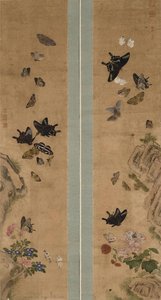
The heart of Nam Gye-woo’s contribution to Korean art history lies in his pioneering mastery of butterfly painting. While many artists of his era focused on the grandiosity of landscapes or the stoicism of scholar-officials, Nam turned his gaze toward the minute and the metamorphic. To him, the butterfly was not merely an insect, but a profound symbol of transformation, joy, and the ephemeral nature of life. His works are celebrated for their meticulous attention to detail, where each brushstroke serves to replicate the translucent fragility of a wing or the soft velvet of a petal. By blending subtle color palettes with precise, rhythmic movements of the brush, he achieved an ethereal serenity that allowed viewers to transcend the chaos of their era and enter a state of quiet contemplation.
Symbolism and the Harmony of Nature
Nam Gye-woo’s artistic vision was deeply rooted in the Neo-Confucian ideals that permeated the Korean intellectual landscape. His compositions were never merely decorative; they were carefully constructed meditations on balance, harmony, and the interconnectedness of all living things. Drawing inspiration from classical Chinese painting techniques, he often integrated elements of traditional landscape art—such as misty mountain ranges and tranquil ponds—to provide a structural backdrop for his more delicate subjects. This synthesis of the vast and the minute created a unique tension within his work, where the permanence of the earth met the fleeting flight of the butterfly.
< certainly, his mastery extended beyond the insect alone to include the exquisite depiction of flora. In his famous compositions, such as Flower and Butterfly, the interaction between botanical life and fauna becomes a poetic dialogue. The following elements characterize his stylistic development:- Meticulous Detail: An unparalleled ability to render the intricate patterns of butterfly wings and the delicate textures of blossoms.
- Subtle Coloration: A preference for soft, naturalistic tones that evoke a sense of peace rather than overwhelming the viewer.
- Philosophical Depth: The use of nature as a vessel for expressing complex spiritual and social truths.
- Compositional Balance: A masterful use of space, often utilizing negative space to suggest the vastness of the natural world.
A Lasting Impression on Korean Art
Despite living through an era marked by significant political instability and the encroaching shadows of social upheaval, Nam Gye-woo remained steadfast in his pursuit of aesthetic perfection. His ability to maintain a sense of understated elegance during such turbulent times is a testament to his resilience and his commitment to the beauty of the natural order. He did not merely paint nature; he elevated it to a genre of its own, establishing butterfly painting as a sophisticated and highly respected discipline within the Korean tradition.
Today, the works of Nam Gye-woo continue to resonate with collectors and scholars alike. His legacy is found in the way his paintings bridge the gap between the physical world and the spiritual realm, offering a window into the refined sensibilities of the late Joseon period. As we look upon his delicate depictions of life in motion, we see more than just historical artifacts; we encounter an enduring echo of elegance that continues to inspire awe and tranquility in the modern heart.