

A Portal to a Bygone Era: The Soul of Spanish Romanticism
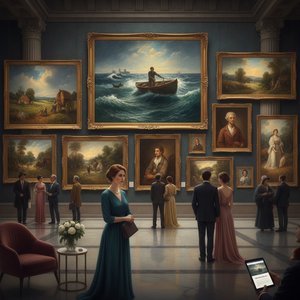
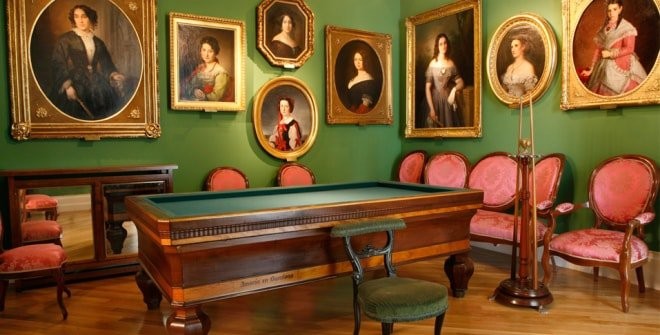
To step through the doors of the Museo Romantico in Madrid is to do far more than enter an art gallery; it is to undergo a temporal displacement. Located at Calle de $\text{San Mateo 13}$, this exquisite institution offers a rare, immersive journey into the heart of Spain’s Romantic period, a transformative era spanning from $1830$ to $1868$. Unlike traditional museums that present artifacts in sterile, isolated environments, this museum employs a masterful “house museum” approach. Visitors find themselves wandering through a meticulously reconstructed bourgeois residence, where the boundaries between art and life dissolve. Every corner of the building—from the opulent dining rooms to the quiet, contemplative billiard rooms—has been curated to mirror the atmosphere of a $19\text{-th}$ century home, allowing the spirit of Romanticism to breathe through the very architecture itself.
The museum’s historical narrative is as much a part of its charm as its collection. Established through the profound generosity of the Marquis of Vega-Inclán , the institution was born from a fervent desire to preserve the cultural and social essence of a pivotal moment in Spanish history. The building itself is a jewel of the era; its elegant façade reflects the grandeur of the Baroque style, while the interior serves as a living reliquary of the period's aesthetic values. As one moves through the halls, the weight of history becomes palpable, felt in the heavy draperies, the intricate ceramics, and the fine textiles that once adorned the lives of Madrid’s intellectual and social elite.
A Tapestry of Emotion and Decorative Splendor
The collection is a breathtaking tapestry of emotion, individualism, and dramatic intensity. At its core, the museum showcases works by the titans of Spanish Romanticism, most notably the legendary Francisco de Goya . His presence is felt through pieces like San Gregorio Magno , which embodies the psychological depth and chiaroscuro mastery characteristic of the age. The galleries also celebrate the evocative brushwork of Leonardo Alenza , the soulful compositions of Valeriano Domínguez Bécquer , and the luminous, light-drenched scenes of Joaquín Sorolla . These paintings do not merely depict subjects; they capture the turbulent passions, the fascination with folklore, and the profound human struggles that defined the Romantic movement.
For the discerning collector or interior designer, the museum offers unparalleled inspiration through its diverse decorative arts. The collection extends far beyond the canvas to include:
- Exquisite furniture crafted with the delicate ornamentation of the era.
- Intricate ceramics adorned with floral motifs that reflect $19\text{-th}$ century tastes.
- Evocative portraits capturing the likenesses of influential figures such as Isabel II and the rebellious writer Mariano José de Larra .
This synergy of fine art and decorative splendor makes the Museo Romantico a unique sanctuary. It is a place where history is not merely studied but felt, offering a profound understanding of how art, literature, and daily life intertwined to create the vibrant, emotional landscape of $19\text{-th}$ century Spain.