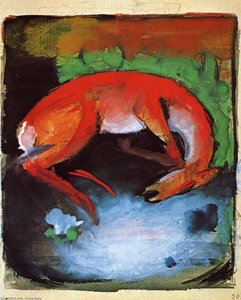
Dead DeerFranz Marc · 1913
 Acrylic On Canvas
- WallArt
- German Expressionism
 1913
1913 16.0 x 13.0 cm
Franz Marc (1880 – 1916)
Alman Dışavurumculuğu'nun öncüsü ve Der Blaue Reiter kurucusu. Canlı ve sembolik hayvan tablolarını hemen keşfedin.
A Moment of Profound Stillness: Introducing “Dead Deer” by Franz Marc
Franz Marc’s “Dead Deer,” painted in 1913, isn’t merely a depiction of an animal; it's a distilled essence of feeling, a poignant meditation on life and death rendered with the vibrant intensity characteristic of his Expressionist style. Measuring just 16 x 13 centimeters, this intimate work invites close contemplation, drawing us into a world where color becomes language and form embodies emotion. The painting immediately arrests the eye – a rich red fox, head bowed in quiet acceptance, occupies the foreground, seemingly absorbed by the earthy tones of the forest floor. The birds scattered throughout the scene aren’t mere background detail; they contribute to an atmosphere of both tranquility and subtle unease, suggesting the cyclical nature of existence—life, death, and rebirth intertwined.
The Soul of the Animal: Marc’s Spiritual Vision
Franz Marc's artistic journey was deeply rooted in a quest for spiritual understanding, and this painting exemplifies that pursuit. Born into a family of artists—his father a landscape painter—Marc initially considered a career in theology, grappling with profound questions about faith and the nature of existence. This intellectual exploration profoundly shaped his art, leading him to believe that visual representation could be a conduit for experiencing something beyond the purely material world. “Dead Deer,” therefore, isn’t simply a portrait; it's an attempt to capture the *anima*, the soul or spirit residing within the animal subject. Marc sought to depict not just what he saw, but what he felt—a deep reverence and empathy for the creature before him.
His use of color is paramount here. The fox’s vibrant red isn't a realistic depiction of fur; it’s an embodiment of energy, vitality, and perhaps even a hint of melancholy. The muted greens and browns of the forest create a grounding contrast, emphasizing the vulnerability of the fallen animal. Marc’s technique—loose brushstrokes and bold color choices—reflects the emotional intensity he wished to convey, moving away from academic precision towards a more subjective and expressive approach.
A Pioneer of Expressionism: Context and Influences
“Dead Deer” was created during a pivotal period in art history – the early 20th century, when German Expressionism was emerging as a powerful force. Marc was a key figure in the “Der Blaue Reiter” (The Blue Rider) group, alongside artists like Wassily Kandinsky and August Macke. This circle sought to break free from traditional artistic conventions and explore new ways of representing emotion and experience. Marc’s early exposure to Vincent van Gogh's expressive use of color and brushwork undoubtedly influenced his own style, as did his interest in symbolism and spirituality.
The painting also reflects the broader anxieties of the time – a sense of impending war and social upheaval. Marc’s work often grappled with themes of mortality, loss, and the fragility of life, mirroring the turbulent atmosphere of Europe on the brink of World War I. His decision to depict a dead animal speaks powerfully to this underlying current of unease, prompting viewers to contemplate their own place within the larger scheme of things.
Bringing “Dead Deer” into Your Space: Reproduction and Legacy
Mus3ums offers meticulously crafted hand-painted reproductions of Franz Marc’s “Dead Deer,” allowing you to experience the depth and emotion of this iconic work in your own home. Our skilled artisans faithfully recreate Marc's vibrant palette and expressive brushwork, ensuring that every detail is rendered with exceptional accuracy and sensitivity. Whether displayed as a statement piece or incorporated into a more subtle interior design scheme, “Dead Deer” will undoubtedly serve as a captivating focal point, sparking conversation and inviting contemplation.
To learn more about Franz Marc’s life, work, and the fascinating history of “Dead Deer,” we encourage you to explore our website: https://www.Mus3ums.com/en/art/franz-marc-dead-deer-8XY3GC-en/ and discover the broader context of this remarkable masterpiece.
Bu eser hakkında
- Eser Adı: Dead Deer
- Sanatçı: Franz Marc
- Yıl: 1913
- Orijinal boyutlar: 16.0 x 13.0 cm
- Biçim: Portrait
- Telif hakkı durumu: Kamu malı (telifsiz)
- Hareket: German Expressionism
- Teknik: Acrylic On Canvas
- Ana renk: Brown
- Anahtar Kelimeler: forest scene, wildlife art, deer
Hızlı Bilgiler
- Movement: Expressionism
- Dimensions: 16 x 13 cm
- Title: Dead Deer
- Medium: Painting
- Location: Private Collection
- Influences: Van Gogh
Soru ve Cevaplar
Franz Marc imzalı "Dead Deer" eserinin renk yoğunluğu nedir?
Franz Marc imzalı "Dead Deer" eserindeki renkler Balanced yoğunluğundadır.
Franz Marc imzalı "Dead Deer" eserinin renk paleti nasıl tanımlanıyor?
"Dead Deer" eserinin renkleri Dark bir palet oluşturmaktadır. Bu sınıflandırma, baskın renk ailelerini tanımlar.
Franz Marc imzalı "Dead Deer" eserinin renkleri nasıl bir duygu uyandırıyor?
Franz Marc imzalı "Dead Deer", Dark bir paleti Tranquil bir tonla birleştiriyor.