
Origins and history of Hôtel Bertrand
The history of Hôtel Bertrand begins in the 1770s with the construction of this private residence in Châteauroux, France. Martin Bouchet, who held the position of First Engineer to the King, oversaw the building of the house. It was designed as a family home for his descendants, most notably his grandson, General Henri-Gatien Bertrand. The residence remained within the family for many decades, serving as a private domestic space through the early nineteenth century.
The ownership of the property changed in 1901 when the City of Châteauroux purchased the building. During the period of the First World War, the structure underwent a significant transformation, functioning as a military hospital for wounded soldiers between 1917 and 1919. This era of use as a medical facility marked a departure from its long history as a private aristocratic dwelling.
In 1921, the building transitioned into its current role as a museum. This opening was organized to commemorate the centenary of the death of Napoleon. Since that time, the site has preserved the memory of the Bertrand family and the historical layers of the Indre region.
The building and its architecture
The Hôtel Bertrand is a classical style hôtel particulier that reflects the architectural elegance of the 18th century. Built in the 1770s, the structure has maintained its historical integrity and was classified in the inventory of Monuments Historiques in 1944. The facade is defined by a monumental entrance, where a large arch is pierced through a wall that extends from the main building. This architectural feature creates a sense of transition between the street and the private space within.
Upon passing through the arch, one enters a courtyard that is bordered by the main building and two lateral wings. This arrangement creates a sheltered, enclosed atmosphere characteristic of high-status urban residences of the period. The layout follows a traditional symmetry, providing a sense of order and permanence to the site. While the building preserves its historical character, it has been adapted to be partially wheelchair accessible.
Art and historical collections
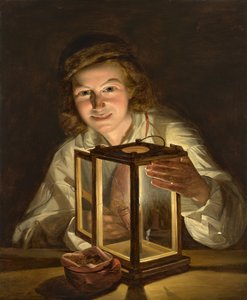
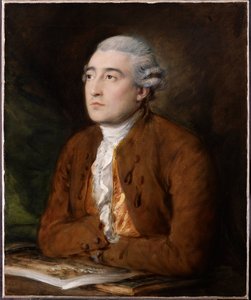
The collections within the Hôtel Bertrand span several centuries and diverse artistic traditions. A significant portion of the holdings consists of paintings, including works from the French, Dutch, and Flemish schools. These classical traditions sit alongside contemporary abstract works, creating a dialogue between historical styles and modern expression. The presence of these varied movements reflects the evolving tastes of the building's former inhabitants and the subsequent development of the municipal collections.
Archaeological finds provide a deeper connection to the region's ancient past. The Gallo-Roman collection, dating from the 1st and 2nd centuries, features ceramics and funerary stelae. These objects offer a tangible link to the antiquity of the area. Alongside these pieces, the museum houses various other archaeological items that contribute to the historical depth of the site.
Religious and decorative arts are also represented through specific historical objects. A 13th-century copper and enamel reliquary, originating from the church of Sazeray, remains a notable presence. The collection also includes several other significant items:
- A bronze medallion by Pierre-Jean David d'Angers from 1837
- A plaster original of Sakountala by Camille Claudel
- An inkwell once belonging to Cambacérès
- A reliquary containing a tooth attributed to Voltaire
Masterpieces of the collection
The presence of Camille Claudel is felt through a plaster original of Sakountala, a work gifted to the city in 1895. This sculpture carries a specific weight, its surface holding the traces of the artist's hand. Nearby, the history of the Bertrand family and their connection to the Napoleonic era is anchored by a bronze medallion of Le général Bertrand, created in 1837 by Pierre-Jean David d'Angers. The metal holds a quiet permanence, capturing a likeness intended for commemoration.
The museum also preserves intimate and heavy remnants of the Napoleonic period. Napoleon's death mask offers a stark, silent encounter with the past. This is accompanied by the Aboukir saber that once belonged to the Emperor, an object of steel and history. Even the domestic life of Saint Helena finds its way into these halls through an aviary that Napoleon had installed during his exile. These objects exist not as mere relics, but as tangible links to a specific, turbulent era of French history.
Major acquisitions and donations
The collection has been shaped by significant gestures of generosity and careful acquisitions over many decades. In 1895, the museum received the plaster original of the Sakountala sculpture, a work gifted by Camille Claudel. This was followed in 1898 by the acquisition of a 13th-century copper and enamel reliquary from the church of Sazeray.
A notable moment in the museum's history occurred in 1976, when a descendant of the Thabaud Boislareine-Desaix family bequeathed several rare items. These donations brought an inkwell belonging to Cambacérès into the collection. The bequest also included a reliquary containing a tooth attributed to Voltaire and hair from Henri IV.