The Enigmatic Legacy of Baldassare degli Embriachi
In the vibrant tapestry of the Italian Renaissance, few names evoke as much mystery and mercantile intrigue as Baldassare degli Embriachi. While history often remembers the solitary genius of a painter or sculptor, Embriachi represents a different kind of Renaissance figure: the art entrepreneur. Emerging from the influential Obriachi family of Florence, his life was a sophisticated dance between high finance, international diplomacy, and the curation of exquisite beauty. Though some records suggest his formative years were shaped by the papal atmosphere of Avignon, it was in the bustling commercial hubs of Florence and Venice that he truly left his mark. He was not merely an artist, but a man who navigated the Arte del Cambio—the moneychangers’ guild—and even earned the prestigious title of Count Palatine through his shrewd dealings with the imperial courts of Europe.
The true brilliance of Embriachi lay not necessarily in the movement of a chisel, but in the orchestration of a workshop that redefined the decorative arts. His enterprise functioned as a bridge between the late Gothic elegance and the burgeoning humanism of the early Renaissance. By managing a complex network of skilled craftsmen, he facilitated the creation of objects that were as much symbols of political alliance as they were masterpieces of craftsmanship. This ability to blend the logistical precision of a merchant with the aesthetic vision of a patron allowed his workshop to flourish across Northern Italy, leaving an indelible imprint on the visual culture of both Florence and Venice.
Mastery in Miniature: The Marriage Casket Tradition
The most enduring legacy of the Embriachi workshop is found in the delicate, hexagonal treasures known as marriage caskets. These small, precious objects, often measuring only about a foot across, served as the ultimate emblem of courtship and social prestige during the 14th and 15th centuries. To behold an Embriachi casket is to witness a symphony of materials: intricately carved bone, ivory, and horn set within frameworks of stained wood. Through the masterful use of the certosina technique—a meticulous method of inlaying colored pastes and materials into wood—the workshop created vibrant, geometric patterns that shimmered with life.
These caskets were far more than mere jewelry boxes; they were narrative vessels designed to communicate profound social values. The imagery chosen for these pieces often blended the sacred with the profane, weaving together classical mythology and Christian devotion. A bride might gaze upon scenes of Venus and Adonis or Cupid and Psyche, representing the idealized virtues of romantic love, alongside biblical narratives that reinforced the moral foundations of her new life. This careful curation of iconography ensured that every gift presented at a betrothal was a potent symbol of fidelity, status, and the enduring strength of familial alliances.
A Workshop of Innovation and Influence
The operational genius of the Embriachi workshop allowed for a level of production that was remarkably advanced for its era. Rather than relying solely on individual commissions, the workshop developed a sophisticated system of mass-production, where various components—the carved bone figures, the inlaid wooden frames, and the decorative horn elements—were produced separately before being assembled into finished works. This innovation allowed them to cater to a vast market of wealthy merchants, noble families, and even emperors, ensuring that their aesthetic style became a standard of excellence throughout the Italian peninsula.
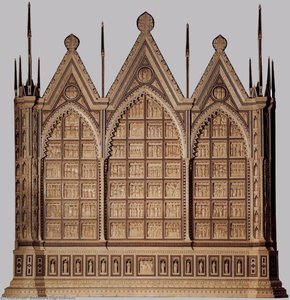
While the workshop's peak is often associated with the period leading up to 1416, its influence rippled through the decades, shaping the decorative sensibilities of the Renaissance. The sheer variety of their output—ranging from small religious icons and mirrors to monumental altarpieces—demonstrates a versatility that few contemporary workshops could match. Even as historians struggle to definitively attribute specific carvings to Baldassare himself, the "Embriachi style" remains a recognizable hallmark of luxury. His ability to transform raw materials like bone and wood into vessels of profound cultural meaning ensures that his name remains etched in the history of art as a pioneer who understood that true beauty is most powerful when it is woven into the very fabric of social and political life.
问答详情
Baldassare Degli Embriachi 还有哪些别名?
Baldassare Degli Embriachi 也以 Baldassare Ubriachi 等其他名称为人所知。
Baldassare Degli Embriachi 出生于哪个国家和城市?
Baldassare Degli Embriachi 出生于 Italy 的 Florence。