
The First Animals马克·弗朗茨 · 1913
 Acrylic On Canvas
- WallArt
- Cubism
 1913
1913- Modern
 39.0 x 46.0 cm
Franz Marc’s Vision of Early Animal Life
Franz Marc's The First Animals stands as a cornerstone of German Expressionism, embodying the movement’s core tenets: subjective emotion and inner reality. Created in 1913, this oil painting measuring 39 x 46 cm exemplifies Marc's revolutionary approach to art, firmly rooted in Cubist principles.
Artistic Context and Style
Expressionism arose as a reaction against the academic conventions of its time, prioritizing emotional intensity over objective representation. Marc’s unwavering dedication to conveying feeling through color and abstract forms aligns perfectly with this ethos. The First Animals brilliantly captures the spirit of Expressionism, featuring two horses prominently positioned in the foreground alongside birds soaring above.
The painting’s palette is remarkably rich and diverse—blues, reds, yellows, and purples intertwine to establish a vibrant atmosphere. Crucially, Marc utilizes Cubist techniques, fracturing forms into geometric planes that offer multiple perspectives simultaneously. This bold departure from traditional realism was groundbreaking, signaling a fundamental shift in artistic sensibilities.
Symbolism and Interpretation
Within The First Animals, the horses are arranged in a deliberate manner—one horse stands adjacent to another—creating an intriguing visual dynamic. Above them, birds symbolize freedom and vitality, mirroring Marc’s fascination with the harmonious coexistence of animals within their natural environment.
Marc's oeuvre consistently explores themes of conflict and beauty intertwined within nature. The First Animals serves as a poignant representation of the genesis of life—a celebration of organic rhythm and an invitation for contemplation.
Artistic Legacy
Franz Marc’s influence on subsequent generations of artists is undeniable. His distinctive style and thematic focus on animals cemented his place in art history, inspiring countless creatives. The First Animals remains a testament to Marc’s innovative vision—a masterpiece blending Cubist innovation with profound emotional expression.
Mus3ums offers exceptional reproductions of Marc's paintings, including The First Animals, Horse Asleep, and Picture with Cattle. These meticulously crafted reproductions capture the essence of Marc’s original works.
For a deeper understanding of Expressionism and Cubism, explore Top 5 Famous Expressionism Artists of All Time on Mus3ums. And delve into the broader evolution of painting with The History of Painting on Wikipedia.
The First Animals by Franz Marc is a captivating artwork that exemplifies Marc’s artistic genius—a harmonious blend of vibrant color, geometric abstraction, and symbolic representation that continues to resonate with audiences today.
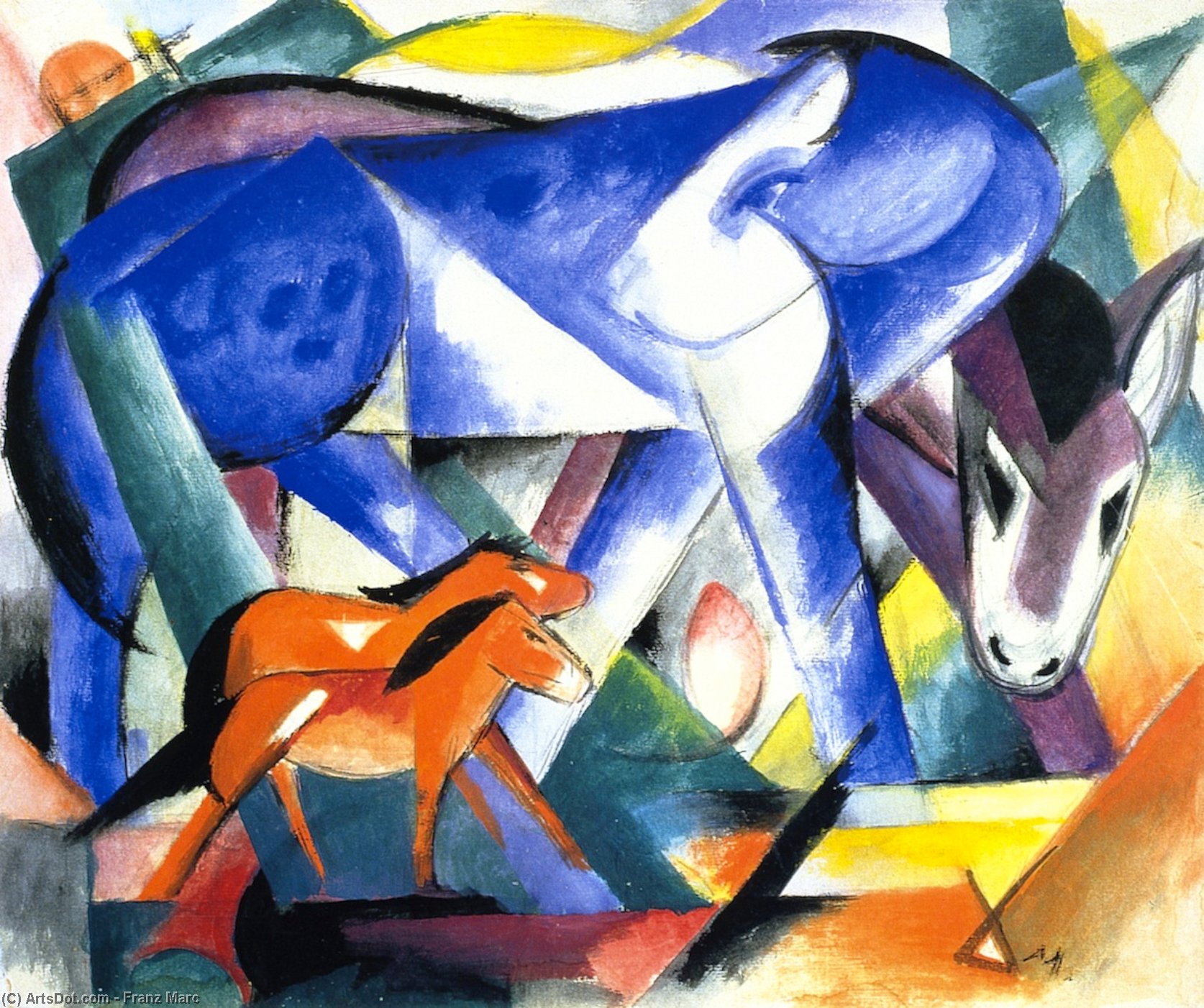
Photo Description: The painting depicts two horses in the foreground, positioned side-by-side, creating a dynamic perspective. Above them fly birds—one on the left and another near the top right—adding movement and symbolizing freedom. The palette is rich with blues, reds, yellows, and purples, generating an energetic atmosphere.
Size: 39 x 46 cm
Date: 1913
马克·弗朗茨(1880 – 1916)
德国表现主义先驱弗朗茨·马克的艺术世界!探索他的标志性动物绘画、鲜艳的色彩和深刻的精神主题。他是“蓝骑士”团体的联合创始人,作品充满象征意义,反映了对自然与人性的思考。
关于此作品
- 作品名称: The First Animals
- 艺术家: 马克·弗朗茨
- 年份: 1913
- 原尺寸: 39.0 x 46.0 cm
- 规格: Landscape
- 版权状态: 公有领域
- 动态感: Cubism
- 媒介: Acrylic On Canvas
- 创作时期: Mature Period
- 主色调: Steel Blue
作品详情
- Influences: Van Gogh
- Dimensions: 39 x 46 cm
- Medium: Oil on canvas
- Artistic style: Abstract Expressionism
- Notable elements or techniques: Cubist style; Bold colors; Geometric forms
- Year: 1913
问答详情
“The First Animals” 是什么类型的作品?
在目录中,马克·弗朗茨 的《The First Animals》 被归类为 WallArt。该类别有助于查找相似作品。
Cubism 流派的作品 "The First Animals" 源自哪个国家?
这件Cubism风格的作品《The First Animals》出自一位出生于德国的艺术家之手。
"The First Animals" 是否体现了 马克·弗朗茨 一贯的创作风格?
"The First Animals" 描绘了 animals, cubism, expressionism, color palette, geometric forms, landscape, symbolism, horse,而 马克·弗朗茨 的创作主题则以 inspired by van gogh’s expressive color., reflects marc’s fascination with nature’s harmony., central to der blaue reiter’s artistic vision., symbolic representation of primal life., innovative use of cubist techniques. 见长。通过两者的对比,可以发现此作与艺术家惯用题材之间的内在联系。