
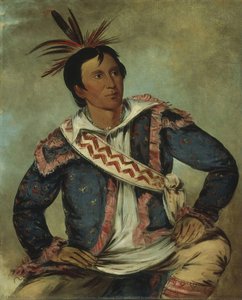
Há-tchoo-túc-knee, Snapping Turtle, a Half-breed乔治·卡特林 · 1834
 Oil On Canvas
- WallArt
- Realism
 1834
1834 73.0 x 60.0 cm
 美國國家藝術博物館
乔治·卡特林(1796 – 1872)
乔治·卡特林(1796-1872)是一位美国画家,以其生动的肖像画和描绘拓荒地区原住民生活的风景画而闻名。他的“印第安人画廊”记录了快速消失的文化,包括曼丹部落、苏族等。卡特林的绘画风格写实且细节丰富,具有重要的历史意义,为我们了解19世纪美国原住民的生活提供了宝贵的视角。
美國國家藝術博物館 (华盛顿特区, 美国)
探索美国艺术的丰富历史,参观史密森尼美国艺术博物馆!欣赏标志性作品、多元化传统和引人入胜的展览,尽在古老专利局大楼内。免费开放! United States of America Washington, D.C. Smithsonian American Art Museum 美国风景画 7000+ artworks Art museum 1865 展示来自世界各地的古代文物。 3 史密森尼美国艺术博物馆的主要重点是什么?
The Visionary’s Gaze: George Catlin and the Soul of the Plains
George Catlin's “Há-tchoo-túc-knee, Snapping Turtle, a Half-breed,” painted in 1834, isn’t merely a portrait; it’s a carefully constructed window into a vanishing world. This arresting image transcends the simple depiction of an individual, becoming instead a poignant meditation on identity, cultural exchange, and the encroaching tide of Western expansion. Catlin, driven by a deep empathy for Native American tribes facing relentless displacement, embarked on a radical artistic project: to capture their essence not through romanticized stereotypes, but with unflinching honesty and profound respect. The painting’s power lies in its ability to convey both the subject's inherent dignity and the complex circumstances of his existence as a ‘half-breed,’ caught between two worlds.
A Man of Two Worlds: Symbolism and Portraiture
The subject himself is immediately compelling – a man radiating quiet strength and contemplative awareness. His posture, seated with folded arms, suggests both dignity and a certain weariness, hinting at the burdens carried by someone navigating a world that doesn’t fully accept him. The vibrant blue jacket, adorned with intricate red designs, speaks to his status and perhaps a connection to tribal traditions – a visual assertion of belonging within a complex social landscape. The feathered headdress, a potent symbol of leadership and spiritual authority, elevates the figure beyond a simple portrait; it's a declaration of heritage. The snapping turtle itself, rendered with remarkable detail, is not just an animal subject but a powerful emblem of the American West – a resilient creature embodying the spirit of survival in a harsh environment.
Catlin’s technique is characterized by his signature “border painting” style. He deliberately left unpainted areas around the figure, creating a sense of depth and drawing attention to the subject's form. This technique, coupled with his use of bold colors and expressive brushstrokes, imbues the portrait with a dynamic energy that belies its stillness. The muted background serves as a deliberate framing device, emphasizing the individual’s presence and directing the viewer’s gaze directly upon him.
Historical Context: A Bridge Between Cultures
“Há-tchoo-túc-knee, Snapping Turtle, a Half-breed” was created during a pivotal moment in American history – the era of westward expansion and the systematic displacement of Native American tribes. Catlin’s work represents a crucial attempt to document these cultures before they were irrevocably lost. He wasn't simply an observer; he actively sought to understand and portray the lives, customs, and beliefs of the people he encountered. His travels through the Plains territories provided him with unparalleled access to indigenous communities, allowing him to capture their essence in a way that few artists had previously attempted. The painting reflects the complex realities of this period – the blending of cultures, the tensions between tradition and modernity, and the tragic consequences of colonization.
A Legacy of Representation: Reproduction and Artistic Impact
Today, “Há-tchoo-túc-knee, Snapping Turtle, a Half-breed” stands as a testament to Catlin’s artistic vision and his commitment to preserving the stories of Native American tribes. Mus3ums offers meticulously crafted hand-painted reproductions that faithfully capture the painting's original detail and emotional resonance. These reproductions provide an opportunity to bring this powerful work into your home or office, serving not only as a beautiful piece of art but also as a reminder of a complex and often overlooked chapter in American history. The reproduction allows you to appreciate Catlin’s masterful use of color, composition, and symbolism, while simultaneously honoring the legacy of the subject he so powerfully depicted.
作品详情
- 标题: Há-tchoo-túc-knee, Snapping Turtle, a Half-breed
- 艺术家: 乔治·卡特林
- 年份: 1834
- 原始尺寸: 73.0 x 60.0 cm
- 格式: Portrait
- 版权状态: 公有领域
- 观赏地点: 美國國家藝術博物館
- 动态感: Realism
- 创作时期: Frontier Period
- 语料上下文: record, ethnographic study
基本信息
- Medium: Oil on canvas
- Title: Há-tchoo-túc-knee, Snapping Turtle
- Notable elements: Feather headdress, jacket
- Location: Smithsonian Art Museum
- Artistic style: Realism
常见问题解答
《Há-tchoo-túc-knee, Snapping Turtle, a Half-breed》属于 乔治·卡特林 艺术生涯中的哪个时期?
"Há-tchoo-túc-knee, Snapping Turtle, a Half-breed" 代表了 乔治·卡特林 的 Frontier Period 时期。
乔治·卡特林 的《Há-tchoo-túc-knee, Snapping Turtle, a Half-breed》 的推荐打印尺寸是多少?
乔治·卡特林 的《Há-tchoo-túc-knee, Snapping Turtle, a Half-breed》 的建议打印尺寸为 Medium。
乔治·卡特林 的《Há-tchoo-túc-knee, Snapping Turtle, a Half-breed》展现了怎样的色彩和谐感?
乔治·卡特林 的《Há-tchoo-túc-knee, Snapping Turtle, a Half-breed》 的色彩呈现出一种 Strong Color Unity 的和谐感。这种和谐感描述了色彩之间的相互关系。
"Há-tchoo-túc-knee, Snapping Turtle, a Half-breed" 是否不受版权保护?
关于版权,"Há-tchoo-túc-knee, Snapping Turtle, a Half-breed" 属于 属于公有领域 —— 其版权已过期。
“Há-tchoo-túc-knee, Snapping Turtle, a Half-breed”的创作者是谁,创作于何时?
"Há-tchoo-túc-knee, Snapping Turtle, a Half-breed" 是由 乔治·卡特林 于 1834 年创作的。