Introduction
The 20th century was a period of profound transformation for the Russian art world, a time when the boundaries of visual language were pushed to their absolute limits. From the quiet, spiritual landscapes of the countryside to the sharp, geometric pulses of the avant-garde, these artists navigated a landscape of intense social change and revolutionary thought. What unites this diverse group of creators is their ability to capture the tension between tradition and the radical unknown, translating the complex energy of a changing era into vibrant color and groundbreaking form.
This era saw the birth of movements that would eventually reshape global modernism. Artists moved between the ethereal, symbolic worlds of the late 19th-century influence and the bold, structural experiments of abstraction. Whether they were exploring the depths of the human psyche, the rhythm of industrial life, or the sacred geometry of the cosmos, these painters were not just documenting their time; they were inventing a new way of seeing the world.
Today, their influence remains palpable in contemporary design and fine art. The bold compositions and experimental palettes developed during this century continue to inspire interior spaces, offering a sense of history and intellectual depth that transcends mere decoration. Their works serve as a bridge between the classical past and the digital future, proving that even the most radical ideas can achieve a timeless elegance.
As we walk through this curated selection, we will encounter the masters who defined this epoch, from the pioneers of abstraction to the masters of soulful portraiture and landscape, exploring the unique legacies of ten essential figures from this remarkable century.
El Lissitzky
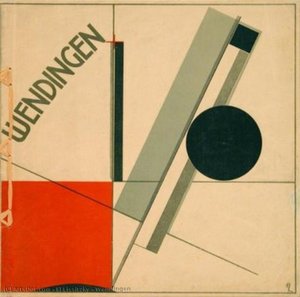 Wendingen - El Lissitzky
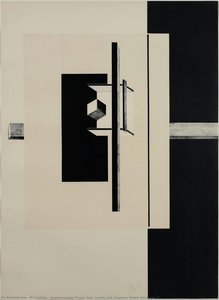
A pivotal figure in the evolution of modernism, El Lissitzky represents the restless, transformative energy of 20th century Russian painters. Born in 1890 in the Russian Empire, his work emerged from a profound desire to bridge the gap between abstract theory and tangible construction. He was a true polymath of the era, moving fluidly between painting, typography, and architecture to redefine the visual language of a new age.
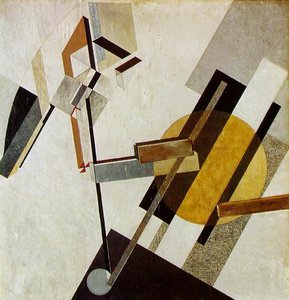
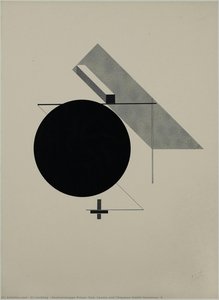
Lissitzky is best known for pioneering the concept of "Proun"—a term reflecting his ambition to synthesize art with engineering and spatial design. His 1921 work, Wendingen, serves as a masterful example of this vision. Originally created as a cover design for a Dutch architectural magazine, this piece utilizes a sophisticated dialogue of geometric forms, sharp angles, and intersecting planes to create a sense of structured dynamism. By moving beyond mere representation, Lissitzky’s compositions embraced the principles of Constructivism and Suprematism, influencing how we perceive the relationship between two-dimensional art and three-dimensional space. His legacy remains a cornerstone of the radical geometric abstraction that defined the 20th century.
Wassily Kandinsky
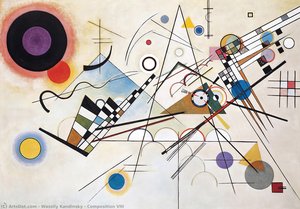 Composition VIII - Wassily Kandinsky
A true pioneer of the abstract movement, Wassily Kandinsky transformed the visual language of the 20th century. Born in Russia, his artistic journey began later in life, following a distinguished academic career in law and economics. His transition from the structured world of academia to the vibrant life of a student in Munich—studying at the Anton Ažbe School and the Academy of Fine Arts—marked the birth of a revolutionary spirit. Kandinsky’s work is instantly recognizable by its profound connection to music; his early training in piano and cello deeply influenced his ability to treat color and form as rhythmic, spiritual vibrations.
At a glance, his compositions are a dance of energetic dynamism, characterized by a sophisticated interplay of geometric shapes and a rich, emotive palette. In his landmark 1923 masterpiece, Composition VIII, one can witness his mastery of non-objective painting. The canvas becomes a symphony of floating circles, sharp triangles, and sweeping lines that interact against a pale background, creating a sense of depth without traditional perspective. His work moves beyond mere representation, seeking to evoke the very essence of the human soul through pure, rhythmic abstraction.
Nicholas Roerich
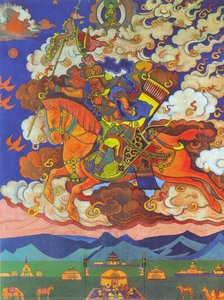 Great rider. Rigden Jyepo - Messenger of Shambhala - Nicholas Roerich
A central figure in the evolution of 20th century Russian painters, Nicholas Roerich moved far beyond the traditional boundaries of his era. While his early years were defined by a rigorous dual education in law and fine arts at the Imperial Academy of Arts, his creative spirit eventually sought a higher, more metaphysical plane. As a leader of the influential "World of Art" society, Roerich helped dismantle the rigid structures of the past, pivoting from theatrical set design toward a profound exploration of spiritual landscapes.
His journey led him away from the urban centers of Russia toward the remote Himalayan regions, a transition that fundamentally reshaped his palette and purpose. This shift is masterfully captured in his 1927 work, Great Rider. Rigden Jyepo - Messenger of Shambhala. In this piece, Roerich transcends mere landscape painting to engage with the Symbolist movement, using vibrant tones to evoke the mythical kingdom of Shambhala. Rather than documenting physical geography, he sought to visualize the essence of enlightenment and universal harmony, cementing his legacy as a visionary who bridged the gap between the earthly and the divine through his monumental oil compositions.
Boris Kustodiev
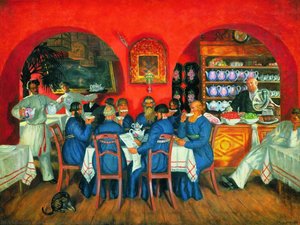 Moscow Tavern - Boris Kustodiev
A visitor can instantly recognize a work by Boris Kustodiev through his vibrant, almost theatrical use of color and his ability to capture the bustling energy of Russian life. His canvases are characterized by a rich, tactile quality and a mastery of light that breathes life into every scene. As a prominent figure of the 20th century Russian painters, Kustodiev’s career spanned the transformative decades of the early 1900s, bridging the gap between traditional realism and the decorative elegance of Art Nouveau.
Born in 1878, his artistic vision was deeply influenced by his childhood in Astrakhan, where he observed the lively customs of the merchant class. After studying under Pavel Vlasov and later undergoing rigorous training at the Imperial Academy of Arts in St. Petersburg, he developed a signature style that celebrated communal joy and social texture. His 1916 masterpiece, Moscow Tavern, serves as a quintessential example of his talent. In this work, he creates a convivial atmosphere through warm, rosy tones and meticulous detail, transforming a simple dining setting into a profound celebration of human connection and historical vitality.
Alexej von Jawlensky
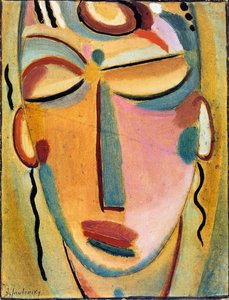 Mystical Head: Meditation - Alexej von Jawlensky
Born in Torzhok, Russia, Alexej von Jawlensky represents the profound spiritual evolution of 20th century Russian painters. His journey began with classical training in Saint Petersburg, where he studied under the realist master Ilya Repin, but his artistic soul truly awakened through the experimental environments of Munich and Paris. This transition from the rigid academic traditions of his youth to the avant-garde movements of the early 1900s defines his place among the most influential Russian-born artists of the 20th century.
Jawlensky is celebrated for his ability to distill the human essence into pure, emotive color and form. His work often bridges the gap between Expressionism and Fauvism, moving away from literal representation toward a more profound, internal reality. A quintessential example of this mastery is his 1918 work, Mystical Head: Meditation. In this piece, he utilizes bold, geometric abstraction and vibrant, contrasting hues to depict a face in a state of deep introspection. Through thick outlines and a textured, energetic application of paint, he captures a sense of spiritual serenity that transcends the physical, turning the portrait into a vessel for meditative reflection.
Martiros Saryan
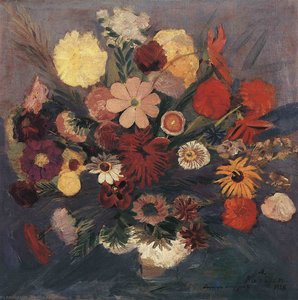 Flowers - Martiros Saryan
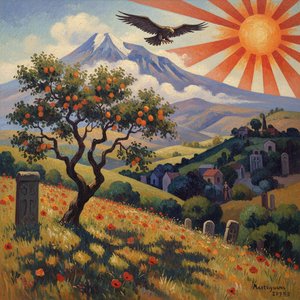
A visitor can instantly recognize a work by Martiros Saryan through his extraordinary command of color and light. His canvases are defined by a vibrant, almost rhythmic application of pigment that captures the essence of the landscape rather than mere topographical detail. He possesses a unique ability to translate the warmth of the sun into a visual language of luminous hues and soft, diffused light, often imbuing his subjects with a dreamlike, serene quality.
As a central figure of the 20th century Russian art scene, Saryan’s development was deeply rooted in the professional rigor of the Moscow School of Painting, Sculpture, and Architecture. Between 1897 and 1903, he refined his technical discipline under the guidance of masters such as Konstantin Korovin and Valentin Serov. This academic foundation, combined with his formative years in Nakhichevan-on-Don, allowed him to bridge the gap between classical training and a modern, expressive style.
In his 1928 masterpiece, "Flowers", Saryan demonstrates this mastery through a lush, pastel-driven composition. The work presents a sophisticated bouquet of diverse floral varieties, where the interplay of reds, yellows, and purples creates a symphony of color that reflects his profound devotion to the natural world.
Lovis Corinth
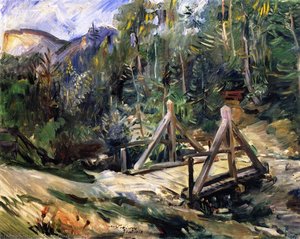 Tyrolean Landscape with Bridge - Lovis Corinth
Lovis Corinth stands as a vital figure in the transition from the 19th to the early 20th century, a period that defined the artistic evolution of the Russian landscape. Born in the Prussian province of East Prussia, his life and work bridge the gap between the meticulous realism of the previous era and the raw, emotive power of Impressionism and Expressionism. His inclusion in this group of 20th century painters from Russia is rooted in his profound influence on the stylistic shifts occurring across the Eastern European borders during this transformative era.
Corinth’s journey took him from the academic traditions of Munich to the vibrant energy of Paris, where he synthesized the dramatic intensity of Rubens with a modern, expressive sensibility. His brushwork is characterized by a bold, tactile energy that breathes life into every subject, whether in his unflinching naturalistic studies or his more serene landscapes. A masterful example of his ability to capture atmosphere is Tyrolean Landscape with Bridge (1913), where he uses a rich, vibrant palette to depict a sense of quiet abandonment through a collapsed bridge and a tranquil forest setting.
Aleksandr Deyneka
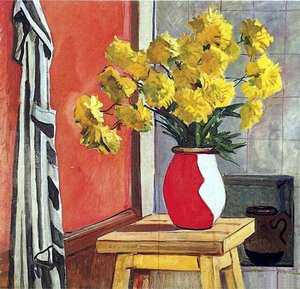 Still Life. Yellow flowers - Aleksandr Deyneka
Aleksandr Deyneka (1899–1969) stands as a monumental figure among 20th century Russian painters, his career tracing the dramatic evolution of the nation from the revolutionary fervor of the early century to the structured aesthetics of the mid-century. A graduate of the influential Vkhutemas, Deyneka’s work is defined by a unique fusion of modernist structural clarity and the grand narrative requirements of Socialist Realism. His compositions are instantly recognizable for their rhythmic energy, athletic dynamism, and a profound sense of spatial organization that reflects his training in graphic arts and constructivism.
In his representative work, Still Life. Yellow flowers (1954), we see a departure from his more famous, sweeping depictions of labor and sport, moving instead toward a tranquil, domestic elegance. This oil on canvas demonstrates his mastery of light and color, using a vibrant palette to elevate the ordinary. The composition focuses on a red vase holding bright yellow blooms, set against a simple, sturdy wooden table. Through his precise brushwork and ability to find beauty in the commonplace, Deyneka captures a sense of optimism and stability, proving his versatility as a master of the 20th-century Russian canon.
George Washington Lambert
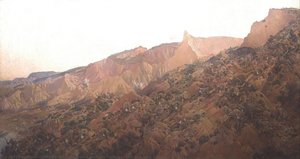 Anzac, the landing 1915 - George Washington Lambert
Born in St. Petersburg, Russia, in 1873, George Washington Lambert occupies a unique position in the history of 20th-century art. While his artistic journey is deeply intertwined with the development of Australian realism, his Russian origins place him within this specific era of international modernism. His life was marked by a profound ability to capture the human spirit under extreme duress, a skill most poignantly realized during his service as an official war artist from 1917 to 1920.
His monumental work, Anzac, the Landing 1915, serves as a visceral testament to this period. In this piece, Lambert moves beyond mere documentation to create a cinematic, psychological experience of the Gallipoli campaign. Through a dramatic, upward-looking perspective, he captures the terrifying ascent of soldiers against the rugged cliffs, blending technical mastery with an intense, emotional gravity. This capacity to translate historical upheaval into powerful, large-scale compositions defines his legacy, bridging the gap between classical portraiture and the raw, expressive demands of 20th-century war art.
Mikhail Vrubel
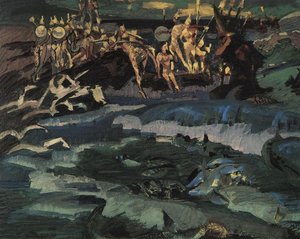 Thirty-three knights - Mikhail Vrubel
A foundational figure in the transition toward modernism, Mikhail Vrubel (1856–1910) stands as a bridge between the classical traditions of the 19th century and the experimental spirit of the 20th century Russian painters. His work, characterized by a profound sense of mysticism and psychological depth, helped pave the way for the avant-garde movements that would define the Russian art scene in the decades to follow. Trained at the Imperial Academy of Arts under Pavel Chistyakov, Vrubel moved away from strict academic realism to develop a highly idiosyncratic language of form and line.
His time spent studying medieval mosaics at St. Cyril's Church in Kiev profoundly altered his aesthetic, leading him to treat the canvas like a mosaic. Using a painting knife, he applied bold, faceted strokes that gave his surfaces a crystalline, gemstone-like quality. This technique is masterfully displayed in his 1901 masterpiece, Thirty-three Knights. In this work, Vrubel utilizes a dramatic composition and a palette of deep, saturated tones to evoke a sense of medieval valor and supernatural movement. By blending the organic sinuosity of Art Nouveau with the spiritual weight of Symbolism, Vrubel transformed the canvas into a realm of myth and emotion.
Conclusion
The 20th century was a period of profound transformation for Russian art, a century where the boundaries of expression were pushed from the mystical, symbolic depths of Vrubel to the radical, geometric abstractions of Kandinsky and Lissitzky. Whether through the vibrant, soulful landscapes of Saryan and Roerich or the structured, modern compositions of Deyneka, these artists collectively redefined how we perceive color, form, and the human spirit. Each painter in this group contributed a unique layer to a complex cultural legacy, bridging the gap between traditional heritage and the avant-garde movements that would eventually shape the modern world.
Bringing these masterpieces into your own home allows you to connect with this rich history on a personal level. At Mus3ums.com, we help you transform your living space into a curated gallery through our full collection of Russian art. From the bold energy of Suprematism to the soft, emotive textures of Impressionist-inspired works, you can choose to live with these icons through our museum-quality, hand-painted oil reproductions, each meticulously crafted to capture the authentic brushstrokes and soul of the original masters.