
Introduction
The emergence of American Romanticism marked a profound shift in the visual identity of a young nation, moving away from the rigid, formal constraints of European Neoclassicism toward a more visceral, emotive connection with the world. During the first half of the 19th century, artists across the United States began to prioritize the sublime power of nature, the intensity of individual feeling, and the untamed spirit of the American wilderness. This movement was not merely a stylistic choice but a cultural response to a rapidly expanding landscape, where the vastness of the frontier and the dramatic interplay of light and shadow offered a new vocabulary for the human soul.
These painters sought to capture the awe-inspiring and often terrifying majesty of the natural world, from the sweeping vistas of the western territories to the intimate, psychological depths of portraiture. By emphasizing intuition and the sublime over rational order, they helped define a uniquely American aesthetic that resonated with the era's burgeoning sense of destiny and identity. Their works serve as vital historical documents, capturing a landscape and a cultural zeitgeist that were in a state of constant, turbulent transformation.
Today, the legacy of these masters remains essential for understanding the evolution of Western art. Their ability to translate the intangible—the feeling of wind through a canyon or the quiet tension in a sitter's gaze—continues to influence how we perceive the relationship between humanity and the environment. The following selection examines ten pivotal figures of this movement, ranging from the ethnographic precision of George Catlin to the atmospheric landscapes of Samuel Colman, each contributing a distinct thread to the grand tapestry of American Romanticism.
George Catlin
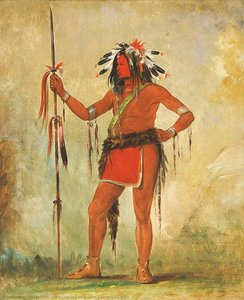
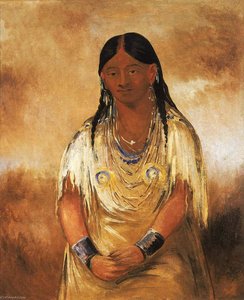
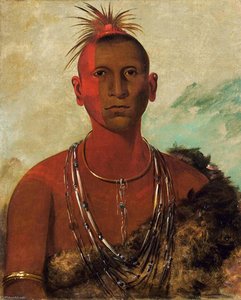
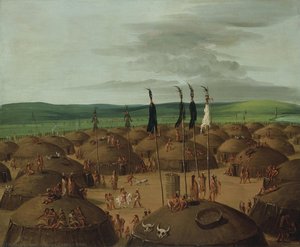
George Catlin (1796–1872) stands as a singular figure among American Romantic painters, driven by a profound impulse to document the raw, untamed spirit of the American frontier. Though he initially trained in law at Litchfield Law School and was admitted to the Bar in 1819, the rigid confines of the legal profession could not stifle his visceral connection to the West—a passion deeply rooted in his mother’s personal history of survival during an Indian raid. This emotional, subjective drive is what defines his place in the Romantic movement; he sought to capture the sublime essence of a vanishing world rather than mere topographical accuracy.
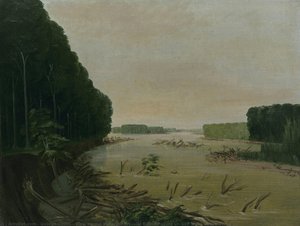
His career was defined by five massive expeditions through the Missouri River territories, where he engaged with the Mandan, Sioux, and Blackfeet nations. His monumental "Indian Gallery" remains a vital visual record of indigenous life. In his representative work, View on the Missouri, Alluvial Banks Falling in, 600 Miles above St. Louis (1832), Catlin demonstrates the Romantic fascination with the power of nature. Through confident brushwork and a focus on the dramatic interplay of water and land, he transforms a river landscape into a poignant, tranquil elegy for the frontier.
Samuel Finley Breese Morse
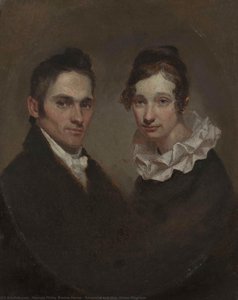 Reverend and Mrs. Hiram Bingham - Samuel Finley Breese Morse
Samuel Finley Breese Morse (1791–1872) occupies a singular position in American art history, bridging the gap between the intellectual rigor of the early republic and the profound emotionality of the Romantic movement. While widely celebrated for his later scientific innovations, Morse’s artistic foundation was built upon a deep commitment to capturing the human spirit. His work is characterized by a sophisticated command of light and a preference for dramatic, psychologically resonant compositions that moved beyond mere formal likeness.
A defining element of Morse’s contribution to American Romanticism was his ability to infuse portraiture with a sense of inner life and dignity. This is masterfully demonstrated in his 1819 work, “Reverend and Mrs. Hiram Bingham.” In this piece, Morse moves away from rigid academicism, utilizing expressive brushwork and subtle tonal gradations to convey the piety and composed grace of his subjects. His style, heavily influenced by his studies in England under the Romantic master Washington Allston, emphasizes the emotional weight of the moment. By prioritizing the character and presence of the individual over idealized perfection, Morse helped define a uniquely American approach to the Romantic ideal: one where the sublime is found in the quiet strength of human connection and historical identity.
Washington Allston
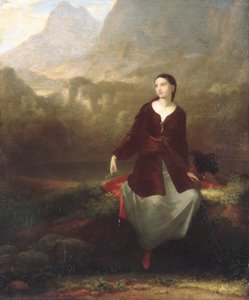 The Spanish Girl in Reverie - Washington Allston
Washington Allston (1779–1843) stands as a foundational figure in the development of American art, embodying the core tenets of the Romantic movement through his emphasis on emotion, imagination, and the sublime. Unlike the more literal, documentary-style painters of his era, Allston sought to capture the internal psychological state of his subjects, often imbuing his landscapes and portraits with a sense of profound melancholy or spiritual yearning. His work is instantly recognizable by its dramatic, atmospheric light and a sophisticated use of color inspired by the Venetian Renaissance masters. After studying under Sir Benjamin West in London and traveling through Italy and France, Allston developed a luminous, almost ethereal brushwork that prioritized the feeling of a scene over mere topographical accuracy.
In his evocative work, The Spanish Girl in Reverie (1831), this Romantic sensibility is fully realized. The painting transcends simple portraiture, using a rocky, dreamlike landscape to mirror the subject's internal state of longing. Through his ability to merge literary themes with atmospheric depth, Allston moved American art away from strict neoclassicism and toward a more soulful, expressive tradition that prioritized the power of the human spirit.
Titian Peale
 Alfonso d'Este (1486–1534), Duke of Ferrara - Titian Peale
In the portrait of Alfonso d'Este (1486–1534), Duke of Ferrara, Titian Ramsay Peale II demonstrates a profound capacity to bridge the gap between scientific observation and the emotional depth characteristic of the Romantic era. As a member of the illustrious Peale dynasty, born in Philadelphia in 1799, Peale occupied a unique position in the American Romanticism movement. While many of his contemporaries focused on the sublime landscapes of the wilderness, Peale’s contribution to the movement lay in his ability to infuse meticulous, naturalist documentation with a sense of dramatic, classical grandeur.
His work often navigated the intersection of field research and formal studio painting. In this specific piece, his technique echoes the High Renaissance and the Venetian school, utilizing sophisticated layering of pigments to achieve a luminous, regal quality. His palette and composition reflect a mastery of light, capturing the dignity of his subjects through a structured, yet emotionally resonant, realism. Whether documenting the physical world as a naturalist or rendering historical figures, Peale’s art prioritized the structural reality of his subjects, elevating the act of observation into a high art form that defined the burgeoning American aesthetic of the 19th century.
Chester Harding
 Chester Harding Self-Portrait - Chester Harding
Chester Harding stands as a towering figure of the American frontier, a self-taught visionary whose life mirrored the rugged expansion of the nineteenth-century United States. Born in 1792 in Massachusetts, Harding’s path to fine art was anything but conventional; he transitioned from the utilitarian trades of a turner and peddler to the sophisticated realm of portraiture. His evolution from a sign painter in Pittsburgh to a master of psychological depth was ignited by a transformative encounter with a traveling artist, eventually leading him to the classical traditions of Paris. This unique blend of American grit and European refinement places him firmly among the Romanticism painters from United States, as his work prioritizes the raw, emotional essence of his subjects over rigid academic formality.
In his Chester Harding Self-Portrait, we witness the profound mastery of chiaroscuro. This oil on paper work utilizes a dramatic play of light and shadow to sculpt the features of an elderly man, casting a single, focused radiance upon a textured white beard and a contemplative gaze. The somber, muted palette of ochres and deep browns evokes a sense of quiet prestige and historical weight, capturing the very soul of a man shaped by a changing nation.
Alfred Jacob Miller
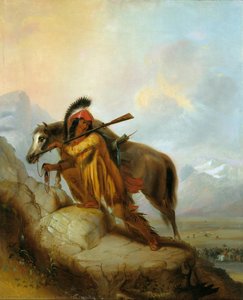 The Scalplock - Alfred Jacob Miller
Alfred Jacob Miller (1810–1874) stands as a vital visual chronicler of the American frontier, bridging the gap between formal European training and the raw, untamed spirit of the New World. His inclusion in the movement of American Romanticism stems from his ability to prioritize the emotional and sublime power of the wilderness over rigid academic order. Rather than merely documenting geography, Miller captured the profound connection between humanity and the vast, unpredictable landscapes of the Rocky Mountains.
His technical precision was forged at the École des Beaux-Arts in Paris, where he mastered life drawing, yet his true artistic destiny was realized during his 1837 expedition with the Scottish aristocrat Sir William Drummond Stewart. This journey allowed Miller to observe the Sioux, Crow, and Shoshone tribes firsthand, translating their rituals and customs into a lasting visual record. His representative work, The Scalplock, exemplifies this intersection of realism and romanticism, depicting a Native American figure with a sense of readiness and dignity amidst the expansive frontier. Through his sketches and oils, Miller transformed the fleeting moments of the fur trade era into enduring monuments of American history.
Henry Inman
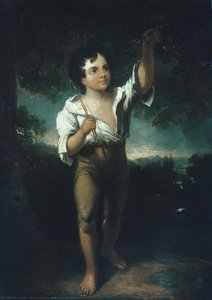 The Young Fisherman - Henry Inman
Henry Inman (1801–1846) stands as a pivotal figure in the development of a distinct American visual identity, bridging the gap between formal portraiture and the emotive spirit of the Romantic movement. His work is characterized by a profound interest in the psychological depth of his subjects and the untamed vitality of the natural world, a hallmark of Romanticism painters from United States. Rather than adhering to the rigid, cold structures of Neoclassicism, Inman sought to capture the soulful essence of both high-society figures and the everyday rhythms of life.
In his 1829 masterpiece, The Young Fisherman, Inman demonstrates this Romantic sensibility through a serene, pastoral composition. The work transcends simple genre painting by imbuing a moment of childhood innocence with a sense of profound connection to the landscape. The lush, vibrant greenery surrounding the boy suggests a world of boundless potential, reflecting the era's fascination with the sublime power and beauty of nature. Whether documenting the dignity of Native American leaders or the quiet grace of a youth in a sun-drenched field, Inman’s ability to infuse his subjects with character and atmosphere ensures his place among the most significant voices of American Romanticism.
John Neagle
 Joseph Clay Neal - John Neagle
A central figure in the development of American portraiture, John Neagle (1796–1865) embodied the Romantic movement's focus on individual character and the psychological depth of the human spirit. His artistic journey began in Boston, where an early apprenticeship in the practical craft of decorative painting under Thomas Wilson provided the technical foundation for his later mastery of light and form. This transition from utilitarian artistry to fine art was catalyzed by his exposure to masters like Thomas Sully, whose influence helped Neagle elevate the portrait from a mere likeness to a profound study of personality.
Neagle’s work is quintessential to American Romanticism because of his ability to infuse his subjects with a sense of vital, living presence. His brushwork, reminiscent of the grand traditions of van Dyck and Sir Thomas Lawrence, utilized a dazzling, expressive technique to capture the essence of a burgeoning nation. In his 1837 Joseph Clay Neal, we see this mastery in action; the bust-length composition employs a sophisticated interplay of light and shadow to create a sense of formal dignity and quiet intimacy. Whether documenting the social elite of Philadelphia or historical figures, Neagle’s art remains a testament to the Romantic era's fascination with the soul and the individual's place in a changing world.
Jacob Eichholtz
 Mr. Benjamin Schaum - Jacob Eichholtz
Jacob Eichholtz (1776–1842) stands as a vital figure among American Romanticism painters due to his profound ability to capture the individual spirit and social character of the early American frontier. While many of his contemporaries focused on idealized forms, Eichholtz’s work reflects the Romantic emphasis on the authentic human experience and the dignity of the individual. His journey from a Lancaster coppersmith apprentice to a prolific portraitist allowed him to develop a unique, self-taught precision that translated the textures of real life onto canvas.
His representative work, Mr. Benjamin Schaum (1809), exemplifies this mastery. In this portrait, Eichholtz moves beyond mere likeness to create a somber, intimate study of a man deeply embedded in the Pennsylvania community. The composition utilizes a restrained, dark palette and a soft, directional light that emerges from the shadows to illuminate the subject's profile. This technique creates a sense of psychological depth and quiet contemplation, hallmarks of the Romantic movement's interest in the inner life of the subject. Through such works, Eichholtz documented the social fabric of the Mid-Atlantic with a soulful, observational intensity that remains a cornerstone of early American art history.
Samuel Colman
 The Hill of the Alhambra, Granada - Samuel Colman
Samuel Colman (1832–1920) stands as a vital figure among American romantic painters, bridging the gap between the rugged landscapes of the Hudson River School and a more global, cosmopolitan vision of the sublime. Trained under the esteemed Asher Durand, Colman inherited a foundational mastery of light and composition that defined the American Romantic movement. However, his artistic temperament was characterized by an insatiable wanderlust that led him far beyond the domestic vistas of his mentor. By traveling through France, Spain, Italy, and North Africa, he expanded the American Romantic vocabulary to include architectural grandeur and exoticism.
His work exemplifies the movement's preoccupation with the emotional power of nature and the historical weight of civilization. In his 1865 masterpiece, The Hill of the Alhambra, Granada, Colman captures the monumental scale of the Moorish fortress through a panoramic lens, blending the awe of the natural terrain with the romanticized majesty of human history. This ability to infuse landscapes with a sense of timelessness and atmospheric depth allowed him to move beyond mere realism, instead using light and color to evoke the profound, often nostalgic, spirit of the 19th-century traveler.
Conclusion
The American romantic painters captured a nation in transition, moving away from rigid European neoclassicism to embrace the untamed spirit of the New World. From the ethnographic precision of George Catlin to the dramatic, light-drenched landscapes of Washington Allston, these artists shared a profound preoccupation with the sublime power of nature and the emotional weight of the human experience. Whether documenting the vastness of the American frontier or the intimate psychological depth of a portrait, their collective legacy lies in their ability to translate raw feeling into enduring visual narratives.
For those seeking to bring this era of profound emotion into a modern setting, our full collection offers a gateway to these historical masterpieces. We invite you to experience the tactile beauty of this movement through our museum-quality, hand-painted oil reproductions, each meticulously crafted by expert artists to preserve the soul and brushwork of these American masters.


