

Introduction
The 18th century in Spain marked a profound era of aesthetic transition, where the rigid formalities of the Baroque gave way to the grace of the Rococo and the intellectual rigor of Neoclassicism. This period was defined by a fascinating tension between the traditional religious fervor of the Spanish Golden Age and the enlightened, secular influences flowing from the rest of Europe. As the Bourbon dynasty took the throne, the courtly life of Madrid became a vibrant stage for artists who mastered the art of portraiture, the delicate nuances of landscape, and the dramatic storytelling required by both the Church and the aristocracy.
The painters of this era were not merely decorators; they were visual chroniclers of a changing society. From the intimate, light-filled scenes of courtly life to the darker, more psychological explorations of the human condition, their work captures a nation caught between the old world and the modern age. Their ability to manipulate light and texture allowed them to move seamlessly from the exuberant decorative styles of the early century to the disciplined, structural clarity that defined the late Enlightenment.
Today, these masters remain essential for understanding the evolution of European art. Their influence can be seen in the way they handled color and composition, setting the stage for the Romanticism that would follow. By examining the lives and techniques of these ten pivotal figures, we gain a deeper appreciation for the technical mastery and emotional depth that continue to resonate in art history. This selection explores the diverse voices—from the masters of the royal portrait to the virtuosos of the landscape—that defined the Spanish visual identity during this transformative century.
Francisco Goya
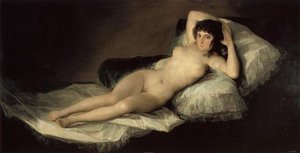 La maja desnuda. . Madrid - Francisco Goya
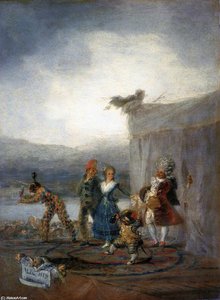
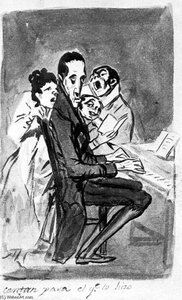
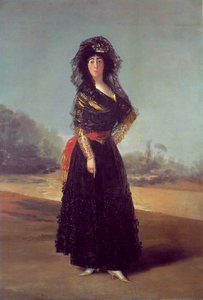
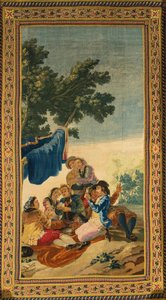
A titan of the Romantic movement, Francisco Goya stands as the most formidable figure among 18th century Spanish painters. Born in Fuendetodos in 1746, his journey from a provincial upbringing to the heights of the Spanish court defines the artistic evolution of his era. After honing his technical foundations under José Luzán y Martínez and later refining his mastery under Anton Raphael Mengs in Madrid, Goya ascended to become the first court painter to the Crown, serving both Charles IV and Ferdinand VII.
His career during the late 1700s was marked by a remarkable versatility, ranging from the charming, light-filled tapestry designs for the Royal Tapestry Factory to the profound psychological depth of his royal portraits. His ability to navigate these diverse commissions while developing a uniquely expressive language is why he remains the central pillar of this century's Spanish art. In his iconic work, La maja desnuda, painted around 1797, Goya demonstrated his capacity to challenge social conventions through bold, intimate compositions. This masterpiece, characterized by its fluid lines and striking use of light, showcases the technical precision and emotional intensity that would eventually lead him to create his most powerful and dark visions.
José Camarón y Bonanat
 The Virgin Dolorosa - José Camarón y Bonanat
A prominent figure in the Spanish art scene of the 1700s, José Camarón y Bonanat (1731–1803) exemplifies the technical versatility required of an 18th century Spanish painter. His artistic foundation was deeply rooted in the tactile traditions of sculpture, having received his earliest lessons from his father, Nicolás Camarón. This early training in form was later refined through the delicate precision of portrait miniatures under his uncle, Mosén Eliseo Bonanat, and the spiritual perspectives of the Dominican friar Miguel Posadas. After a formative period in Madrid, Camarón y Bonanat became a central pillar of the Valencian school, serving as a Professor at the Academia de Bellas Artes de Santa Bárbara and gaining honorary membership in the Real Academia de Bellas Artes de San Fernando.
His mastery of both genre scenes and profound devotional subjects is epitomized in his work The Virgin Dolorosa (c. 1785–1790). In this dramatic oil composition, he employs a sophisticated chiaroscuro to illuminate the Virgin Mary amidst a turbulent, cloudy sky. The piece is defined by a striking color palette, most notably the luminous ultramarine of her mantle, which contrasts with the soft pink of her undergarments and the organic, rounded forms of surrounding putti. Through this interplay of light and emotion, he captures a moment of intense spiritual suffering, marking him as a master of the late Spanish Baroque and Rococo transition.
Vicente López Portaña
 The Good Shepherd - Vicente López Portaña
Born in Valencia in 1772, Vicente López Portaña stands as a cornerstone of the 18th century Spanish painters, representing the height of Neoclassical precision. His journey began under the disciplined guidance of Father Antonio de Villanueva and continued through the prestigious Academy of San Carlos. By age seventeen, his talent earned him a scholarship to the Academia Real de Bellas Artes de San Fernando in Madrid, where he refined his mastery under Mariano Salvador Maella. This rigorous training prepared him for a career that would eventually see him appointed as an honorary court painter by King Charles IV, positioning him as a primary rival to Goya in capturing the essence of the Spanish elite.
His technical virtuosity is profoundly evident in his 1800 work, The Good Shepherd. This oil on canvas demonstrates a masterful command of light and shadow, pulling a soulful figure from a dark, atmospheric background. The painting captures a moment of quiet devotion, where the texture of the creamy wool and the heavy folds of a crimson robe are rendered with exceptional clarity. Through his ability to balance dramatic spiritualism with Neoclassical order, López Portaña secured his legacy within the golden age of Spanish portraiture.
Mariano Salvador Maella
 The Assumption of the Virgin - Mariano Salvador Maella
A hallmark of Mariano Salvador Maella's artistry is the seamless transition from the dramatic intensity of the late Baroque to the disciplined elegance of Neoclassicism. A visitor can recognize his hand through a profound command of anatomical precision and a sophisticated use of light that breathes life into both sacred and secular subjects. His brushwork often balances sculptural clarity with a fluid, rhythmic grace, particularly evident in the way he handles drapery and celestial movement.
Born in Valencia in 1739, Maella’s career epitomizes the artistic evolution of 18th century Spanish painters. After moving to Madrid and studying under Felipe de Castro, his talent earned him prestigious recognition at the Real Academia de Bellas Artes de San Fernando, eventually leading him to Rome. This academic rigor, combined with his service as a chamber painter to King Charles IV, solidified his status as a central figure in the Spanish courtly tradition. His ability to navigate these shifting stylistic tides is masterfully captured in The Assumption of the Virgin, a work that utilizes a theatrical chiaroscuro to bridge the earthly and the divine, directing the viewer's gaze through a dynamic, vertical composition toward the ethereal heavens.
Luis Paret Y Alcázar
 Charles III Dining before the Court - Luis Paret Y Alcázar
A central figure among 18th century Spanish painters, Luis Paret y Alcázar (1746–1799) brought a sophisticated, cosmopolitan elegance to the Iberian Peninsula. His career represents a vital bridge between the rigid traditions of the Spanish Baroque and the whimsical lightness of the Rococo. After receiving his foundational training at the Academia Real de San Fernando under Antonio González Velázquez, Paret’s artistic trajectory shifted significantly through his association with the French painter Charles de la Traverse. This exposure infused his work with a distinctive grace and a luminous, pastel-driven palette that set him apart from his contemporaries.
Paret is celebrated for his versatility, ranging from intimate genre scenes to grand vedute—panoramic landscapes that serve as topographical chronicles of the era. His ability to capture both the bustling maritime life of ports like Cádiz and the refined atmosphere of the royal court defines his legacy. His masterpiece, “Charles III Dining before the Court” (1788), exemplifies this mastery. In this work, he utilizes delicate ornamentation and a sophisticated interplay of light and shadow to document the social dynamics of Enlightenment Spain, immortalizing the opulent spirit of the 18th-century court through a lens of unparalleled elegance.
Antonio Carnicero
 Ascent of the Monsieur Bouclé's Montgolfier Balloon in the Gardens of Aranjuez - Antonio Carnicero
A quintessential figure of the Spanish Enlightenment, Antonio Carnicero y Mancio (1748–1814) represents the transition from late Baroque sensibilities to the disciplined clarity of Neoclassicism. Born in Salamanca into a family of distinguished artists, his journey from the Royal Academy of Fine Arts of San Fernando in Madrid to the vibrant studios of Rome—where he studied under masters like Giovanni Battista Piranesi—allowed him to infuse Spanish tradition with a sophisticated, classical structure. His status as a premier painter of 18th century Spain was cemented through his role as a court artist to Charles IV, capturing the intellectual and social pulse of the era.
Carnicero’s mastery is perhaps most breathtakingly realized in his 1784 work, Ascent of the Monsieur Bouclé's Montgolfier Balloon in the Gardens of Aranjuez. In this monumental composition, he captures a moment of profound human aspiration, depicting the Montgolfier balloon suspended against a luminous sky. Through a delicate orchestration of light and shadow, he portrays a diverse assembly of aristocrats and onlookers, their faces upturned in collective wonder. This work stands as a testament to his ability to blend historical narrative with the scientific curiosity that defined the age.
Antonio Palomino
 The Infant Saint John the Baptist - Antonio Palomino
Antonio Palomino stands as a pivotal figure in the transition of Spanish art, bridging the late Baroque era into the early 18th century. Born in Bujalance, Spain, his influence extended far beyond the canvas; he was a prolific painter and a vital art historian whose writings helped preserve the legacies of Spanish masters. His inclusion in the group of 18th-century Spanish painters is defined by his prolific activity during the opening decades of the 1700s, a period where his mastery of composition and narrative helped shape the visual language of the era.
In his representative work, The Infant Saint John the Baptist (c. 1701), Palomino demonstrates the profound spiritual depth characteristic of his style. This oil on canvas depicts the young precursor amidst a rugged, earthy landscape, seated near a lamb and holding a slender wooden staff. The painting is a masterful study of light and shadow, utilizing a celestial glow to illuminate the child's skin against the darker, textured terrain. Through this work, Palomino captures a sense of quietude and innocence, employing a naturalism that elevates the sacred subject through dramatic, emotive lighting.
Agustín Esteve
 Charles IV in the Uniform of a Colonel of the Royal Guard - Agustín Esteve
Agustín Esteve y Marqués stands as a pivotal figure among 18th century Spanish painters, embodying the stylistic transition from the disciplined clarity of Neoclassicism to the emotive depth of the Romantic era. Born in Valencia in 1753, Esteve’s artistic identity was forged through rigorous academic training at the Academia de Bellas Artes de San Carlos. His early mastery of classical principles and tonal harmonies allowed him to navigate the complex social hierarchies of the Spanish court, eventually evolving through a profound artistic metamorphosis sparked by his encounter with Francisco Goya.
His representative work, Charles IV in the Uniform of a Colonel of the Royal Guard (1799), serves as a testament to this stylistic bridge. In this portrait, Esteve utilizes precise Neoclassical technique to document the textures of power, from the glint of metallic embroidery to the stark white of stockings. The composition captures a quiet, formal prestige, where light carves the contours of a powdered wig against a dark, indeterminate void. Through the meticulous rendering of the blue uniform and the Order of the Golden Fleece, Esteve achieves a sense of stillness and authority that defines the portraiture of his era.
Antoni Viladomat i Manalt
 The Holy Family with Saint Augustine - Antoni Viladomat i Manalt
A central figure in the transition of Catalan art, Antoni Viladomat i Manalt (1678–1755) represents the profound evolution of Spanish painting as it moved into the 18th century. His mastery was rooted in a deep understanding of light and texture, a skill likely inherited from his father, a skilled gilder. After training under Pasqual Bailon Savall and completing a transformative apprenticeship with Joan Baptista Perramon, Viladomat’s style underwent a significant shift through his exposure to the theatrical grandeur of Italian art, specifically the works of Ferdinando Galli-Bibiena. This encounter infused his work with the dramatic essence of the Venetian Baroque, characterized by a sophisticated use of chiaroscuro.
His ability to manipulate light and shadow defines his contribution to the 18th-century Spanish canon. In his representative work, The Holy Family with Saint Augustine (1720), Viladomat demonstrates this technical prowess. The composition utilizes a singular, focused beam of light to carve sacred figures out of a deep, atmospheric gloom, creating a sense of volume and spiritual immediacy. Through the interplay of piercing highlights and thick, enveloping shadows, he transformed religious narratives into profound, emotional encounters that resonate with celestial intensity.
Alonso Miguel de Tovar
 Bartolomé Esteban Murillo - Alonso Miguel de Tovar
A central figure in the transition of Spanish art during the 1700s, Alonso Miguel de Tovar bridged the gap between the late Baroque and the burgeoning tastes of the Spanish court. Born in 1678, his journey from a modest background in Higuera de la Sierra to the heights of royal favor is a testament to his technical mastery. Trained under the rigorous discipline of Juan Antonio Ossorio and Juan Antonio Fajardo, Tovar eventually became a defining voice of 18th century Spanish painters through his appointment as a court painter to Philip V in 1723. His style was deeply informed by the aesthetic legacy of Murillo, a connection that allowed him to master a visual language of soft light and profound character.
In the representative work, Bartolomé Esteban Murillo, Tovar demonstrates this sophisticated command of light and shadow. The portrait, rendered as an oil on canvas, utilizes an oval trompe l'oeil frame to create a window into the past. The subject emerges from a somber, dark periphery, his features carved by a single, directional light source that emphasizes the texture of his skin and the quiet dignity of his gaze. It is a masterful study of presence, capturing a moment of stillness that resonates with the dramatic elegance of the era.
Conclusion
The 18th century in Spain was a period of profound artistic transition, where the rigid traditions of the Baroque era gradually yielded to the elegance of Rococo and the dramatic intensity of early Romanticism. From the courtly refinement of Vicente López Portaña to the haunting, psychological depths explored by Francisco Goya, these masters collectively captured a nation in flux. Whether through the delicate portraiture of Luis Paret y Alcázar or the grand historical compositions of Mariano Salvador Maella, each artist contributed a unique visual language that defined the aesthetic identity of the Spanish Enlightenment. Their ability to balance technical precision with deep emotional resonance ensures that their legacy remains vital to the history of European art.
For those looking to bring this era of Spanish mastery into a modern setting, Mus3ums.com offers a way to experience these masterpieces firsthand. Our artisans specialize in creating museum-quality, hand-painted oil reproductions that preserve the authentic brushstrokes and tonal depth of these historical treasures. You can explore our full collection to find the perfect piece for your home and live with the enduring beauty of these legendary painters through our bespoke, handmade artworks.


